

Winemaker Notes
"The 2003 Esprit de Beaucastel, a blend of 50% Mourvedre, 27% Syrah, 18% Grenache, and 5% Counoise, exhibits a saturated deep ruby/purple color in addition to a superb nose of blackberries, blue fruits, crushed minerals, new saddle leather, animal fur, and flowers. With wonderful concentration and purity buttressed by considerable structure as well as moderately high tannin, this foudre-aged effort will benefit from another 1-2 years of cellaring, and promises to keep for a decade or more."
-The Wine Advocate
Professional Ratings
-
Vinous
Dusty dried flowers and spiced citrus peel give way to red plums as the 2003 Esprit de Beaucastel slowly awakens in the glass. This is nearly velvety in feel, with lifting acidity and pliant wild berry fruits adding contrast. A slight saline tinge forms through the finish as the 2003 tapers off with admirable length and a touch of currant. This comes across as a bit tired in comparison to the surrounding vintages, but it remains perfectly enjoyable in its own right.


With bold fruit flavors and accents of sweet spice, Grenache, Syrah and Mourvèdre form the base of the classic Rhône Red Blend, while Carignan, Cinsault and Counoise often come in to play. Though they originated from France’s southern Rhône Valley, with some creative interpretation, Rhône blends have also become popular in other countries. Somm Secret—Putting their own local spin on the Rhône Red Blend, those from Priorat often include Merlot and Cabernet Sauvignon. In California, it is not uncommon to see Petite Sirah make an appearance.
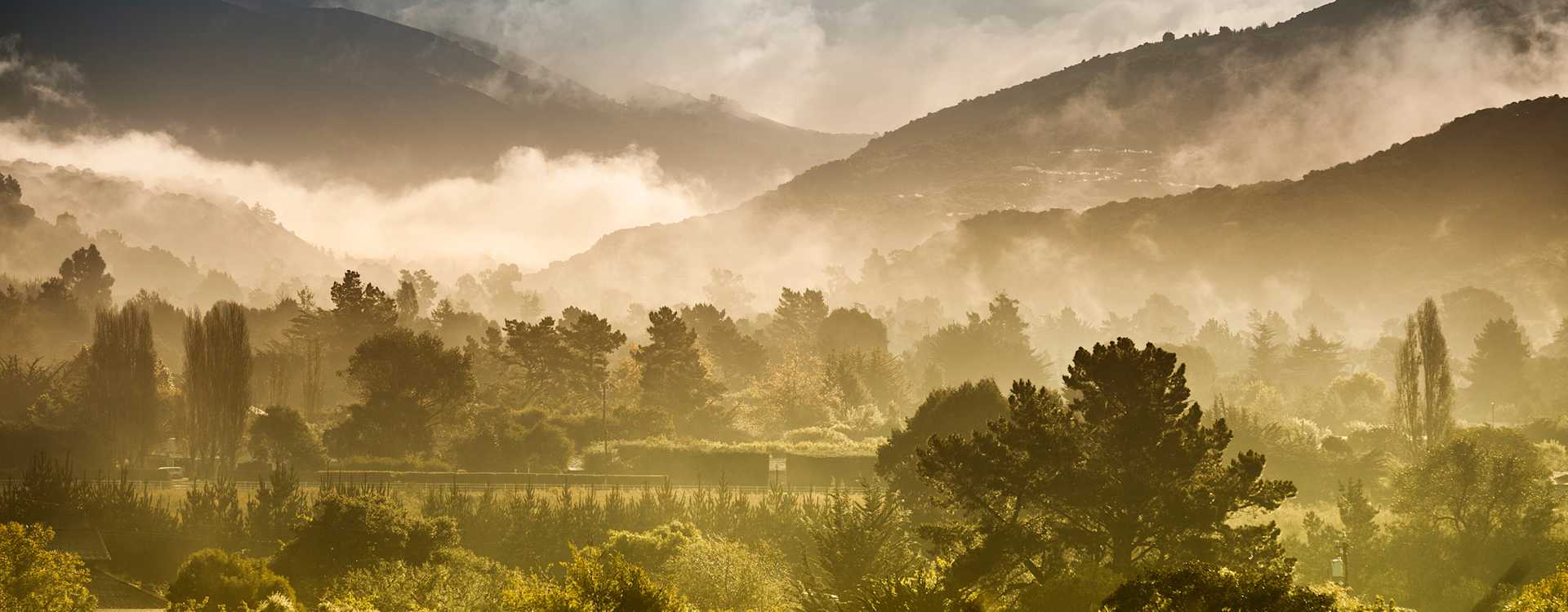
The largest and perhaps most varied of California’s wine-growing regions, the Central Coast produces a good majority of the state's wine. This vast California wine district stretches from San Francisco all the way to Santa Barbara along the coast, and reaches inland nearly all the way to the Central Valley.
Encompassing an extremely diverse array of climates, soil types and wine styles, it contains many smaller sub-AVAs, including San Francisco Bay, Monterey, the Santa Cruz Mountains, Paso Robles, Edna Valley, Santa Ynez Valley and Santa Maria Valley.
While the Central Coast California wine region could probably support almost any major grape varietiy, it is famous for a few Central Coast reds and whites. Pinot Noir, Chardonnay, Cabernet Sauvignon and Zinfandel are among the major ones. The Central Coast is home to many of the state's small, artisanal wineries crafting unique, high-quality wines, as well as larger producers also making exceptional wines.