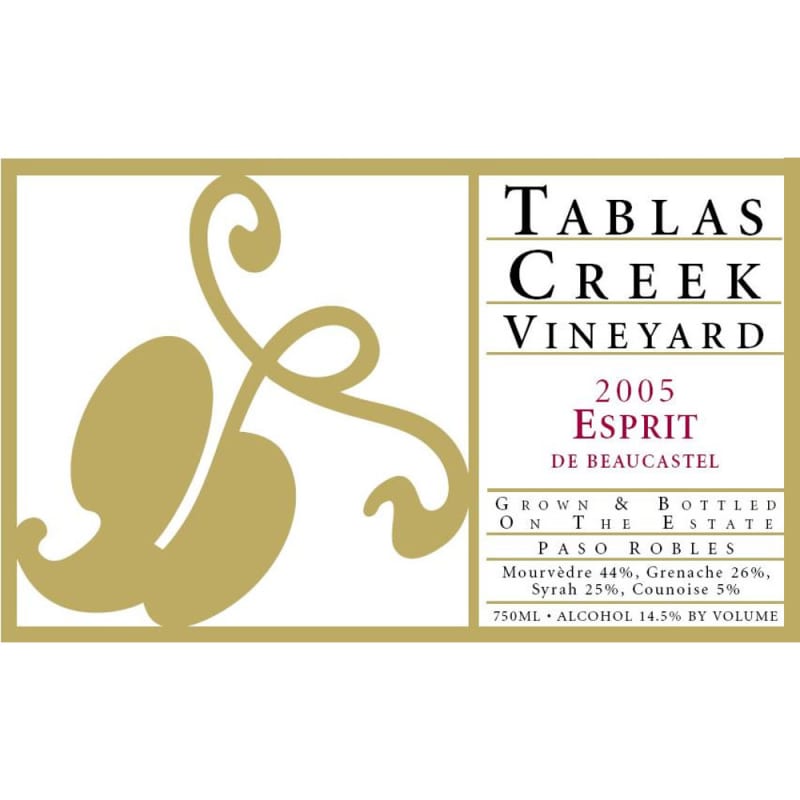

Winemaker Notes
The 2005 Esprit de Beaucastel Blanc is a vibrant expression of the terroir of Tablas Creek. It shows aromas of honeysuckle, mint, lemon peel and spice, with rich Roussanne flavors of honey, rose petals, pear, petrol and white flowers, excellent breadth, cleansing acidity and great length.
It should drink well when young but will also reward time in bottle; it is expected to show beautifully for at least the next 5-7 years.
Food pairings: Cooked shellfish (lobster, softshell crab, shrimp); roasted or grilled vegetables (eggplant, asparagus, peppers); foods cooked with garlic and olive oil; rich fish dishes (i.e., salmon, swordfish); Asian stir fry.
"Even better is the 2005 Esprit de
Beaucastel Blanc, a combination of 70% Roussanne and the rest mostly Grenache Blanc and a touch of Picpoul that sees no new oak. It reveals classic notes of honeyed marmalade, intense tropical fruits, impressive underlying minerality, and a chalky character in its big, fullthrottle personality that is bursting with character as well as intensity." 93 Points
Wine Advocate
August 31, 2007
"The components of this blend (70 percent roussanne, 25 percent grenache blanc and 5 percent picpoul blanc) form a tight weave. The middle of the wine has a plump, lovely richness without any overt sense of wood; the finish brings scents of fresh spring blossoms and savory saltwater toffee. It lasts with dynamic harmony, suited to age or to miso-marinated black cod." 93 Points
Wine & Spirits
August 2007
Professional Ratings


Full-bodied and flavorful, white Rhône blends originate from France’s Rhône Valley. Today these blends are also becoming popular in other regions. Typically some combination of Grenache Blanc, Marsanne, Roussanne and Viognier form the basis of a white Rhône blend with varying degrees of flexibility depending on the exact appellation. Somm Secret—In the Northern Rhône, blends of Marsanne and Roussanne are common but the south retains more variety. Marsanne, Roussanne as well as Bourboulenc, Clairette, Picpoul and Ugni Blanc are typical.
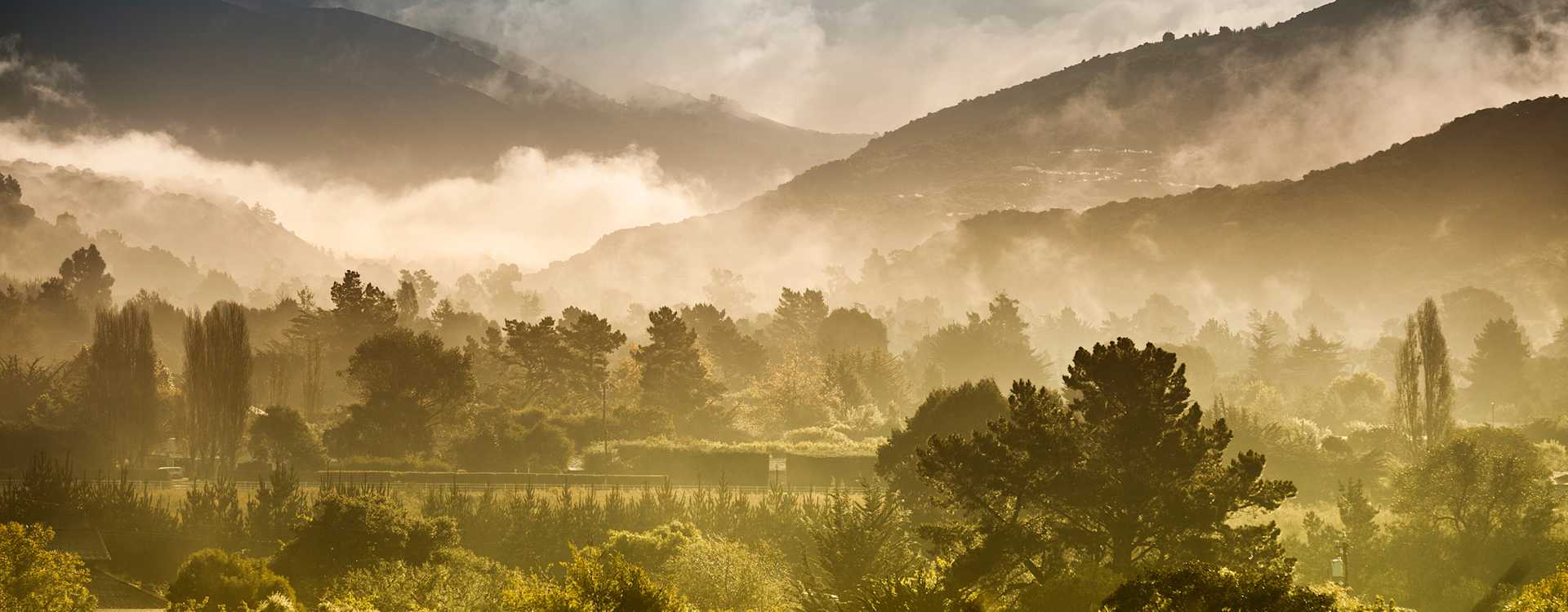
The largest and perhaps most varied of California’s wine-growing regions, the Central Coast produces a good majority of the state's wine. This vast California wine district stretches from San Francisco all the way to Santa Barbara along the coast, and reaches inland nearly all the way to the Central Valley.
Encompassing an extremely diverse array of climates, soil types and wine styles, it contains many smaller sub-AVAs, including San Francisco Bay, Monterey, the Santa Cruz Mountains, Paso Robles, Edna Valley, Santa Ynez Valley and Santa Maria Valley.
While the Central Coast California wine region could probably support almost any major grape varietiy, it is famous for a few Central Coast reds and whites. Pinot Noir, Chardonnay, Cabernet Sauvignon and Zinfandel are among the major ones. The Central Coast is home to many of the state's small, artisanal wineries crafting unique, high-quality wines, as well as larger producers also making exceptional wines.