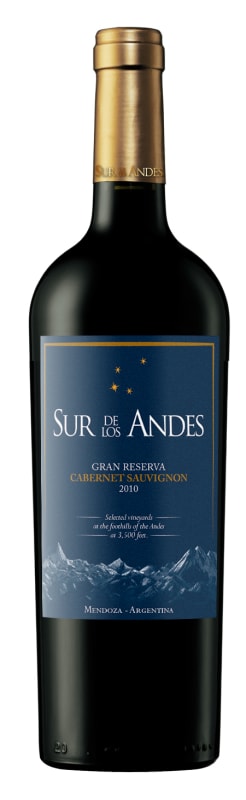


Winemaker Notes
Rich dark berries, black fruit and complex wood tones of cedar and aged oak come together in this dense Cabernet. Deserving of the Gran Reserva designation with balance from the aroma to the lasting, tannic finish. Produced on clay and limestone soils, all the grapes are double sorted upon arrival to the winery. All fermentations take place naturally with native yeasts. Fermentation takes 30 days with 5 days of cold maceration, at temperatures between 24-27 Celsius to achieve the most complexity. The wine then goes through 100% Malolactic Fermentation and is aged for up to one year in older oak casks.
Professional Ratings
-
Wine Enthusiast
This full-bodied, layered Cabernet opens with mossy, damp aromas that suggest a forest after a rain. The palate is direct and solid, with good depth. Flavors of cola, baked plum, raisin and chocolate finish strong and with previously announced notes of cocoa, mocha and prune.


A noble variety bestowed with both power and concentration, Cabernet Sauvignon enjoys success all over the globe, its best examples showing potential to age beautifully for decades. Cabernet Sauvignon flourishes in Bordeaux's Medoc where it is often blended with Merlot and smaller amounts of some combination of Cabernet Franc, Malbecand Petit Verdot. In the Napa Valley, ‘Cab’ is responsible for some of the world’s most prestigious, age-worthy and sought-after “cult” wines. Somm Secret—DNA profiling in 1997 revealed that Cabernet Sauvignon was born from a spontaneous crossing of Cabernet Franc and Sauvignon Blanc in 17th century southwest France.

By far the largest and best-known winemaking province in Argentina, Mendoza is responsible for over 70% of the country’s enological output. Set in the eastern foothills of the Andes Mountains, the climate is dry and continental, presenting relatively few challenges for viticulturists during the growing season. Mendoza, divided into several distinctive sub-regions, including Luján de Cuyo and the Uco Valley, is the source of some of the country’s finest wines.
For many wine lovers, Mendoza is practically synonymous with Malbec. Originally a Bordelaise variety brought to Argentina by the French in the mid-1800s, here it found success and renown that it never knew in its homeland where a finicky climate gives mixed results. Cabernet Sauvignon, Syrah, Merlot and Pinot Noir are all widely planted here as well (and sometimes even blended with each other or Malbec). Mendoza's main white varieties include Chardonnay, Torrontés, Sauvignon Blanc and Sémillon.