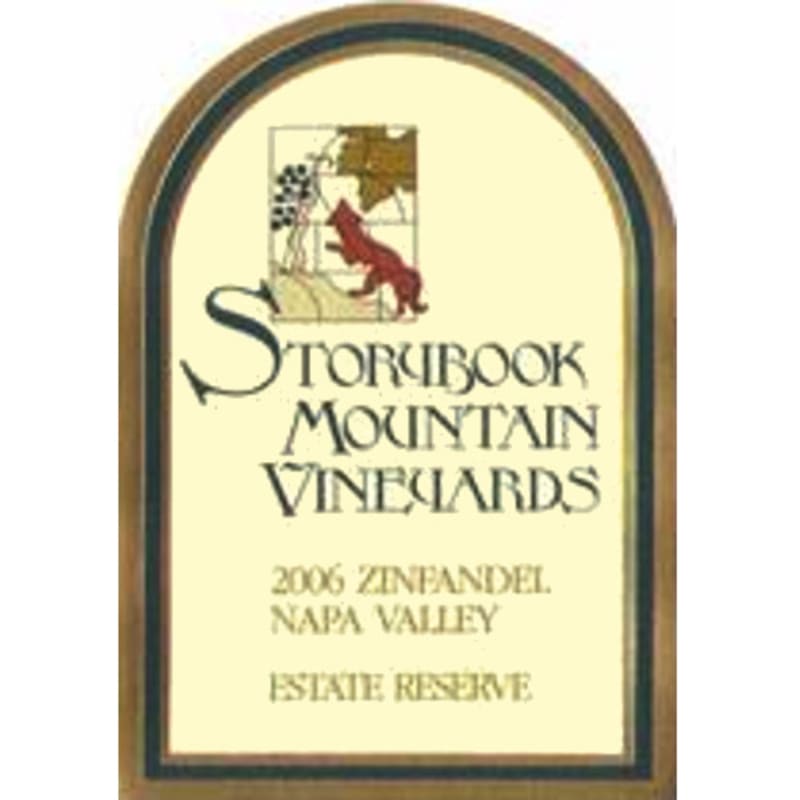

Winemaker Notes
Professional Ratings
-
Wine & Spirits
Jerry and Sigrid Seps select the barrels for this reserve, the top lot from their hillside estate overlooking Mount St. Helena and the Palisades in northern Napa Valley. The vineyard forms an ampitheatre facing northeast, with enough cool morning sun to ripen the grapes with the kind of pure, fresh fruit flavors that Bordeaux's first growths attain in the finest vintages. But rather than the black currant depths of cabernet, here it's zin's basket of raspberries, cool and delicious. This is perfectly formed, youthfully floral, with sweetness in the fruit tannin that captures the late autumn sun. After tasting this wine, I decided to organize a zin tour of Napa Valley with David Darlington. We tasted the 2001 and 1981 Reserves at Storybook, which led me to believe that my score on the 2006 is conservative.
-
Connoisseurs' Guide
This perennial high-performer returns in 2006 with another stellar outing in which its tight first aromas are terrifically well-focused on bright, pert, concentrated blackberry fruit with a claret-like sense of potential in their midst. As expected from the nose, the wine is firm, balanced and deep with solid, if youthfully reluctant yet impeccably crafted flavors. Bottle aging will be this wine's greatest ally, and we would counsel that it be put in the cellar for some three to four years at a minimum--with the full expectation that this Zin has a decade of forward momentum in its kit bag.


Undoubtedly proving its merit over and over, Napa Valley is a now a leading force in the world of prestigious red wine regions. Though Cabernet Sauvignon dominates Napa Valley, other red varieties certainly thrive here. Important but often overlooked include Merlot and other Bordeaux varieties well-regarded on their own as well as for their blending capacities. Very old vine Zinfandel represents an important historical stronghold for the region and Pinot noir is produced in the cooler southern parts, close to the San Pablo Bay.
Perfectly situated running north to south, the valley acts as a corridor, pulling cool, moist air up from the San Pablo Bay in the evenings during the hot days of the growing season, which leads to even and slow grape ripening. Furthermore the valley claims over 100 soil variations including layers of volcanic, gravel, sand and silt—a combination excellent for world-class red wine production.