

Winemaker Notes
-Wine Advocate
L'Avion (the airplane) is a Rousanne-based wine with small amounts of Viognier and sauvignon Blanc blended into the finished wine to improve balance and aromatic complexity. The Rousanne vines are planted in a long, narrow piece of land running through the middle of the estate, the level topography of which helps to even the ripening of the grapes. At one time, this area was the old landing strip for the Santa Ynez Valley, which inspired us to whimsically name the wine L'Avion.
Every vintage is a challenge in making L'Avion. With our white wine, it is our aim to produce a wine with concentration, freshness, subtly and finesse. To achieve this goal we focus on harvesting the fruit at precisely the right moment. Even though the Rousanne vineyard was developed in an area that encourages a more even maturation of the grapes, our Rousanne still struggles to ripen evenly. In 2003, it required five passes to complete the harvest for L'Avion. Only the ripe, golden clusters were selected during each pass, and any damaged berries were meticulously removed, one by one, to ensure the freshest flavors possible in the finished wine.
When the Rousanne reaches the winery, it is quickly sorted and pressed directly without destemming. Because Rousanne is extremely susceptible to oxidation, we immediately remove the juice from the press into large 500 liter oak barrels. The must is fermented with native yeasts and allowed to reach very high temperatures (90°+F), which helps integrate the oak into the wine. The lees are vigorously stirred until the malolactic fermentation is completed (usually in March or April). The Rousanne then remains on its lees for its entire passage in wood. The wine is bottled without fining or filtration in August before the next vintage.
Professional Ratings


Full-bodied and flavorful, white Rhône blends originate from France’s Rhône Valley. Today these blends are also becoming popular in other regions. Typically some combination of Grenache Blanc, Marsanne, Roussanne and Viognier form the basis of a white Rhône blend with varying degrees of flexibility depending on the exact appellation. Somm Secret—In the Northern Rhône, blends of Marsanne and Roussanne are common but the south retains more variety. Marsanne, Roussanne as well as Bourboulenc, Clairette, Picpoul and Ugni Blanc are typical.
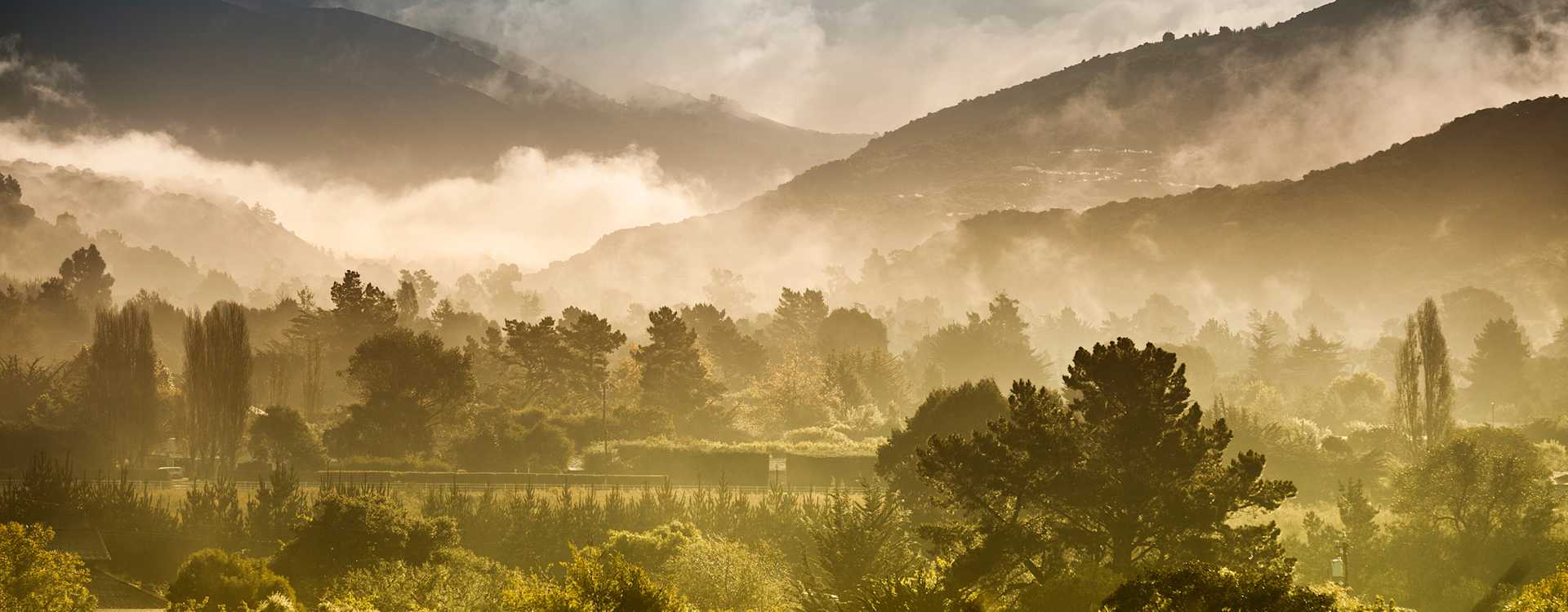
The largest and perhaps most varied of California’s wine-growing regions, the Central Coast produces a good majority of the state's wine. This vast California wine district stretches from San Francisco all the way to Santa Barbara along the coast, and reaches inland nearly all the way to the Central Valley.
Encompassing an extremely diverse array of climates, soil types and wine styles, it contains many smaller sub-AVAs, including San Francisco Bay, Monterey, the Santa Cruz Mountains, Paso Robles, Edna Valley, Santa Ynez Valley and Santa Maria Valley.
While the Central Coast California wine region could probably support almost any major grape varietiy, it is famous for a few Central Coast reds and whites. Pinot Noir, Chardonnay, Cabernet Sauvignon and Zinfandel are among the major ones. The Central Coast is home to many of the state's small, artisanal wineries crafting unique, high-quality wines, as well as larger producers also making exceptional wines.