


Winemaker Notes
Our Dundee Hills Chardonnay is a mix of all the Chardonnay clones on our property. Whole cluster pressed to mitigate phenolics, delicate aromatics leap out of the glass. Showing notes of ripe pear, candied lemon, and jasmine on the nose, the palate is vibrant yet succulent. Flavors of mandarin orange, baked apple, and ginger along with hints of wet stone fill the front and mid-palate. The initial vibrancy winds down to a long soft finish.
Professional Ratings
-
Wine & Spirits
Stoller’s reserve bottling is sumptuous and high-toned at once, the aromatics leading with pineapple and a pointed note of pineapple acid also. Its flavors are toasty, with a concentration and structure that keep the wine sturdy and on point for rich seafood, like a sauced finnan haddie.
-
Wine Enthusiast
This bright, spicy wine is made entirely in stainless tanks, showcasing crisp apple fruit with side notes of green pear and white peach. Despite the low listed alcohol it does not feel underripe, just fresh and bracing with ample acidity.
-
Wine Spectator
Vibrant and zesty, with tropical fruit and kiwifruit accents that glide along the crisp, steely finish. Drink now.
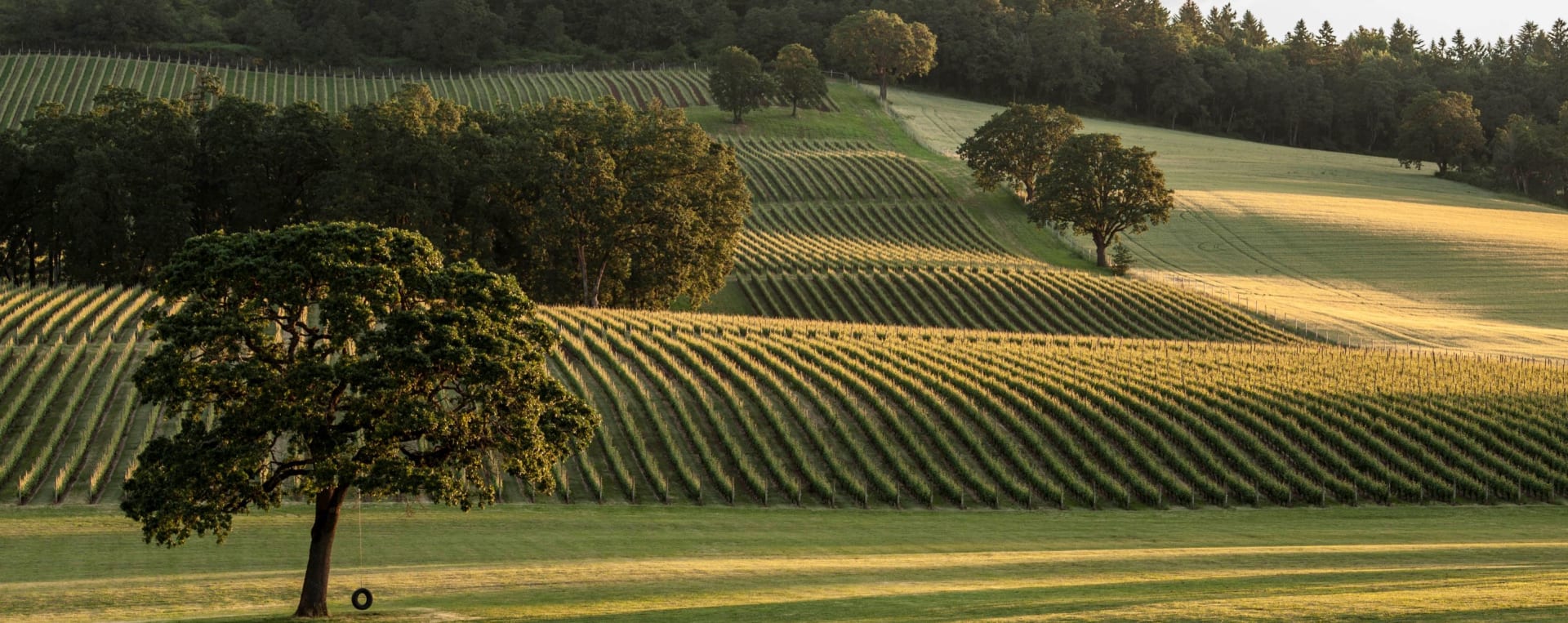


Stoller Family Estate is one of Oregon's most highly regarded vineyards and wineries. Pioneering Oregonian and Founder Bill Stoller purchased his family's second-generation farm in 1993 with the vision of cultivating an enduring legacy for the land and Oregon wine industry. Over the last 30 years, he has patiently transformed the 400-acre property into the largest contiguous vineyard in the Dundee Hills. We continue to look for new ways to refine and protect that legacy so it can thrive for generations to come.
Stoller Family Estate features the world's first LEED® Gold certified winery, a reflection of our ongoing commitment to sustainable and environmentally responsible winemaking.

One of the most popular and versatile white wine grapes, Chardonnay offers a wide range of flavors and styles depending on where it is grown and how it is made. While it tends to flourish in most environments, Chardonnay from its Burgundian homeland produces some of the most remarkable and longest lived examples. California produces both oaky, buttery styles and leaner, European-inspired wines. Somm Secret—The Burgundian subregion of Chablis, while typically using older oak barrels, produces a bright style similar to the unoaked style. Anyone who doesn't like oaky Chardonnay would likely enjoy Chablis.

Home of the first Pinot noir vineyard of the Willamette Valley, planted by David Lett of Eyrie Vineyard in 1966, today the Dundee Hills AVA remains the most densely planted AVA in the valley (and state). To its north sits the Chehalem Valley and to its south, runs the Willamette River. Within the region’s 12,500 acres, about 1,700 are planted to vine on predominantly basalt-based, volcanic, Jory soil.