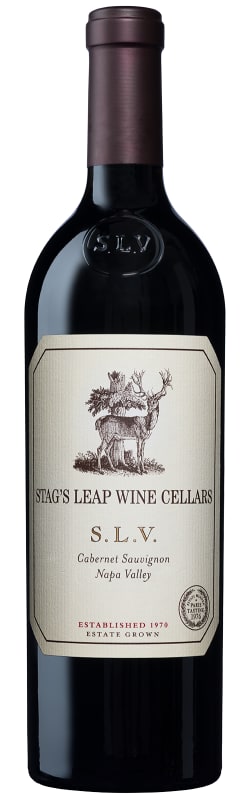


Winemaker Notes
The 2022 S.L.V. Cabernet Sauvignon entices the senses with its captivating aromas of dark fruits, including blackcurrants and ripe plums, beautifully intertwined with delicate notes of violets, graphite, and rich dark chocolate, all rounded o ff by the warmth of black tea. Flavors showcase a richness and texture that impresses from the outset. The tannins reveal a minerality that adds depth and character, while the youthful mouthfeel elevates the experience. As the wine lingers on the palate, complex layers of espresso, mocha, and dark fruit emerge, crafting a finish that is both sophisticated and unforgettable.
Enjoy with Steak Diane, Grilled Hangar Steak with Chimichurri, Duck Confit with Roasted Figs and Polenta or Mushroom Ravioli with Arrabiata Sauce.
Professional Ratings
-
James Suckling
Though slightly restrained at this young age, this is an outstanding wine with the structure and depth of flavor typical of this estate-grown bottling. Blackberries, dried blueberries, creme de cassis, cedar and cinnamon are layered on the palate. Tannins are fine-grained, velvety and well integrated. Drinkable now but best from 2029.
-
Robert Parker's Wine Advocate
The 2022 Cabernet Sauvignon S.L.V. kicks off with masses of black cherries and cassis, plus hints of dark chocolate. It's full-bodied, rich and velvety in feel, perhaps even a touch open-knit in character, but it shows great length and freshness on the lingering finish.
-
Jeb Dunnuck
Rocking levels of crème de cassis, redcurrants, spicy wood, dried flowers, and sweet tobacco all emerge from the 2022 Cabernet Sauvignon S.L.V., a medium to full-bodied Cabernet Sauvignon that has a pure, layered, elegant mouthfeel, ripe, polished tannins, and a great finish. Aged 20 months in 100% new French oak, it's another remarkably fresh 2022 from this estate that has tons to love.
-
Vinous
The 2022 Cabernet Sauvignon S.L.V. shows the riper side of the year in its slightly roasted, cooked profile. Brown spice, leather, tobacco and incense add to an impression of a wine that is a touch forward. I would prefer to drink this over the next handful of years.





Considered one of the "first growths" of Napa Valley, Stag's Leap Wine Cellars produces renowned Cabernet Sauvignon from its historic Stags Leap District estate vineyards. Learn about Stags Leap history and estate-grown wines.
History of Stag’s Leap Wine Cellars
Stag’s Leap Wine Cellars was founded in 1970 with the purchase of a 40 acre property in the now famed Stag’s Leap District AVA in Napa Valley. The winery brought international recognition to California winemaking and the Napa Valley region when their 1973 S.L.V. Cabernet Sauvignon won the 1976 Paris Tasting, also known as the "Judgement of Paris."
Stag’s Leap Wine Cellars Estate-Grown Cabernet Sauvignon
Stag's Leap Wine Cellars' three estate-grown Cabernet Sauvignons - CASK 23, S.L.V. and Fay - are among the most highly regarded and collected Cabernet Sauvignons worldwide. The Cabernet wines are fashioned to express richness balanced by elegant restraint, an approach often described as "an iron fist in a velvet glove."

One of the most prestigious wines of the world capable of great power and grace, Napa Valley Cabernet is a leading force in the world of fine, famous, collectible red wine. Today the Napa Valley and Cabernet Sauvignon are so intrinsically linked that it is difficult to discuss one without the other. But it wasn’t until the 1970s that this marriage came to light; sudden international recognition rained upon Napa with the victory of the Stag’s Leap Wine Cellars 1973 Cabernet Sauvignon in the 1976 Judgement of Paris.
Cabernet Sauvignon undoubtedly dominates Napa Valley today, covering half of the land under vine, commanding the highest prices per ton and earning the most critical acclaim. Cabernet Sauvignon’s structure, acidity, capacity to thrive in multiple environs and ability to express nuances of vintage make it perfect for Napa Valley where incredible soil and geographical diversity are found and the climate is perfect for grape growing. Within the Napa Valley lie many smaller sub-AVAs that express specific characteristics based on situation, slope and soil—as a perfect example, Rutherford’s famous dust or Stags Leap District's tart cherry flavors.