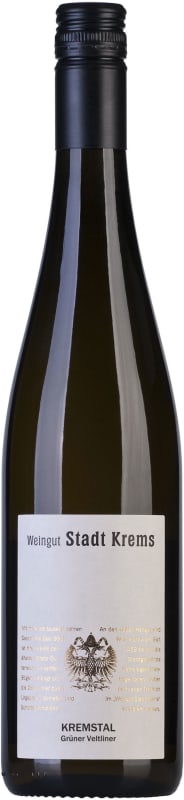


Winemaker Notes
Krems opens to the east and the warm Pannonian climate flows in here. Grüner Veltliner has the ideal breeding ground here on the gentle hills of sandy loess. In the north of Krems cooler air flows in through the forest district and the ground is interspersed with gravel and crystalline. This interplay influences the spiciness and balance of the Krems Veltliner.
Optimal drinking window: 2020 to 2025
Food pairing: Baked, classic Austrian cuisine, Asian cuisine
Professional Ratings
-
Wine Enthusiast
Underneath the vivid green pear and lemon notes on the nose there is a real Mirabelle intensity. The palate adds yeasty creaminess to these notions on a slender but concentrated palate, while salty, peppery highlights enliven that yeasty body. Craft+Estate–Winebow. Best Buy.
-
James Suckling
Plenty of lemon and flint with spicy pear and apple. Medium to full body. Creamy texture. Flint and green apple at the finish. Screw cap.
-
Wine & Spirits
Peppery and lean, this is a savory veltliner with a knife-edge of acidity, ready to slice through salt-and-pepper squid.
Best Buy


Fun to say and delightfully easy to drink, Grüner Veltliner calls Austria its homeland. While some easily quaffable Grüners come in a one-liter—a convenient size—many high caliber single vineyard bottlings can benefit from cellar aging. Somm Secret—About 75% of the world’s Grüner Veltliner comes from Austria but the variety is gaining ground in other countries, namely Hungary, the Czech Republic, Slovakia and the United States.

The region of considerable geologic diversity and microclimates, Kremstal extends virtually without border east from Wachau along the Danube River. Its magnificent terraced and rocky vineyards in the west alongside Wachau include some of Austria’s most esteemed Riesling vineyards, the (Steiner) Hund and Pfaffenberg, as well as Kögl and Wachtberg nearer to the city of Krems. After Krems, the vineyards become excessively steep upstream around Senftenberg where Riesling and Grüner Veltliner thrive. Grüner Veltliner does best from here east where the soils become a mix of sand, gravel and loess.
Grüner Veltliner and Riesling together comprise two thirds of all of the Kremstal vineyards; the region itself represents about five percent of Austria’s total vineyard area.