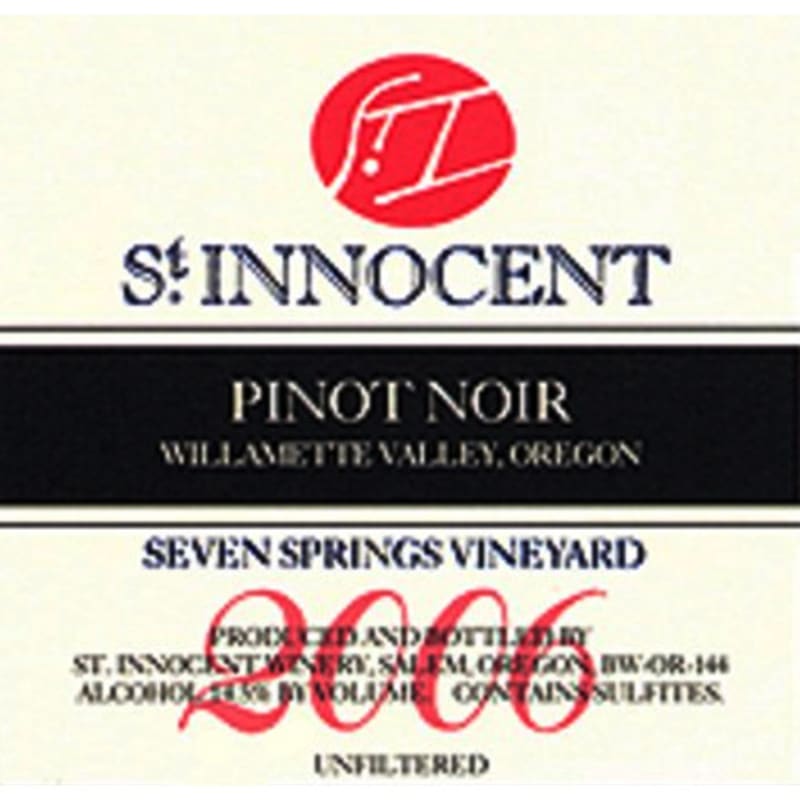

Winemaker Notes
In a vintage of richly fruited wines, the 2006 Seven Springs Pinot noir has remakable finesse, balance, and depth. The nose has red and blackberry fruits with allspice, ginger and white pepper. There is a dusty sub-tone to the aromas that reminds me of wild blackberries picked beside the road. Dark red and black raspberry fruit fruit flavors are layered with hints of mushroom, earthy spices and white pepper. The tannins are soft and rich and are remakably delicate and balanced. The finish is exceptionally long and layered with fruit and spice.
This is wine for game and wild mushrooms - those wild and earthy flavors in the food bring out all the layers in this wine. Roast leg of lamb, duck, cassoulet, hearty beef roasts, and wild mushroom risotto are great matches. When drunk young, this Pinot will benefit by decanting with vigorous aeration 2-4 hours before serving.
I suggest that you either drink Seven Springs when it is young (up to five years from vintage) or wait until it is at least eight years old. In the early years, you will enjoy the freshness of the fruit balanced with its rustic qualities. By waiting longer, aged flavors develop and Seven Springs will increase in both intensity and purity of its components. It will be worth the wait. Seven Springs Pinot noirs will continue developing for 12-15 years.
Professional Ratings


Thin-skinned, finicky and temperamental, Pinot Noir is also one of the most rewarding grapes to grow and remains a labor of love for some of the greatest vignerons in Burgundy. Fairly adaptable but highly reflective of the environment in which it is grown, Pinot Noir prefers a cool climate and requires low yields to achieve high quality. Outside of France, outstanding examples come from in Oregon, California and throughout specific locations in wine-producing world. Somm Secret—André Tchelistcheff, California’s most influential post-Prohibition winemaker decidedly stayed away from the grape, claiming “God made Cabernet. The Devil made Pinot Noir.”

Running north to south, adjacent to the Willamette River, the Eola-Amity Hills AVA has shallow and well-drained soils created from ancient lava flows (called Jory), marine sediments, rocks and alluvial deposits. These soils force vine roots to dig deep, producing small grapes with great concentration.
Like in the McMinnville sub-AVA, cold Pacific air streams in via the Van Duzer Corridor and assists the maintenance of higher acidity in its grapes. This great concentration, combined with marked acidity, give the Eola-Amity Hills wines—namely Pinot noir—their distinct character. While the region covers 40,000 acres, no more than 1,400 acres are covered in vine.