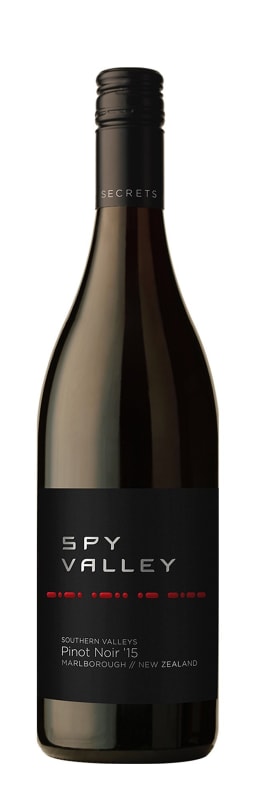


Winemaker Notes
Grapes were hand harvested from our hillside plantings of Pinot Noir. They were partially de-stemmed and fermented with wild yeasts in small oak cubes. After pressing and malolactic fermentation the wine was aged for 18 months in French Oak barrels.
Professional Ratings
-
James Suckling
A smart pinot noir with plenty on offer in terms of fresh flowers, fresh leafy nuances, red cherries, orange zest and oak spice. The palate has an attractive bed of fine-grained tannins and neat resolve.
-
Robert Parker's Wine Advocate
The silky, medium-bodied 2015 Pinot Noir is a fine introduction to the quality Pinot Noir coming out of Marlborough's Southern Valleys. There's more concentration and tannin than you might expect from a basic bottling, with lovely black cherry fruit, hints of cola and spice and enough structure to warrant holding up to 5 years.
-
Wine Enthusiast
Heady aromas of ripe blue and purple fruit, florals and spice flow into a palate that offers silky, fine-grained tannins. The oak turns a little bitter on the finish. There's power to this Pinot, but elegance too. Drink now–2023.
-
Wine Spectator
White pepper, dried lavender and spicy tobacco notes add aromatic lift to the core of dense currant and blueberry flavors, finishing with plenty of spice and Earl Grey tea accents. Drink now through 2028.


Thin-skinned, finicky and temperamental, Pinot Noir is also one of the most rewarding grapes to grow and remains a labor of love for some of the greatest vignerons in Burgundy. Fairly adaptable but highly reflective of the environment in which it is grown, Pinot Noir prefers a cool climate and requires low yields to achieve high quality. Outside of France, outstanding examples come from in Oregon, California and throughout specific locations in wine-producing world. Somm Secret—André Tchelistcheff, California’s most influential post-Prohibition winemaker decidedly stayed away from the grape, claiming “God made Cabernet. The Devil made Pinot Noir.”

An icon and leading region of New Zealand's distinctive style of Sauvignon blanc, Marlborough has a unique terroir, making it ideal for high quality grape production (of many varieties). Despite some common generalizations, which could be fairly justified given that Marlborough is responsible for 90% of New Zealand's Sauvignon blanc production, the wines from this region are actually anything but homogenous. At the northern tip of New Zealand’s South Island, the vineyards of Marlborough benefit from well-draining, stony soils, a dry, sunny climate and wide temperature fluctuations between day and night, a phenomenon that supports a perfect balance between berry ripeness and acidity.
The region’s king variety, Sauvignon blanc, is beloved for its pungent, aromatic character with notes of exotic tropical fruit, freshly cut grass and green bell pepper along with a refreshing streak of stony minerality. These wines are made in a wide range of styles, and winemakers take advantage of various clones, vineyard sites, fermentation styles, lees-stirring and aging regimens to differentiate their bottlings, one from one another.
Also produced successfully here are fruit-forward Pinot noirs (especially where soils are clay-rich), elegant Riesling, Pinot gris and Gewürztraminer.