

Winemaker Notes
Professional Ratings
-
Jeb Dunnuck
A perfect wine is the 2016 Cabernet Sauvignon Estate, composed of 85% Cabernet Sauvignon, 9% Cabernet Franc, and 6% Petit Verdot, which is a classic blend from this incredible estate. Sporting a deep purple color as well as an extraordinary bouquet of ultra-pure creme de cassis, blueberries, camphor, scorched earth, and licorice, with subtle background oak, it hits the palate with a full-bodied, deep, powerful texture that carries sweet tannins and blockbuster length. With a stacked mid-palate, straight-up awesome purity of fruit, and a huge finish, it's as classic and brilliant as it gets. Reminding me of the 2013 with its pure yet backward style, give bottles 4-5 years of bottle age and it will keep for 3-4 decades. Hats off to the team at Spottswoode for this legend in the making!
-
Wilfred Wong of Wine.com
COMMENTARY: The 2016 Spottswoode Cabernet Sauvignon is my wine of the decade. Though we still have a few more weeks before the end of these ten years, I can't imagine any wine taking me like this one just did. TASTING NOTES: This wine is 100% complete. Its aromas and flavors of relentless and penetrating black fruits, violets, other berries, and earth stay long on the palate and into the finish. One can drink this wine at any time, but I recommend 10+ years before sticking the wine key into the cork. Keep this enchanting genie in the bottle for as long as you can. (Tasted: November 23, 2019, San Francisco, CA)
-
Decanter
Spottswoode has clearly made the most of this lovely vintage - this has charm and elegance on the nose that is still too rare in Napa Cabernet, yet it is blackcurranty, ripe and expressive. This is no blockbuster but it has splendid purity and finesse with no lack in grip and structure. The finish is long, peppery and lively, with fine acidity, excellent balance, and well-judged oak. Aron Weinkauf was the winemaker having taken over from Jennifer Williams in 2011.
-
Robert Parker's Wine Advocate
Still quite dark-hued, youthful and primary, Spottswoode's 2016 Cabernet Sauvignon features loads of powerful black cherries and cassis. It's medium to full-bodied and nicely structured, with a bit more of an acid edge than some vintages, which beautifully complements the ripe, supple tannins and serves to lengthen and freshen the long, licorice-tinged finish.approachable now. Best After 2022. Rating: 96+
-
Wine Enthusiast
Blended with small percents of Cabernet Franc and Petit Verdot, this vintage marks the winery’s 35th year of making this wine, the grapes all estate-grown and organically farmed. Rich and grippy, it expands to reveal expressive notes of dried herb, leather and salty stone, at first demure in black fruit, with an elegant structure and undoubtable time to age. Enjoy best from 2026–2031.
-
Wine Spectator
Beautifully rendered, with a focused beam of gently mulled red and black currant fruit that glides through atop a subtle but persistent loamy structure. Light tea and alder notes fill in throughout, ending with a wave of fruit that is alluringly lined with latent mineral tension. Best from 2021 through 2040.
-
James Suckling
This blend of 85 per cent cabernet sauvignon, nine per cent cabernet franc and six per cent petit verdot has strikingly pure blackcurrant aromas and flavors. The palate has flavorful and fleshy, ripe mixed berries, cast in plush, seamlessly even tannins. Drink or hold.





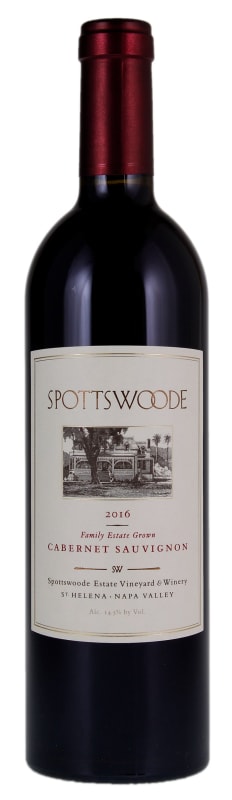
Spottswoode is an historic, family-owned estate vineyard and winery located on the western edge of St. Helena in Napa Valley. The estate was established in 1882 by George Schonewald, whose historic Victorian home is depicted on the label. Spottswoode was christened by Mrs. Albert Spotts, whose family owned the property from 1910 until its purchase in 1972 by Mary Weber Novak and her husband, Dr. Jack Novak. After Jack died unexpectedly in 1977, Mary carried out their shared dream, and Spottswoode’s debut Cabernet Sauvignon was produced in 1982, exactly one hundred years after the estate’s founding.
To ensure the highest quality, Spottswoode is dedicated to producing a handful of wines in very limited quantities: Spottswoode Estate Cabernet Sauvignon, Sauvignon Blanc, Lyndenhurst, and Field Book. The winery's goal is to produce exceptional, well-balanced, structured wines that exhibit texture, elegance, consistency and the ability to age well.
The 40-acre Spottswoode Estate Vineyard is an ideal terroir for growing wine grapes. Situated on the apex of the Sulphur Creek fan, the alluvial soils comprised primarily of sandy clay loam provide superb drainage. The gap between the Mayacamas Range and Spring Mountain admits cooling maritime breezes that temper the sun’s heat, creating an ideal microclimate for winegrowing. Among the first to introduce organic farming practices in the Napa Valley in 1985, Spottswoode is proud to have enjoyed the California Certified Organic Farmers (CCOF) certification since 1992 and Demeter Biodynamic Certification since 2020. Spottswoode is also Napa Valley’s first Certified B-Corp winery.

One of the most prestigious wines of the world capable of great power and grace, Napa Valley Cabernet is a leading force in the world of fine, famous, collectible red wine. Today the Napa Valley and Cabernet Sauvignon are so intrinsically linked that it is difficult to discuss one without the other. But it wasn’t until the 1970s that this marriage came to light; sudden international recognition rained upon Napa with the victory of the Stag’s Leap Wine Cellars 1973 Cabernet Sauvignon in the 1976 Judgement of Paris.
Cabernet Sauvignon undoubtedly dominates Napa Valley today, covering half of the land under vine, commanding the highest prices per ton and earning the most critical acclaim. Cabernet Sauvignon’s structure, acidity, capacity to thrive in multiple environs and ability to express nuances of vintage make it perfect for Napa Valley where incredible soil and geographical diversity are found and the climate is perfect for grape growing. Within the Napa Valley lie many smaller sub-AVAs that express specific characteristics based on situation, slope and soil—as a perfect example, Rutherford’s famous dust or Stags Leap District's tart cherry flavors.