
Winemaker Notes
Professional Ratings
-
Robert Parker's Wine Advocate
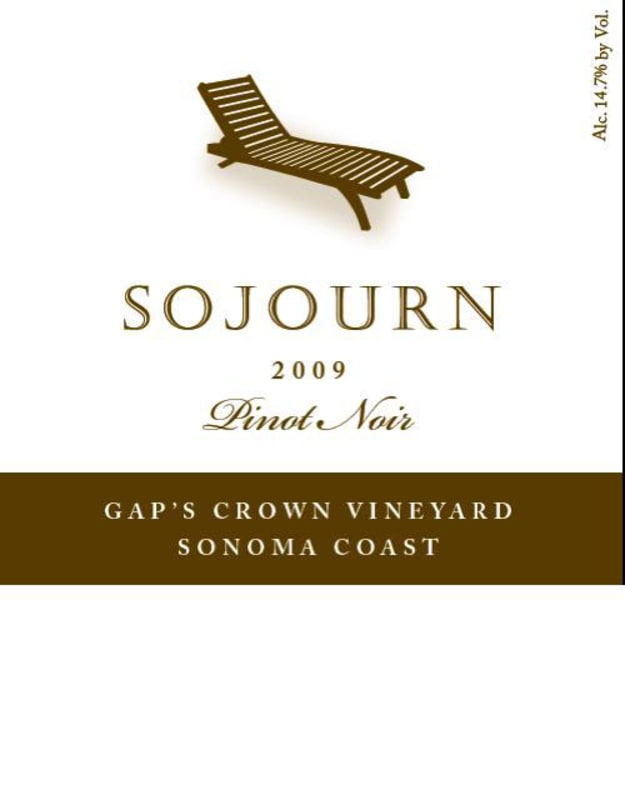
An up-and-coming hillside vineyard seen more and more in Sonoma is the Gap’s Crown Vineyard on the Sonoma Coast. The 2009 Pinot Noir Gap’s Crown Vineyard, made from some whole clusters, is one of the deeper, more saturated rubycolored Pinot Noirs from Sojourn. Very Burgundian, with deep raspberry, forest floor, and black cherry fruit as well as hints of earth and mineral, there is a sense of spring flowers as well in this complex, deep, rich, full-bodied Pinot Noir, which is stunning. It has loads of black and red fruits, and to me is the most complex of the Pinot Noirs in the Sojourn Cellars portfolio. It is also a blend of the more modern clones, 113, 114 and 828. Already drinking well, with lots of complexity, it should continue to do so for 7-8 more years.
-
Wine Spectator
Firm and concentrated, with complex dried berry, sage, fresh earth, forest floor, underbrush, anise and cedar notes, tightly bound but increasingly expansive and complex as the finish unfolds. Drink now through 2018.



Based in the town of Sonoma, Sojourn Cellars is a highly acclaimed winery specializing in the production of artisan Pinot noir and Cabernet Sauvignon wines.
We source fruit from celebrated vineyards in both Sonoma and Napa Counties, and we help direct farming operations to assure that our grapes are produced using world-class growing techniques. We consistently produce remarkable wines with a hands-off natural winemaking style that showcases the character and personality of the individual vineyards.
Sojourn feels passionate about creating high-quality wines and always being accessible to the people who buy and enjoy our wines. Sojourn offers seated tastings in a casual, yet sophisticated environment and prides itself on always putting the customer first.

Thin-skinned, finicky and temperamental, Pinot Noir is also one of the most rewarding grapes to grow and remains a labor of love for some of the greatest vignerons in Burgundy. Fairly adaptable but highly reflective of the environment in which it is grown, Pinot Noir prefers a cool climate and requires low yields to achieve high quality. Outside of France, outstanding examples come from in Oregon, California and throughout specific locations in wine-producing world. Somm Secret—André Tchelistcheff, California’s most influential post-Prohibition winemaker decidedly stayed away from the grape, claiming “God made Cabernet. The Devil made Pinot Noir.”

A vast appellation covering Sonoma County’s Pacific coastline, the Sonoma Coast AVA runs all the way from the Mendocino County border, south to the San Pablo Bay. The region can actually be divided into two sections—the actual coastal vineyards, marked by marine soils, cool temperatures and saline ocean breezes—and the warmer, drier vineyards further inland, which are still heavily influenced by the Pacific but not quite with same intensity.
Contained within the appellation are the much smaller Fort Ross-Seaview and Petaluma Gap AVAs.
The Sonoma Coast is highly regarded for elegant Pinot Noir, Chardonnay, and, increasingly, cool-climate Syrah. The wines have high acidity, moderate alcohol, firm tannin, and balanced ripeness.