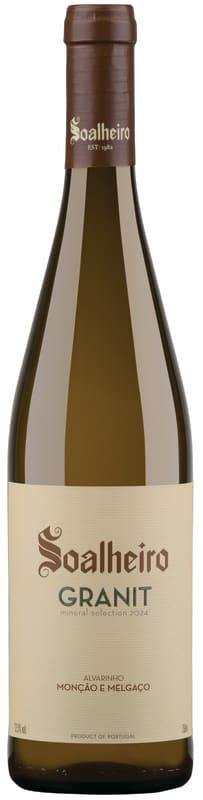


Winemaker Notes
With its mineral flavors and bracing acidity, Soalheiro Granit especially complements Mediterranean cuisine such as seafood, grilled fish, or oven-baked fatty fish. It also pairs well with white and smoked meats, mature cheeses, or delicate Asian dishes such as sushi or dumplings.
Professional Ratings
-
James Suckling
A mineral- and acid-driven wine with aromas of wet stones, slate, lemons and a hint of white peaches. Very fresh, with focused, linear acidity, flavors of fresh lemons and a bright, salty finish. From a high-elevation parcel. Drink or hold.
-
Robert Parker's Wine Advocate
The Alvarinho 2024 Granit comes from higher-altitude vines at around 400 meters above sea level. This results in the wine having more salinity and verticality because of the altitude and the granite soils (it wears the subtitle “Mineral Selection”). It fermented at a slightly higher temperature, avoiding the excessive aromatic intensity of the grape and giving a more austere profile, without malolactic, unoaked and with bâtonnage of three months to provide good integration of the acidity. This is usually among my favorite wines in the portfolio, and it is serious, elegant and sharp/mineral. It has moderate ripeness and 12.5% alcohol, a pH of 3.16 and 6.5 grams of acidity and is very tasty and with aging potential. And it's very nicely priced too.


Bright and aromatic with distinctive floral and fruity characteristics, Albariño has enjoyed a surge in popularity and an increase in plantings over the last couple of decades. Thick skins allow it to withstand the humid conditions of its homeland, Rías Baixas, Spain, free of malady, and produce a weighty but fresh white. Somm Secret—Albariño claims dual citizenship in Spain and Portugal. Under the name Alvarinho, it thrives in Portugal’s northwestern Vinho Verde region, which predictably, borders part of Spain’s Rías Baixas.

A cheerful, translucid, lemon-yellow and slightly pétillant white wine, Vinho Verde literally means ‘green wine’ and is named after the northwest Portugese region from which it originates. The ‘green’ in the name refers to the youthful state in which the wines are customarily released and consumed, not the color of the wine.
It is typically a blend of various percentages of Alvarinho, Loureiro, Trajadura, and Pedernã (Arinto). Following initial alcoholic fermentation, a natural, secondary malolactic conversion in cask produces carbon dioxide, giving Vinho Verde its charmingly light sparkle.