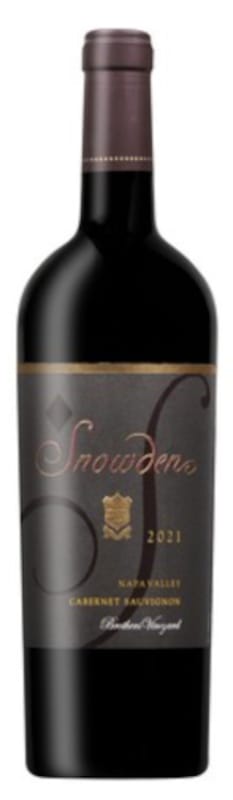


Winemaker Notes
With tiny berries and clusters, the 2021 Brothers is a dense, concentrated expression of this classic, two acre, Cabernet Sauvignon site. The bouquet greets you with brooding aromas of tobacco, violets and dried plums. The wine has energy and cut. Plums, black cherries, blood orange and graphite unfold on the palate and persist in chiselled precision. The structure of the Brothers Vineyard is always organized along a linear track. The 2021 is just so, but made more energetic with a citrus rind top note. If you choose to enjoy the wine immediately, please decant ahead of your meal. If you prefer to cellar your wines, the 2021 Brothers has decades of life ahead of it.
Blend: 99% Cabernet Sauvignon, 1% Petit Verdot
Professional Ratings
-
Robert Parker's Wine Advocate
Classic scents of cassis and pencil shavings mark the nose of Snowden's 2021 Cabernet Sauvignon Brothers Vineyard, which also includes 1% Petit Verdot. Despite being labeled at 15% alcohol, it comes across as balanced and well-proportioned, with ripe—but not overripe—flavors and tannins, a smooth, velvety mouthfeel and a lush, lingering finish. It's even reasonably priced by Napa Cab standards.
-
Vinous
The 2021 Cabernet Sauvignon Brothers Vineyard is dark and brooding in feel. Black cherry, plum, new leather, spice and espresso are front and center. Here, the fruit profile leans toward the darker end of the spectrum, and the oak imprint is quite a bit stronger. Rough, angular contours on the finish need time to meld together, but there is good substance throughout.
-
Wine Spectator
A fruit-driven, polished style, but without being bombastic, as red currant and black cherry fruit flavors lead off and then meld seamlessly with singed cedar, vanilla and tobacco hints, which gain more prominence through the finish. Should age nicely. Drink now through 2036. 332 cases made.


One of the most prestigious wines of the world capable of great power and grace, Napa Valley Cabernet is a leading force in the world of fine, famous, collectible red wine. Today the Napa Valley and Cabernet Sauvignon are so intrinsically linked that it is difficult to discuss one without the other. But it wasn’t until the 1970s that this marriage came to light; sudden international recognition rained upon Napa with the victory of the Stag’s Leap Wine Cellars 1973 Cabernet Sauvignon in the 1976 Judgement of Paris.
Cabernet Sauvignon undoubtedly dominates Napa Valley today, covering half of the land under vine, commanding the highest prices per ton and earning the most critical acclaim. Cabernet Sauvignon’s structure, acidity, capacity to thrive in multiple environs and ability to express nuances of vintage make it perfect for Napa Valley where incredible soil and geographical diversity are found and the climate is perfect for grape growing. Within the Napa Valley lie many smaller sub-AVAs that express specific characteristics based on situation, slope and soil—as a perfect example, Rutherford’s famous dust or Stags Leap District's tart cherry flavors.