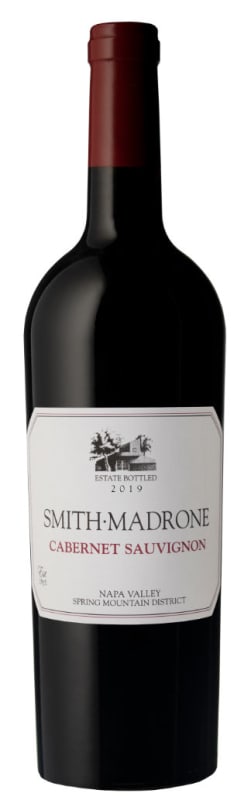


Winemaker Notes
The aroma of the 2019 Smith-Madrone Cabernet Sauvignon immediately hits you with a luxurious combination of blue and black fruit. Cassis, black cherry, marionberry and black plums dominate. Dig in a little deeper and you will find subtle hints of black pepper, graphite, black olives and a range of spices. An experienced taster should also be able to identify the signature quality that 12% Cabernet Franc lends to this wine’s seductive nose. Medium weight on the palate, this is an exceptionally lively and elegant wine, loaded with delicious dark fruit. It is bright, creamy and plush at mid-palate, then slowly tapers off to a long, lingering finish that is both succulent and zingy. It is a completely lovely wine that qualifies as serious fun in a glass. The Spring Mountain pedigree insures deliciously integrated tannins and a long life-span.
Blend: 83% Cabernet Sauvignon, 5% Merlot, 12% Cabernet Franc
Professional Ratings
-
Tasting Panel
This current release has settled into a sweet spot where oak, primary fruit, and tannin are all singing in harmony. Savory undertones emerge to lend enduringly intriguing complexities as it warms and breathes in the glass. Neither pushy nor reticent, heavy nor light, this is one of Napa's classiest Cabernets in a vintage that shows it in peak form.
-
Wine & Spirits
You can feel the dappled sunlight in this wine as the flavors shift from warm, sunny forest berries to cool forest-floor tannins. Those beautiful tannins coat the fruit in a drape of dark riches—espresso-roast coffee, redwood tea, smoke and madrone. Stu Smith has been farming the steep slopes of Spring Mountain without irrigation since 1971 (it’s not named Spring Mountain for nothing). This is pretty smart cabernet, especially at the price—a 2019 that should age well.
-
Wilfred Wong of Wine.com
COMMENTARY: The 2019 Smith Madrone Cabernet Sauvignon is powerful yet stylish. TASTING NOTES: Enjoy its aromas and flavors of ripe blackberries, dried earth, and oak with grilled, well-marbled ribeye. (Tasted: May 12, 2024, San Francisco, CA)
-
Wine Enthusiast
Good acidity and firm tannins combine for a grippy texture in this tangy, red-fruited wine made from the dry-farmed mountain property. Slightly lean red cherries and raspberries are accented with light herbal, toasty notes.
-
James Suckling
Aromas of cassis, currant leaf, pine needles, nut shell and cedar. Full-bodied and a little tight with raw but polished tannins and juicy dark fruit. Hints of spiced oak and leafy herbs at the end. Need some time to soften.


A noble variety bestowed with both power and concentration, Cabernet Sauvignon enjoys success all over the globe, its best examples showing potential to age beautifully for decades. Cabernet Sauvignon flourishes in Bordeaux's Medoc where it is often blended with Merlot and smaller amounts of some combination of Cabernet Franc, Malbecand Petit Verdot. In the Napa Valley, ‘Cab’ is responsible for some of the world’s most prestigious, age-worthy and sought-after “cult” wines. Somm Secret—DNA profiling in 1997 revealed that Cabernet Sauvignon was born from a spontaneous crossing of Cabernet Franc and Sauvignon Blanc in 17th century southwest France.

Above the town of St. Helena on the eastern slopes of the Mayacamas Mountains sits the Spring Mountain District.
A dynamic region, its vineyards, cut by numerous springs and streams, vary in elevation, slope and aspect. Soils differ throughout with over 20 distinct types inside of the 8,600 acres that define the appellation. Within that area, only about 1,000 are planted to vineyards. Predominantly farmed by small, independent producers, the region currently has just over 30 wineries.
During the growing season, late afternoon Pacific Ocean breezes reach the Spring Mountain vineyards, which sit at between 400 and 1,200 feet. Daytime temperatures during mid summer and early fall remain slightly cooler than those of the valley floor.
Spring Mountain soils—volcanic matter and sedimentary rock—create intense but balanced reds with lush and delicate tannins. The area excels with Bordeaux varieties such as Cabernet Sauvignon, Cabernet Franc and Merlot and in some cooler spots, Chardonnay.