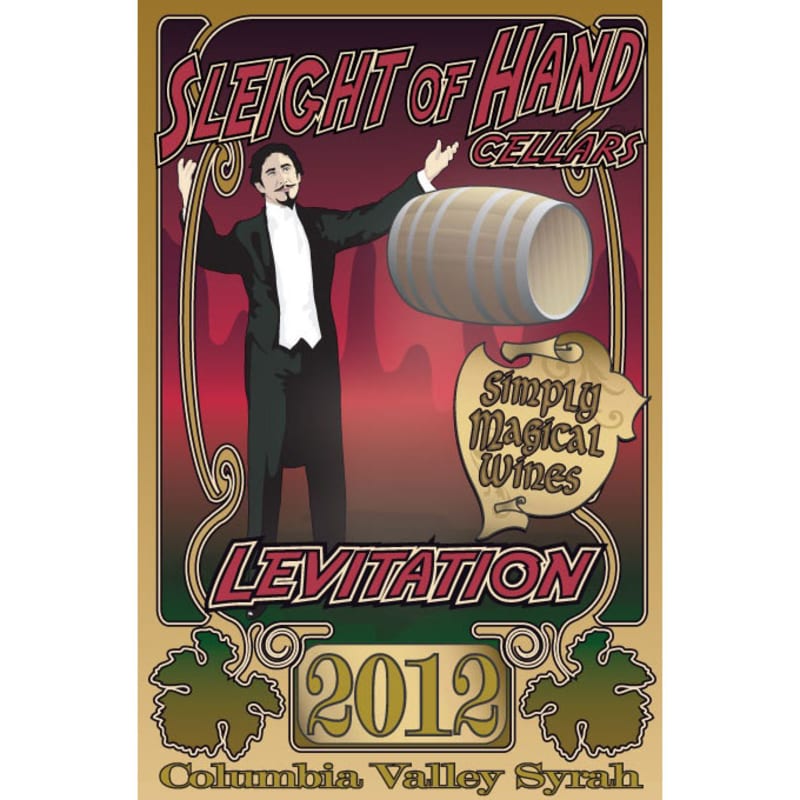

Winemaker Notes
Professional Ratings
-
Robert Parker's Wine Advocate
Kicking off the 2012s and my favorite vintage to date, the 2012 Syrah Levitation is a blockbuster-styled effort that possesses fantastic creme de cassis, blackberry, licorice, graphite and crushed flower-like aromas and flavors. Full bodied, balanced and awesomely textured on the palate, with integrated acidity and building, sweet tannin on the finish, this is the real deal and will dish out loads of pleasure over the coming 7-8 years, possibly longer.
-
Wine Enthusiast
Hailing mostly from renowned Les Collines (44%) and Lewis (41%) vineyards and rounded out by up-and-comer Stoney Vine, this wine isn’t fully ready to reveal its aromatic charms. Notes of dried herb, green olive, licorice, earth and boysenberry are out in front of brooding blue and red fruit. The flavors, however, are in full bloom, with palate-coating, focused and almost creamy cherry and plum notes that persist on the finish.


Marked by an unmistakable deep purple hue and savory aromatics, Syrah makes an intense, powerful and often age-worthy red. Native to the Northern Rhône, Syrah achieves its maximum potential in the steep village of Hermitage and plays an important component in the Red Rhône Blends of the south, adding color and structure to Grenache and Mourvèdre. Syrah is the most widely planted grape of Australia and is important in California and Washington. Sommelier Secret—Such a synergy these three create together, the Grenache, Syrah, Mourvedre trio often takes on the shorthand term, “GSM.”

A large and geographically diverse AVA capable of producing a wide variety of wine styles, the Columbia Valley AVA is home to 99% of Washington state’s total vineyard area. A small section of the AVA even extends into northern Oregon!
Because of its size, it is necessarily divided into several distinctive sub-AVAs, including Walla Walla Valley and Yakima Valley—which are both further split into smaller, noteworthy appellations. A region this size will of course have varied microclimates, but on the whole it experiences extreme winters and long, hot, dry summers. Frost is a common risk during winter and spring. The towering Cascade mountain range creates a rain shadow, keeping the valley relatively rain-free throughout the entire year, necessitating irrigation from the Columbia River. The lack of humidity combined with sandy soils allows for vines to be grown on their own rootstock, as phylloxera is not a serious concern.
Red wines make up the majority of production in the Columbia Valley. Cabernet Sauvignon is the dominant variety here, where it produces wines with a pleasant balance of dark fruit and herbs. Wines made from Merlot are typically supple, with sweet red fruit and sometimes a hint of chocolate or mint. Syrah tends to be savory and Old-World-leaning, with a wide range of possible fruit flavors and plenty of spice. The most planted white varieties are Chardonnay and Riesling. These range in style from citrus and green apple dominant in cooler sites, to riper, fleshier wines with stone fruit flavors coming from the warmer vineyards.