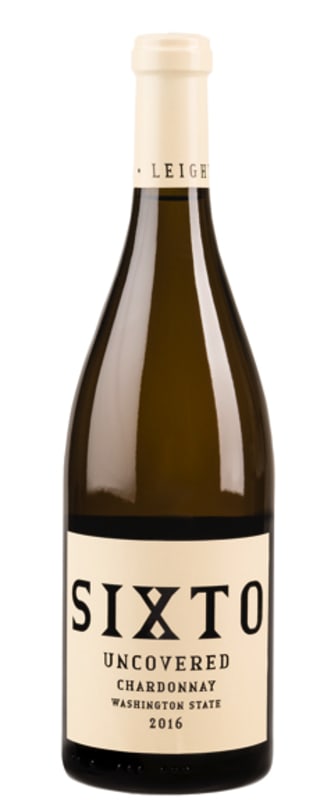


Winemaker Notes
This is what you get when you combine the three best Chardonnay vineyards in Washington State. Sumptuous and graceful, it gives up its flavors of guava, lemon curd, orange blossoms as the palate expands with more and more of the copious good stuff. Good. Compelling. So complete
Professional Ratings
-
Jeb Dunnuck
The 2016 Chardonnay Uncovered is another rich, medium to full-bodied effort from this team that has ample toast and orchard fruit-like aromas, a fleshy, supple texture, good acidity, and a clean finish. It’s well worth the going rate and has a great mix of both richness and freshness.
-
James Suckling
A blend of three mature plots, this has a fleshy and creamy peach core with a gentle almond edge to the nose. A fresh palate with underlying acidity that holds the finish in place. Tastes very complete.
-
Robert Parker's Wine Advocate
Coming from the three different vineyards of the range—Moxee, Frenchman Hills and Roza Hills—the 2016 Chardonnay Uncovered sees different climatic conditions in each location, which adds something different to the blend. The nose has a streak of finesse with fresh-cut apples, lemon blossom and lemon custard with a soft dustiness in the glass. The wine is full-bodied, rich and spicy on the palate, with balanced acidity, then is concentrated and a touch hot on the long finish. 2,362 cases were made.


One of the most popular and versatile white wine grapes, Chardonnay offers a wide range of flavors and styles depending on where it is grown and how it is made. While it tends to flourish in most environments, Chardonnay from its Burgundian homeland produces some of the most remarkable and longest lived examples. California produces both oaky, buttery styles and leaner, European-inspired wines. Somm Secret—The Burgundian subregion of Chablis, while typically using older oak barrels, produces a bright style similar to the unoaked style. Anyone who doesn't like oaky Chardonnay would likely enjoy Chablis.

An important winegrowing state increasingly recognized for its high-quality reds and whites, Washington ranks second in production in the U.S. after California. Washington wines continue to gain well-deserved popularity as they garner higher and higher praise from critics and consumers alike.
Washington winemakers draw inspiration mainly from Napa Valley, Bordeaux and the Rhône as well as increasingly from other regions like Spain and Italy. Most viticulture takes place on the eastern side of the state—an arid desert in the rain shadow of the Cascade mountains. Irrigation is made possible by the Columbia River. Temperatures are extreme, with hot and dry summers and cold winters, during which frost can be a risk.
Washington’s wine industry was initially built on Merlot, which remains an important variety to this day, despite having been overtaken in acreage planted by Cabernet Sauvignon and Syrah. Bordeaux blends and Rhône blends are common as well as single varietal bottlings. Washington reds tend to express a real purity of concentrated fruit. The best examples have a bold richness, seamless texture, plush or powdery tannins and flavors such as licorice, herb, forest floor, espresso and dark chocolate.
In terms of white wine from Washington state, Riesling is the state’s major success story, producing crisp, aromatic examples with plenty of stone fruit that range from bone dry to lusciously sweet. Chardonnay and Sauvignon Blanc perform nicely here as well, and Viognier is beginning to pick up steam.