
Winemaker Notes
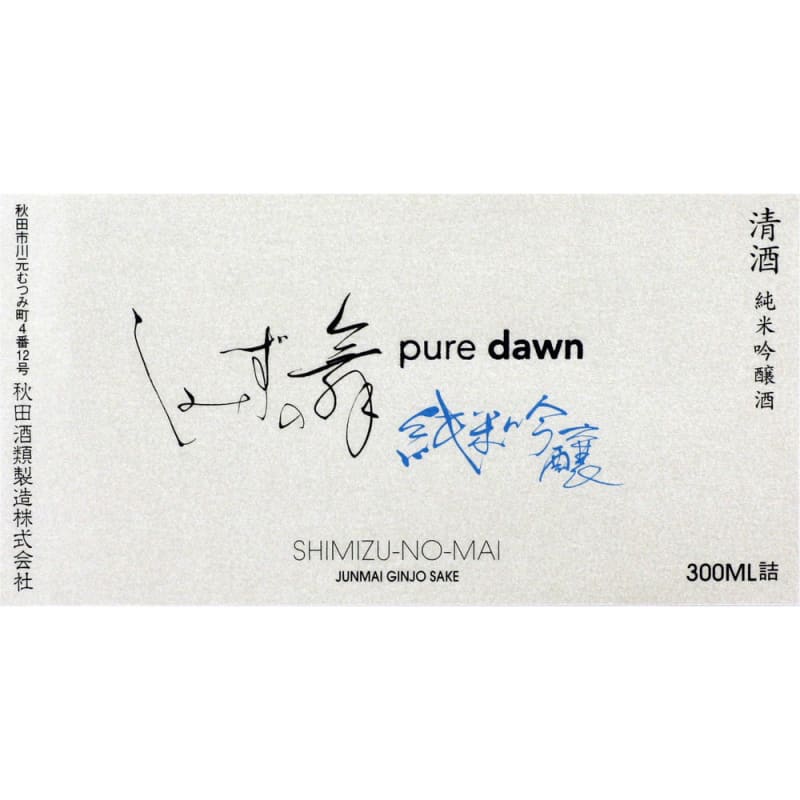
Shimizo-No-Mai Pure Dawn is clear in appearance. The aroma has hints of orange peel and light floral notes, with an underlying minerality. It's fresh and well-structured, with subtle notes of pear and Fuji apple. Creamy mouthfeel, finishes soft-sweet to dry.
Professional Ratings
-
Tasting Panel
Texturally broad and structured, this saké coats the mouth with lanolin, egg white, vanilla bean, and sassafras. Fresh, exotic earth tones and floral notes bloom with umami creaminess on the finish.


A notch above Junmai in its milling requirement, by definition Junmai Ginjo requires milling of 40% of the rice grain so that 60% of each grain remains. The categories of saké are established not by rice variety, but by the polishing or milling percentages. Junmai Ginjo is made up solely of water, koji mold, yeast and rice and is brewed without any additon of alcohol. This style goes well with fresh, lightly seasoned dishes such as sashimi, carpaccio or seared oysters.

The introduction of the waterwheel in the 17th century, which eliminated the need for the manual polishing of rice grains, allowed Japan to begin producing saké at an industrial level for its greater population. Today Japan remains at the cutting edge of technology in its brewing practices. However, the traditional methods of handcrafted, artisanal saké remain alive in smaller and often family-owned breweries. Many of these showcase local ingredients and focus on microclimates to make what is known as ‘jizake,’ or regional saké.