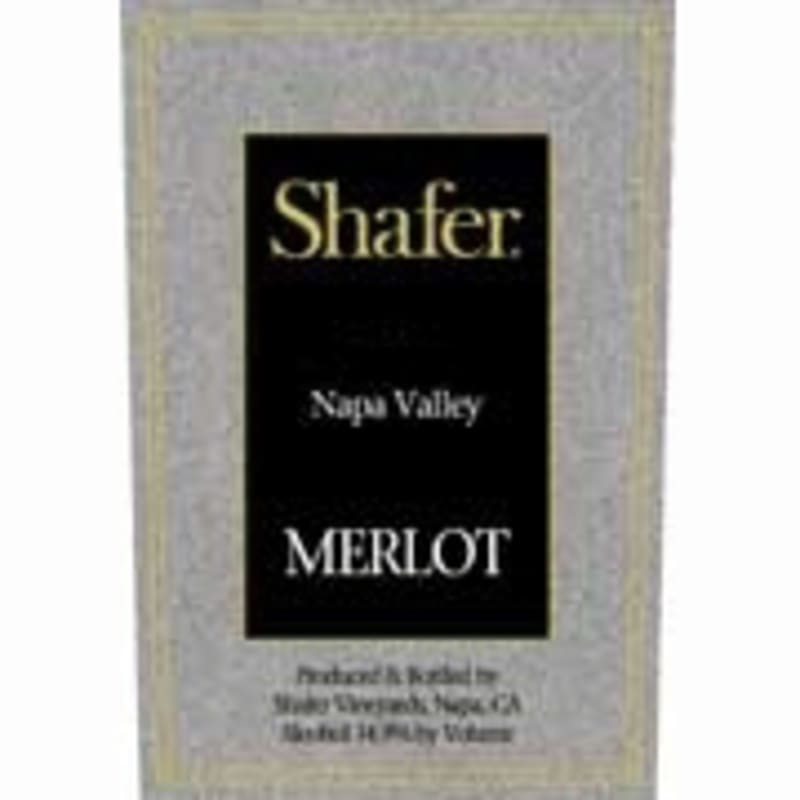

Winemaker Notes
Flatter Merlot's fruit by adding a similar element of fruit to poultry, pork and meat dishes (duck breast with dried cherry-Merlot sauce, roast chicken with cranberry-wild rice stuffing). Carmelized onions, roasted garlic and mushrooms are pleasant companions.
Blend: 84% Merlot, 10% Cabernet Sauvignon, 6% Malbec
Professional Ratings
-
Robert Parker's Wine Advocate
Starting with the Merlots, the 2010 Merlot (a blend of 84% Merlot, 10% Cabernet Sauvignon and 6% Malbec) is sensational. Its dense purple color is accompanied by gorgeous aromas of black fruits and chocolate, a sweetness to the tannin and length that almost makes a mockery of Merlots produced elsewhere in Napa, a voluminous, chewy texture and great elegance and purity. Shafer Vineyards appears to have the Midas touch with just about any fruit they receive. The killer 2010 Merlot may be the finest Merlot they have produced in 20-25 years. It should drink well for 10-15 years.
-
Wine Enthusiast
It’s important to not drink this Merlot right out of the bottle, because it’s pretty tannic, and thus it’s hard to appreciate the wine’s beautiful fruit. Give it some time in a decanter to reveal the complex flavors of blackberry, cherry jam, grilled prosciutto, cassis, red licorice, cola and spice. It’s unclear if this will age for a long time, but it can certainly be enjoyed over the next five years.
-
Wine Spectator
Supple and rich, with ripe cherry and toasty oak aromas that lead to soft and elegant currant, dried herb and mocha flavors. Drink now through 2018. 7,900 cases made.



Shafer Vineyards has produced classic Napa Valley wines for more than 40 years.
Shafer’s wines, including its signature Cabernet Sauvignon, Hillside Select, are found in collectors’ cellars and on wine lists in top luxury hotels and restaurants throughout the world.
The vineyard and cellar teams, led by winemaker Elias Fernandez, cultivate more than 200 acres of Shafer-owned vineyards, sources for the winery's celebrated Red Shoulder Ranch Chardonnay, TD-9, One Point Five, Relentless, and Hillside Select.
The winery has a decades-long commitment to sustainability. Beginning in the 1980s Shafer embraced farming techniques that eliminate insecticides and herbicides, and carefully conserve water resources. In 2004 Shafer became the first winery in the U.S. to go 100% solar.

As Napa Valley’s third most planted grape, Napa Valley Merlot shows time and time again its potential to produce exceptional results. Napa’s vaunted combination of climate, soil and the human factor of winemaking expertise lead to big, ripe, cellar-worthy and world-class versions.
Whether made by itself in single varietal bottlings or as an important role in Bordeaux Blends, Merlot continues a prominent role in this famous region. While Cabernet typically takes the lead role, Merlot’s contribution—even at 10% to 20% or so—is significant indeed. Often described as “the flesh on Cabernet’s bones,” Merlot lends a soft, round and plush character that beautifully complements Cabernet’s linear, full-throttle structure. Its flavors of plums plus subtle herbs and mint also dovetail nicely with Cabernet’s blackberry and cassis.