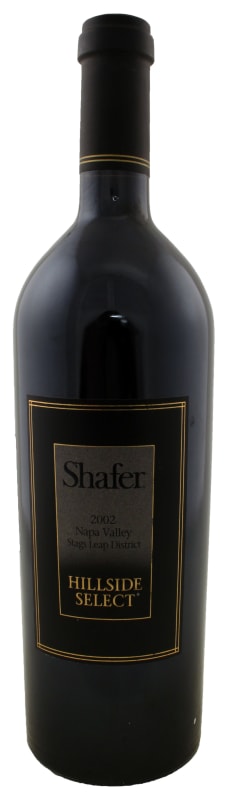


Winemaker Notes
Professional Ratings
-
Robert Parker's Wine Advocate
One of the world’s greatest wines year in and year out is Shafer’s Cabernet Sauvignon Hillside Select. The 2002 was a candidate for perfection the first time I tasted it. The estate keeps this cuvee 32 months in 100% new French oak, so I had a number of chances to see it from barrel. Moreover, I purchased the wine for my own cellar and have had it at least a half dozen times since bottling, and it just gets more profound with each sip. This wine is beyond belief for how it balances its extraordinary richness, purity of personality, and the elegance and finesse of the Stags Leap District with massive cassis fruit, spring flowers, toasty oak and earth. The wine is fabulously concentrated, multidimensional and built like a skyscraper, yet nothing is out of place. The wood, alcohol, acidity and tannin are all in perfect balance. This offering is a tribute to the greatness of Napa Valley, which was recognized by men and women hundreds of years ago, and to the modern day genius of the Shafer family. This 2002 has 50 years of life ahead of it - but why wait!
-
Wine Enthusiast
The impression is of a young, tannicly closed but enormously promising Cabernet. Floods the mouth with dramatic black currant, cherry and chocolate flavors, masses of toasty, caramelized new oak, and a rich, minerally earthiness. For all the power, there’s elegance and refinement.
-
Wine Spectator
Very young, rich and extracted, this boasts a dense, powerful presence and tannic core flavors of blackberry, black licorice, cedar, mocha, roasted coffee, loamy earth, vanilla and dried herb. A tour de force of flavor, ending with ripe, muscular tannins.
-
Wine & Spirits
The vines that produced John Shafer's first cabernet in 1978 now form the core of Hillside Select, from the small knolls surrounding the winery. They grow in a sweet spot of the Stags Leap District, farmed since the mid-eighties by Doug Shafer and winemaker Elias Fernandez; since 1991, they have consistently produced one of the top wines of the Napa Valley. Those vines yielded an intensely structured 2002, posh with supple cabernet fruit and dark minerality in the tannins. It feels sleek even as the delicious berry flavors burst out of the tannins and last.
-
Connoisseurs' Guide
In what has proven to be a sometimes difficult year, Shafer shines once again with this spectacular, immensely extracted Cabernet . Underpinned by a wealth of concentrated cassis-like fruit, shot through with rich, loamy spice and awash in altogether extravagant oak, it is a wine that does not speak in hushed tones but comes with plenty of drama. For all of its very considerable weight and undisguised power, it still shows a fine sense of overall balance, and the evident tannins and heat that emerge in its very long finish are beautifully buffered by its deep and wholly compelling fruit.


A noble variety bestowed with both power and concentration, Cabernet Sauvignon enjoys success all over the globe, its best examples showing potential to age beautifully for decades. Cabernet Sauvignon flourishes in Bordeaux's Medoc where it is often blended with Merlot and smaller amounts of some combination of Cabernet Franc, Malbecand Petit Verdot. In the Napa Valley, ‘Cab’ is responsible for some of the world’s most prestigious, age-worthy and sought-after “cult” wines. Somm Secret—DNA profiling in 1997 revealed that Cabernet Sauvignon was born from a spontaneous crossing of Cabernet Franc and Sauvignon Blanc in 17th century southwest France.

Legend has it that quick and nimble stags would escape the indigenous hunters of southern Napa Valley through the landmark palisades that sit just northeast of the current city of Napa. As a result, the area was given the name, Stags Leap. While its grape-growing history dates back to the mid-1800s, winemaking didn’t really take off until the mid-1970s after a small but pivotal blind tasting called the Judgement of Paris.
When a 1973 Stag’s Leap Wine Cellars Cabernet Sauvignon won first place against its high-profile Bordeaux contenders, like Chateau Mouton Rothschild and Chateau Haut-Brion, international attention to the Stags Leap District of Napa Valley escalated rapidly.
The vineyards in this one-of-a-kind wine growing region receive hot afternoon air reflecting off of its eastern palisade formation. In combination with the cool evening breezes from the San Pablo Bay just south, this becomes an optimal environment for grape growing. While many varieties could thrive here, Cabernet Sauvignon and Merlot dominate with virtually no others, save for a spot or two of Syrah.
Stags Leap soils—eroded volcanic and old river sediments—encourage well established root systems and result in complex, terroir-driven wines. Stags Leap District reds have a distinct sour cherry and black berry character with baking spice and dried earth aromas, and supple tannins.