
Winemaker Notes
Professional Ratings
-
Robert Parker's Wine Advocate
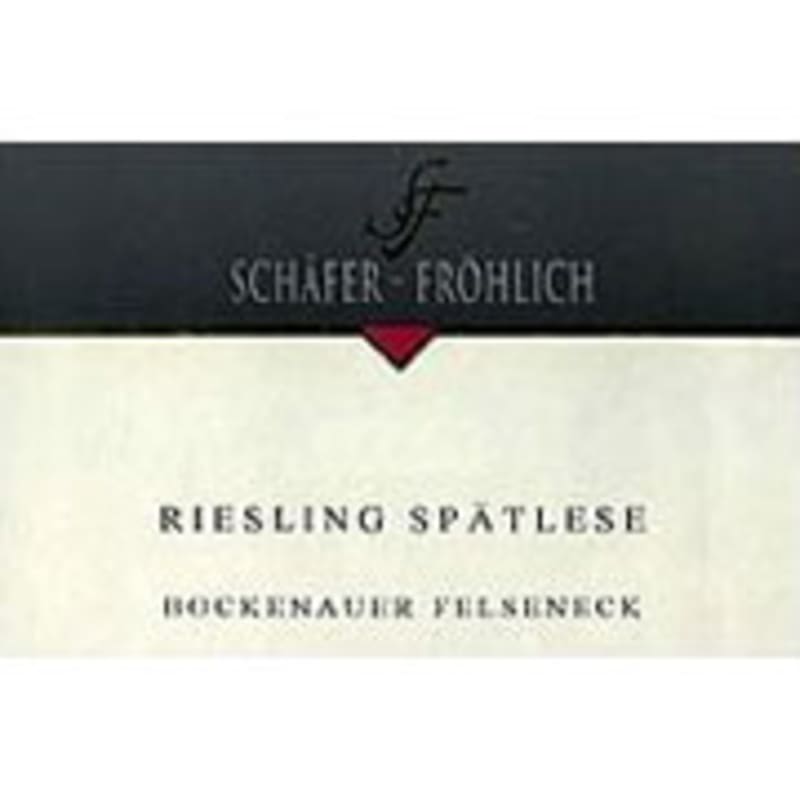
While the Halenberg Spatlese was fermented with selected yeasts, the gauze-like shroud of youthful yeastiness and CO2 give away origins of the 2004 Bockenauer Felseneck Riesling Spatlese A.P. #17 in spontaneous (and, says Frohlich, “endlessly long”) fermentation. This wine is from the highest portions of the towering Felseneck vineyard. The nose clears to reveal yellow and red plum aromas. The palate impression is one of astonishingly vivid fresh plum, dripping with fresh lime, but without the obvious verve of the Halenberg. The mineral expression is a suffusion of salts and infusion of shrimp shells rather than the dynamically diverse range exhibited in the Halenberg. The balance is just extraordinarily poised (despite an unbelievably high nearly 90 grams residual sugar), and the finish pure, sedate, yet endlessly refreshing and satisfying.


Riesling possesses a remarkable ability to reflect the character of wherever it is grown while still maintaining its identity. A regal variety of incredible purity and precision, this versatile grape can be just as enjoyable dry or sweet, young or old, still or sparkling and can age longer than nearly any other white variety. Somm Secret—Given how difficult it is to discern the level of sweetness in a Riesling from the label, here are some clues to find the dry ones. First, look for the world “trocken.” (“Halbtrocken” or “feinherb” mean off-dry.) Also a higher abv usually indicates a drier Riesling.

SSR140313_2004 Item# 140313