

Winemaker Notes
Professional Ratings
-
Robert Parker's Wine Advocate
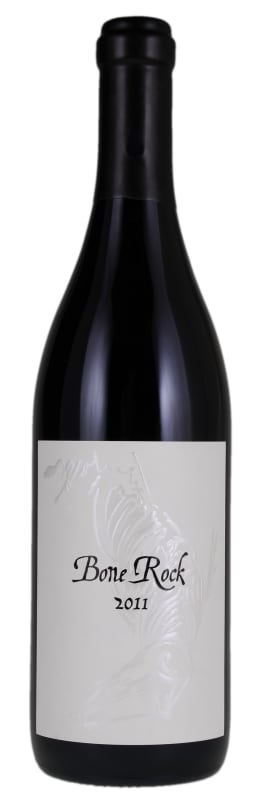
Decidedly cool climate in character, the 2011 James Berry Vineyard Bone Rock comes from steep, terraced plots of old head trained Syrah vines that, in 2011, wasn’t harvested until November. Co-fermented with a splash of Roussanne and Mourvedre, it’s a spectacular effort that makes the most of the cool, long growing season. It’s also the most long term prospect in the lineup. Offering up a tight, Cornas-like bouquet of black and blue fruits, white pepper, spring flowers and salty minerality, it is full-bodied, beautifully concentrated and seamless on the palate, with ultra-fine tannin and building richness that only starts to develop with a healthy decant. It’s a gorgeous wine, yet needs to be forgotten for at least 4-5 years. It should drink nicely through 2031. Rating: 98+
-
Wine Spectator
Classic notes of pepper and wild berry give this sturdy red plenty of backbone and tension. The tannins are more muscular and gripping than in recent vintages, giving the flavors traction and length. Drink now through 2026.


With bold fruit flavors and accents of sweet spice, Grenache, Syrah and Mourvèdre form the base of the classic Rhône Red Blend, while Carignan, Cinsault and Counoise often come in to play. Though they originated from France’s southern Rhône Valley, with some creative interpretation, Rhône blends have also become popular in other countries. Somm Secret—Putting their own local spin on the Rhône Red Blend, those from Priorat often include Merlot and Cabernet Sauvignon. In California, it is not uncommon to see Petite Sirah make an appearance.

Paso Robles has made a name for itself as a source of supple, powerful, fruit-driven Central Coast wines. But with eleven smaller sub-AVAs, there is actually quite a bit of diversity to be found in this inland portion of California’s Central Coast.
Just east over the Santa Lucia Mountains from the chilly Pacific Ocean, lie the coolest in the region: Adelaida, Templeton Gap and (Paso Robles) Willow Creek Districts, as well as York Mountain AVA and Santa Margarita Ranch. These all experience more ocean fog, wind and precipitation compared to the rest of the Paso sub-appellations. The San Miguel, (Paso Robles) Estrella, (Paso Robles) Geneso, (Paso Robles) Highlands, El Pomar and Creston Districts, along with San Juan Creek, are the hotter, more western appellations of the greater Paso Robles AVA.
This is mostly red wine country, with Cabernet Sauvignon and Zinfandel standing out as the star performers. Other popular varieties include Merlot, Petite Sirah, Petit Verdot, Syrah, Grenache and Rhône blends, both red and white. There is a fairly uniform tendency here towards wines that are unapologetically bold and opulently fruit-driven, albeit with a surprising amount of acidity thanks to the region’s chilly nighttime temperatures.