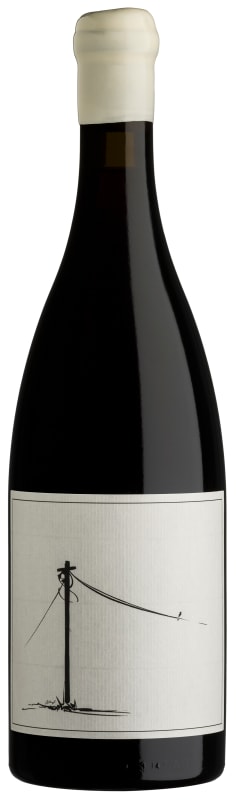


Winemaker Notes
Deep, dark and very serious on the nose, boasting layers of cranberries, dried strawberries, red currants and subtle perfumed hints of rose petals and violets. While the aromatics might be slightly shyer than usual, the palate displays a wonderfully toasty, savory depth of red and black berry fruits, cherry cordial, wild strawberry and a sappy, spicy finish. There is plenty of depth with supporting structure but also an accessibility with a delicious dark fruited opulence.
Blend: 93% Cinsault, 7% Syrah
Professional Ratings
-
Vinous
The 2021 Follow The Line comes from 40-years-old Cinsault vines aged in three oak foudres. It has a quite an elegant, red berry fruit nose with touches of rooibos and bergamot, very well defined and focused. The palate has an understated intensity, fine acidity and is nicely structured with gentle grip, sappy with allspice and sage towards the persistent finish. This will be difficult to resist in its youth. Wonderful.
-
Robert Parker's Wine Advocate
Slightly darker than the previous vintage, the 2021 Follow The Line displays bright, crunchy red fruit essences with dusty potpourri. Medium-bodied and with zesty, bright acidity, the mouthfeel is pure and crystalline with fresh cherries and a balanced structure that beams with a bright, succulent finish. It's incredibly food friendly, while the nose begs me back for more. With beautiful wines like this, one can easily see why South African Cinsault is so attractive yet admired by few and still underappreciated by many.


With bold fruit flavors and accents of sweet spice, Grenache, Syrah and Mourvèdre form the base of the classic Rhône Red Blend, while Carignan, Cinsault and Counoise often come in to play. Though they originated from France’s southern Rhône Valley, with some creative interpretation, Rhône blends have also become popular in other countries. Somm Secret—Putting their own local spin on the Rhône Red Blend, those from Priorat often include Merlot and Cabernet Sauvignon. In California, it is not uncommon to see Petite Sirah make an appearance.

With an important wine renaissance in full swing, impressive red and white bargains abound in South Africa. The country has a particularly long and rich history with winemaking, especially considering its status as part of the “New World.” In the mid-17th century, the lusciously sweet dessert wines of Constantia were highly prized by the European aristocracy. Since then, the South African wine industry has experienced some setbacks due to the phylloxera infestation of the late 1800s and political difficulties throughout the following century.
Today, however, South Africa is increasingly responsible for high-demand, high-quality wines—a blessing to put the country back on the international wine map. Wine production is mainly situated around Cape Town, where the climate is generally warm to hot. But the Benguela Current from Antarctica provides brisk ocean breezes necessary for steady ripening of grapes. Similarly, cooler, high-elevation vineyard sites throughout South Africa offer similar, favorable growing conditions.
South Africa’s wine zones are divided into region, then smaller districts and finally wards, but the country’s wine styles are differentiated more by grape variety than by region. Pinotage, a cross between Pinot Noir and Cinsault, is the country’s “signature” grape, responsible for red-fruit-driven, spicy, earthy reds. When Pinotage is blended with other red varieties, like Cabernet Sauvignon, Merlot, Syrah or Pinot Noir (all commonly vinified alone as well), it is often labeled as a “Cape Blend.” Chenin Blanc (locally known as “Steen”) dominates white wine production, with Chardonnay and Sauvignon Blanc following close behind.