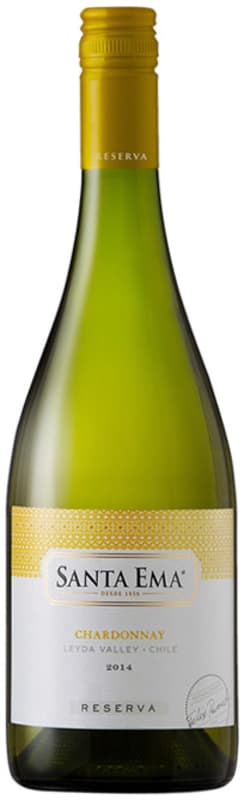


Winemaker Notes
Ideal to go with oily fish and sauces, seafood and grilled crab. Also ideal for white meat and mature cheeses.
Professional Ratings
-
Wine Spectator
Ripe and rich, with apple tart, baked pear and lemon meringue flavors, backed by plenty of fresh acidity. The buttery finish is long and well-spiced.
-
Wilfred Wong of Wine.com
An impressive effort, the zesty 2014 Santa Ema Reserva Chardonnay makes its way onto the palate with fine richness and excellent fruit ripeness. The wine's ripe apple and light touch of oak make it delicious treat. Pair it with steamed crab. (Tasted: September 27, 2017, San Francisco, CA)



Vinos Santa Ema is, hands-down, one of the best value/quality brands from Chile,
offering one of strongest quality-to-price wine brands in the world today. Santa Ema’s founding
Pavone family trace their history in Chile back to 1917 when they first came to the region as
grape farmers. Nearly 100 years and four generations of hands-on experience gives Santa Ema
a deep understanding of the Maipo Valley’s unique terroir. The family has established a 500 acre viticultural ‘path’ from the Andes Mountains to the Pacific Ocean, featuring the best terroir from each zone of Maipo: Alt a, Medio and Costa (Leyda). Extensive and selective vineyard ownership allows for creativity and innovation in the vineyards and winery, while guaranteeing quality control. The result is a collection of generous, elegant, regionally distinct wines that overdeliver. Winemaking: The portfolio commences with the excellent value offering, Select Terroir Reserva, which offers excellent fruit concentration, purity of its origin and unmistakable varietal typicity. The next tier up is Sant a Ema’s Reserva/Gran Reserva range. This is the winery’s most traditional and best known collection. Consistently awarded with medals and scores, including a coveted spot on the Wine Spectator Top 100. Perfect harmony and complexity are achieved through delicate barrel aging plus bottle aging. The Am plus line plays on the Latin word for ‘important, sophisticated, distinguished and honorable’. Amplus wines represent the union of tradition and modernity. These are exciting wines with tremendous complexity and elegance.

One of the most popular and versatile white wine grapes, Chardonnay offers a wide range of flavors and styles depending on where it is grown and how it is made. While it tends to flourish in most environments, Chardonnay from its Burgundian homeland produces some of the most remarkable and longest lived examples. California produces both oaky, buttery styles and leaner, European-inspired wines. Somm Secret—The Burgundian subregion of Chablis, while typically using older oak barrels, produces a bright style similar to the unoaked style. Anyone who doesn't like oaky Chardonnay would likely enjoy Chablis.

An officially recognized sub-zone in the southern part of the San Antonio Valley, the Leyda Valley was the original settlement of the wine pioneers who came to the area in the 1990s. They were in search of cooler and wetter growing conditions—as compared to more eastern, drier and often warmer locations.
Planting, which began only in the late 1990s, focused on Sauvignon blanc, Chardonnay, Pinot noir and some limited spots for Syrah. The area continues to receive well-earned accolades for wines of these varieties.