


Winemaker Notes
The warm weather in the last part of the 2021 vintage gave Barbera a potent, powerful frame on which hang the aromas and flavors of blackberries, blueberries, spice and earth notes. The vibrant acidity keeps the wine light on its feet, dancing on the palate, where the flavors of black stone fruits and black raspberries envelop the taste buds. There are notes of tannins from the tonneaux, which give a bit of structure but are in no way dominant. The finish has notes of wood, minerals and a long fade that lingers in the mouth. Vibrant, fresh, crackling with the energy of ripe black fruits.
Professional Ratings
-
Robert Parker's Wine Advocate
Starting with thick concentration and inky darkness, the Luciano Sandrone 2021 Barbera d'Alba has cooked fruit aromas and some savory tones too, such as leather, spice and a hint of dusty licorice root. The style is big, and this wine is conventional with big juicy sensations. It's all very elaborate for a Barbera d'Alba, but we are talking about a vintage that naturally delivers extra concentration.
-
Wine Enthusiast
Enticing aromas of tart plums, boysenberries and wildflowers lift from the glass of this energetic and singular Barbera. The fleshy palate is driven by tart blue and black fruits that yield mixed spices and mouthwatering acidity on the finish.
-
Jeb Dunnuck
The 2022 Barbera D’Alba offers a more luxurious, oak-spiced profile in its notes of toasted cedar, baked plum, vanilla beans, and violets. Full-bodied, plush, ripe, and long, it’s going to take time to integrate.
-
James Suckling
This is very attractive with fresh dark and blue fruit together with hints of violets, dried citrus peel and cocoa, following through a medium-bodied, textured and sleek palate with crunchy acidity and vibrant juiciness to the fruit.


Luciano Sandrone is one of the most iconic producers in Barolo, and his is both a well known and extraordinary story. He started to learn viticulture at the age of 14 or 15, and after years of work as a cellarman he depleted his life savings and purchased his first vineyard on the Cannubi hill in 1977, though he could only manage his land on the weekends while he continued to work. He made his first vintage in 1978, in the garage of his parents, and then spent years refining his ideas about how to make a wine of distinction and utmost quality that respected the traditions of Barolo while incorporating new ideas and understanding about viticulture and vinification. He made every vintage until 1999 at home, until the winery he constructed in 1998 was ready for use.
Sandrone's wines are sometimes described as straddling the modern and traditional styles in the region: elegant, attractive and easy to appreciate right from their first years in bottle, but with no less power and structure than traditional Barolos. Along with the extremely low yields in the vineyard and an obsessive attention to training, pruning and harvesting, Sandrone has a very rational approach in the cellar. This approach, however, is also unique and outside of simple classification: Sandrone subjects his wines to medium-length maceration period, shorter than traditional, but makes limited use of new oak in the maturation process, which takes place in 500 liter tonneaux, all signs of a more traditional approach in the cellar. The entire range of wines, all limited in production, are jewels of impeccably balanced concentration and precision, and the ability to age for long periods of time.

Friendly and approachable, Barbera produces wines in a wide range of styles, from youthful, fresh and fruity to serious, structured and age-worthy. Piedmont is the most famous source of Barbera; those from Asti and Alba garner the most praise. Barbera actually can adapt to many climates and enjoys success in some New World regions. Somm Secret—In the past it wasn’t common or even accepted to age Barbera in oak but today both styles—oaked and unoaked—abound and in fact most Piedmontese producers today produce both styles.

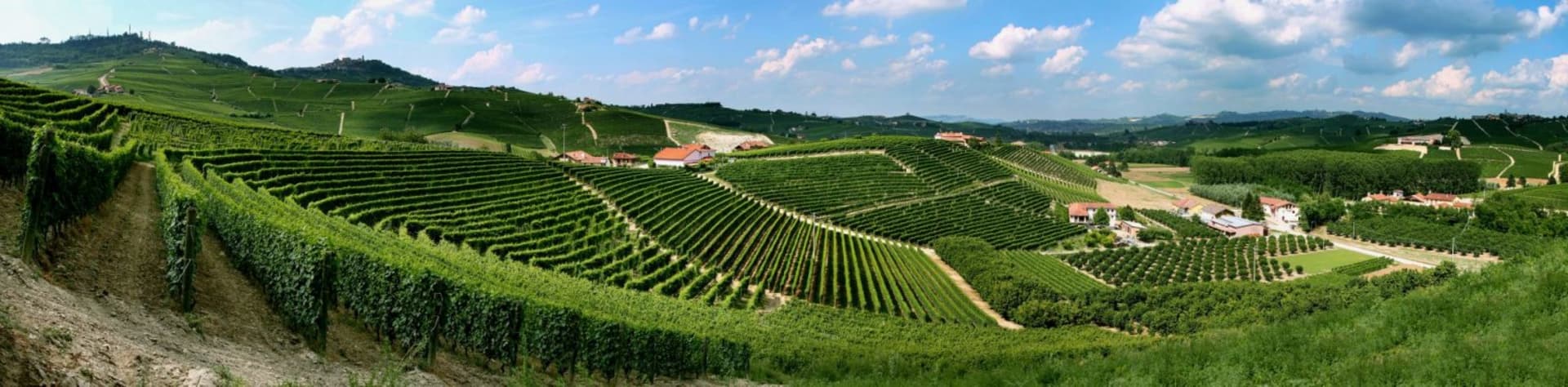
An historic village situated right in between the famous regions of Barolo and Barbaresco, Alba is also the name for the larger wine region surrounding the village.
In a sense, “Alba” is a catch-all phrase, and includes the declassified Nebbiolo wines made in Barolo and Barbaresco, as well as the Nebbiolo grown just outside of these regions’ borders. In fact, Nebbiolo d’Alba is a softer, less tannic and more fruit-forward wine ready to drink within just a couple years of bottling. It is a great place to start if you want to begin to understand the grape. Likewise, the even broader category of Langhe Nebbiolo offers approachable and value-driven options as well.
Barbera, planted alongside Nebbiolo in the surrounding hills, and referred to as Barbera d’Alba, takes on a more powerful and concentrated personality compared to its counterparts in Asti.
Dolcetto is ubiquitous here and, known as Dolcetto d'Alba, can be found casually served alongside antipasti on the tables of Alba’s cafes and wine bars.
Not surprisingly, given its location, Alba is recognized as one of Italy’s premiere culinary destinations and is the home of the fall truffle fair, which attracts visitors from worldwide every year.