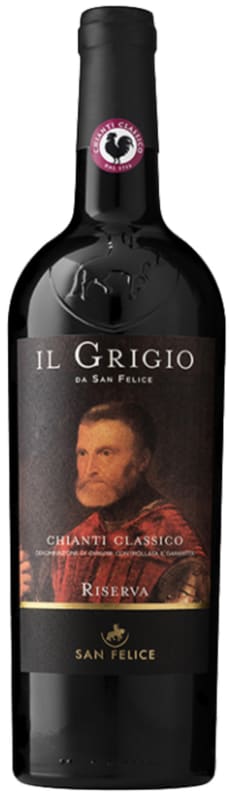


Winemaker Notes
Deep ruby red color. The nose is intense and persistent with the typical notes of sweet violet and wild red berries. An austere, full-bodied wine, with succulent tannins and fresh acidity. Enriched with an aromatic complexity that originates from a delicate dosing of wood.
Professional Ratings
-
Decanter
Few red wines can match Chianti Classico at its best for seemingly effortless class and refinement, and in that sense this subtle, softly stated 2015 Riserva doesn't disappoint. It's dark but not opaque in color, with a fine weave of aroma which combines elegant redcurrant and pomegranate fruits with scents of leather and polished antique wood. It's a lively, lithe midweight, vivid with curranty acidity and lent gastronomic textures by its brisk, ample yet well-rounded tannins. Two years in oak lend a further aromatic grain without any obvious sweetening or toastiness. If you like this wine on glass one, you'll love it by glass three: few of our top twenty choices are more drinkable.
-
James Suckling
Another Chianti Classico Riserva that shows such purity of fruit, with brambleberries, blackcurrants, morello cherries, dark plums and a dash of dried herbs. Loads of fresh fruit on the palate that’s set across a frame of pretty acidity and a web of finely wrought tannins. A chewy yet taut finish. Drink in 2022.
-
Robert Parker's Wine Advocate
The 2015 Chianti Classico Riserva Il Grigio is one of my favorite wines among this group of new releases from San Felice. That low price is one reason. The wine exhibits a very lively and juicy quality of primary fruit that gives it that extra edge. Dark cherry and plum are followed up by leather, tar, licorice and grilled herb. This is a great near or medium-term drinking choice. With 260,000 bottles made, this wine should be easy to locate.
Rating: 92+ -
Wine Spectator
Aromas of cherry, plum, earth and mineral indicate complexity right off the bat. The center is rich and packed with ripe fruit, while the muscular finish winds down slowly, showing elements of mineral, tar and tobacco. Serious, and should age well. Best from 2021 through 2032.


Among Italy's elite red grape varieties, Sangiovese has the perfect intersection of bright red fruit and savory earthiness and is responsible for the best red wines of Tuscany. While it is best known as the chief component of Chianti, it is also the main grape in Vino Nobile di Montepulciano and reaches the height of its power and intensity in the complex, long-lived Brunello di Montalcino. Somm Secret—Sangiovese doubles under the alias, Nielluccio, on the French island of Corsica where it produces distinctly floral and refreshing reds and rosés.

One of the first wine regions anywhere to be officially recognized and delimited, Chianti Classico is today what was originally defined simply as Chianti. Already identified by the early 18th century as a superior zone, the official name of Chianti was proclaimed upon the area surrounding the townships of Castellina, Radda and Gaiole, just north of Siena, by Cosimo III, Grand Duke of Tuscany in an official decree in 1716.
However, by the 1930s the Italian government had appended this historic zone with additonal land in order to capitalize on the Chianti name. It wasn’t until 1996 that Chianti Classico became autonomous once again when the government granted a separate DOCG (Denominazione di Origine Controllata e Garantita) to its borders. Ever since, Chianti Classico considers itself no longer a subzone of Chianti.
Many Classicos are today made of 100% Sangiovese but can include up to 20% of other approved varieties grown within the Classico borders. The best Classicos will have a bright acidity, supple tannins and be full-bodied with plenty of ripe fruit (plums, black cherry, blackberry). Also common among the best Classicos are expressive notes of cedar, dried herbs, fennel, balsamic or tobacco.