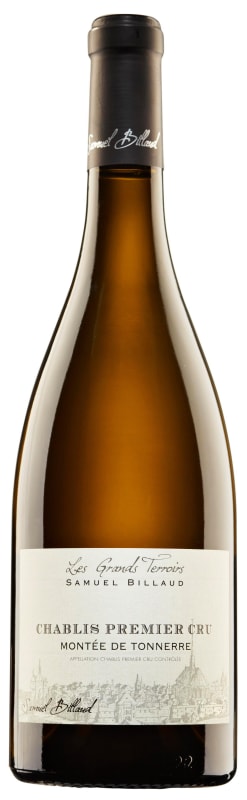


Winemaker Notes
"Minerality and salinity define this premier cru that could be a grand cru. Perfect with grilled or poached fish, eggs cooked in white wine or goat cheese and salad."
Professional Ratings
-
Decanter
This hails from two parcels - one in Chapelots, the other in Montée de Tonnerre itself - and sees 20% wood ageing, in line with Samuel Billaud's policy of allowing the vineyard to express itself. Waxy, bready and savoury, with citrus fruit purity and commendable focus and freshness for the vintage. You'd never guess this came from a warm, south-facing site.
-
Jasper Morris
A pure primrose yellow, with a flamboyant bouquet, ripe but not heavy. There is significant youthful astringency (not in itself a negative for future growth) with a touch of citrus zest. More white fruit than yellow, really quite persistent.
-
Robert Parker's Wine Advocate
The 2018 Chablis 1er Cru Montée de Tonnerre offers up aromas of crisp orchard fruit, honeycomb, pear and dried white flowers, followed by a medium to full-bodied, bright and incisive palate with a delicately textural attack and a tightly wound core. Still youthfully reserved, this vibrant wine will reward a little bottle age.


One of the most popular and versatile white wine grapes, Chardonnay offers a wide range of flavors and styles depending on where it is grown and how it is made. While it tends to flourish in most environments, Chardonnay from its Burgundian homeland produces some of the most remarkable and longest lived examples. California produces both oaky, buttery styles and leaner, European-inspired wines. Somm Secret—The Burgundian subregion of Chablis, while typically using older oak barrels, produces a bright style similar to the unoaked style. Anyone who doesn't like oaky Chardonnay would likely enjoy Chablis.

The source of the most racy, light and tactile, yet uniquely complex Chardonnay, Chablis, while considered part of Burgundy, actually reaches far past the most northern stretch of the Côte d’Or proper. Its vineyards cover hillsides surrounding the small village of Chablis about 100 miles north of Dijon, making it actually closer to Champagne than to Burgundy. Champagne and Chablis have a unique soil type in common called Kimmeridgian, which isn’t found anywhere else in the world except southern England. A 180 million year-old geologic formation of decomposed clay and limestone, containing tiny fossilized oyster shells, spans from the Dorset village of Kimmeridge in southern England all the way down through Champagne, and to the soils of Chablis. This soil type produces wines full of structure, austerity, minerality, salinity and finesse.
Chablis Grands Crus vineyards are all located at ideal elevations and exposition on the acclaimed Kimmeridgian soil, an ancient clay-limestone soil that lends intensity and finesse to its wines. The vineyards outside of Grands Crus are Premiers Crus, and outlying from those is Petit Chablis. Chablis Grand Cru, as well as most Premier Cru Chablis, can age for many years.