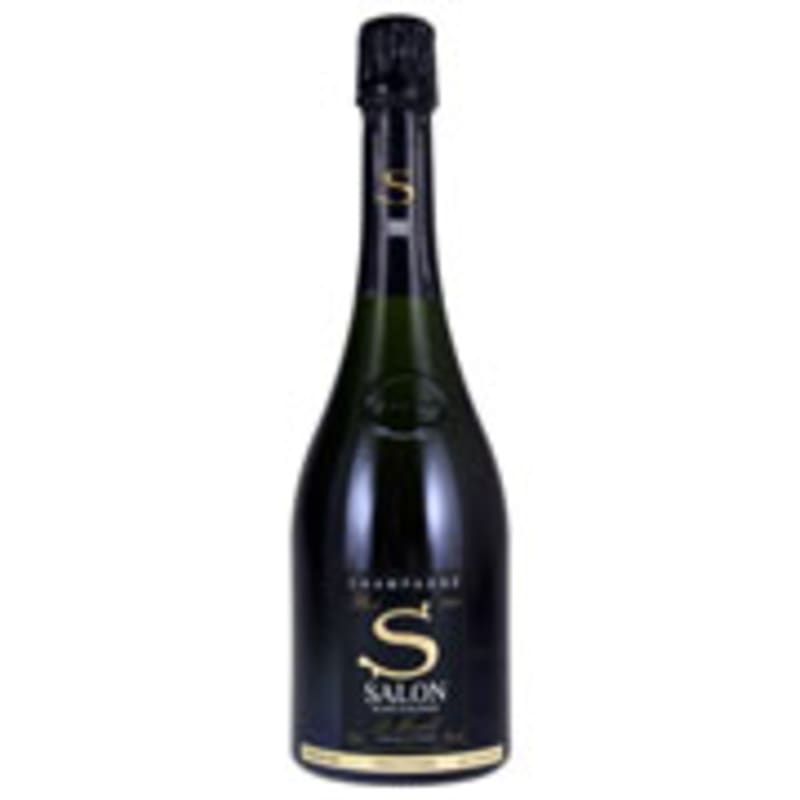

Winemaker Notes
The 1990 vintage is only the 33rd vintage produced since the creation of the House of Salon in 1911. It is certainly one of the greatest vintages ever produced. The year began inauspiciously in the Côte des Blancs, with an early bud-break severely damaged by two frosts in April; forty-five percent of the vineyards were hit. June was wet and cold, resulting in further losses from coulure and millerandage. A miserable beginning, but as if to compensate, the remainder of the summer was glorious. Exceptional ripening conditions prevailed for the growing season, without cessation even through harvest. The harvest began on September 14th in Le Mesnil, with Chardonnay of unusual homogeneity and high acidity, promising greatness.
Salon 1990 tasting notes: The color is deep gold, with a fine and delicate mousse. An aromatic explosion of lemon, lime, and spices amidst very floral notes greets the nose and gives a freshness to the bouquet. The taste is structured, with an ever-present but not aggressive acidity, which will allow it to age far over twenty years. This wine melds seemingly impossible contradictions – ample yet delicate, creamy acidity, dense yet elegant.
Professional Ratings
-
Decanter
A complicated winter and spring gave way to an ideal summer and a sunny September. Harvest began on 14 September. The beguiling nose has touches of rancio, celery, honey and spices. This Salon 1990 offers all the attributes of a great Champagne lovingly cellared for a long time. Elegance and precision on the palate, although some firmness still underlies its dense texture, making it ideal for some audacious food and wine pairing. Another great Salon.


Representing the topmost expression of a Champagne house, a vintage Champagne is one made from the produce of a single, superior harvest year. Vintage Champagnes account for a mere 5% of total Champagne production and are produced about three times in a decade. Champagne is typically made as a blend of multiple years in order to preserve the house style; these will have non-vintage, or simply, NV on the label. The term, "vintage," as it applies to all wine, simply means a single harvest year.

Associated with luxury, celebration, and romance, the region, Champagne, is home to the world’s most prized sparkling wine. In order to bear the label, ‘Champagne’, a sparkling wine must originate from this northeastern region of France—called Champagne—and adhere to strict quality standards. Made up of the three towns Reims, Épernay, and Aÿ, it was here that the traditional method of sparkling wine production was both invented and perfected, birthing a winemaking technique as well as a flavor profile that is now emulated worldwide.
Well-drained, limestone and chalky soil defines much of the region, which lend a mineral component to its wines. Champagne’s cold, continental climate promotes ample acidity in its grapes but weather differences from year to year can create significant variation between vintages. While vintage Champagnes are produced in exceptional years, non-vintage cuvées are produced annually from a blend of several years in order to produce Champagnes that maintain a consistent house style.
With nearly negligible exceptions, . These can be blended together or bottled as individual varietal Champagnes, depending on the final style of wine desired. Chardonnay, the only white variety, contributes freshness, elegance, lively acidity and notes of citrus, orchard fruit and white flowers. Pinot Noir and its relative Pinot Meunier, provide the backbone to many blends, adding structure, body and supple red fruit flavors. Wines with a large proportion of Pinot Meunier will be ready to drink earlier, while Pinot Noir contributes to longevity. Whether it is white or rosé, most Champagne is made from a blend of red and white grapes—and uniquely, rosé is often produce by blending together red and white wine. A Champagne made exclusively from Chardonnay will be labeled as ‘blanc de blancs,’ while ones comprised of only red grapes are called ‘blanc de noirs.’