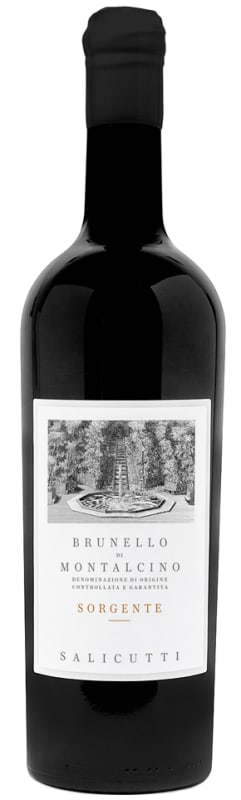


Winemaker Notes
Ripe red cherry, sweet molasses, herbs and candied violet on the complex nose and palate. Fresh with elegant acidity and remarkable density and concentration of fruit, featuring slowly rising tannins on the long and complex finish. Good things will come to those who are able to resist opening for some time.
Professional Ratings
-
Decanter
The highest of Salicutti’s vineyards, Sorgente sits on heavier clay with a slight incline to the southwest. It is usually the last to be picked and was previously destined for the estate’s Rosso di Montalcino – yet this 2019 makes for a very convincing Brunello, demonstrating Sangiovese’s ability to soar weightlessly while reaching great depths. A splendid precision of peony, red currant blossom and red cherry aromas accompanies a sumptuousness to the palate, where plump red plum and watermelon are underscored by brilliant citrussy acidity. Suede-like tannins seem almost an afterthought, yet hold this wine together effortlessly. Just 3,000 bottles produced.
-
James Suckling
Black-cherry, bark, rose-stem and tea aromas follow through to a medium body with firm tannins and a tight, chewy finish. Reductive and holding back. From organically grown grapes. Better after 2028.
-
Robert Parker's Wine Advocate
This wine comes from a vineyard site with compact clay soils and sees extended skin maceration. It comes as no surprise therefore to find extra concentration and intensity in the Salicutti 2019 Brunello di Montalcino Sorgente. This is a wine of impeccable balance that pits dark fruit weight against lifted, almost ethereal aromas. This is a difficult line to walk, and the Sorgente proceeds beautifully. On the one hand, you get a warm toasted note of roasted chestnut, brioche or sweet challah bread, and on the other, you get tart redcurrant and grenadine. There is an upward fruit crescendo that matches the chalky, fine-grained nature of the tannins. This wine ends on the proverbial high note. To think that Sorgente used to make the estate's Rosso di Montalcino, and now it has come this far.
-
Wine Spectator
A pretty red, elegant and delicate, with no shortage of strawberry, raspberry and rose flavors. Harmonious and solidly built, with vibrant acidity and a dense line of tannins guarding the mineral-infused finish. This really increases in intensity. Best from 2026 through 2042.
-
Vinous
The 2019 Brunello di Montalcino Sorgente is like a veritable florist shop on the nose, blending roses and jasmine with lavender and wet stone before giving way to dried strawberries. It sweeps across the palate with textures of pure silk energized by zesty acidity as mineral-laced wild berry fruits add a crunchy sensation toward the close. The 2019 finishes with a pleasantly bitter tinge. An herbal thrust and flinty tannins clamp down hard, reminding the taster that this youthful Brunello is just at the start of its long journey to maturity.
Rating: 94+


Among Italy's elite red grape varieties, Sangiovese has the perfect intersection of bright red fruit and savory earthiness and is responsible for the best red wines of Tuscany. While it is best known as the chief component of Chianti, it is also the main grape in Vino Nobile di Montepulciano and reaches the height of its power and intensity in the complex, long-lived Brunello di Montalcino. Somm Secret—Sangiovese doubles under the alias, Nielluccio, on the French island of Corsica where it produces distinctly floral and refreshing reds and rosés.

Famous for its bold, layered and long-lived red, Brunello di Montalcino, the town of Montalcino is about 70 miles south of Florence, and has a warmer and drier climate than that of its neighbor, Chianti. The Sangiovese grape is king here, as it is in Chianti, but Montalcino has its own clone called Brunello.
The Brunello vineyards of Montalcino blanket the rolling hills surrounding the village and fan out at various elevations, creating the potential for Brunello wines expressing different styles. From the valleys, where deeper deposits of clay are found, come wines typically bolder, more concentrated and rich in opulent black fruit. The hillside vineyards produce wines more concentrated in red fruits and floral aromas; these sites reach up to over 1,600 feet and have shallow soils of rocks and shale.
Brunello di Montalcino by law must be aged a minimum of four years, including two years in barrel before realease and once released, typically needs more time in bottle for its drinking potential to be fully reached. The good news is that Montalcino makes a “baby brother” version. The wines called Rosso di Montalcino are often made from younger vines, aged for about a year before release, offer extraordinary values and are ready to drink young.