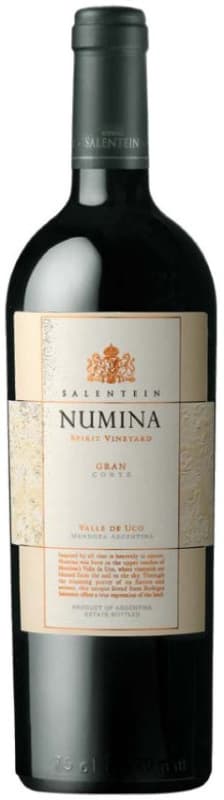


Winemaker Notes
Blend: 64% Malbec, 18% Cabernet Sauvignon, 11% Merlot, 5% Cabernet Franc, 2% Petit Verdot
Professional Ratings
-
Robert Parker's Wine Advocate
There are some blends, of which I tasted two, starting with the one called 2013 Numina Gran Corte. It combines 62% Malbec, 21% Cabernet Sauvignon, 8% Petit Verdot, 5% Cabernet Franc and 4% Merlot from their older vineyards from Los Árboles. The different varieties were harvested at different times and therefore fermented separately in oak vats and after six months in barrel they were blended and put back in barrique to complete an élevage of some 16 months. It's earthy, faintly reduced with some developed aromas, denoting ripeness (maybe the long cycle?) and black rather than red fruit. The Cabernet is quite noticeable in the blend, especially in the texture of the tannins, and the freshness of the vintage shows up in the shape of a fine thread of acidity.
-
Wine Enthusiast
Leathery black-fruit aromas veer a bit towards prune while also showing cheesy oak. This blend features all five Bordeaux grapes, with Malbec in the lead, and it's lively due to pumped-up acidity. Black-fruit flavors are energetic even as this finishes with an echo of raisin. Drink through 2021.
-
Wine Spectator
Powerful and juicy, with concentrated flavors of dark plum, blackberry and dark currant that feature plenty of Asian spice notes. Dark chocolate details show on the finish, revealing some graphite and white pepper accents. Malbec, Cabernet Sauvignon, Petit Verdot, Cabernet Franc and Merlot. Drink now through 2020.


One of the world’s most classic and popular styles of red wine, Bordeaux-inspired blends have spread from their homeland in France to nearly every corner of the New World. Typically based on either Cabernet Sauvignon or Merlot and supported by Cabernet Franc, Malbec and Petit Verdot, the best of these are densely hued, fragrant, full of fruit and boast a structure that begs for cellar time. Somm Secret—Blends from Bordeaux are generally earthier compared to those from the New World, which tend to be fruit-dominant.

With a winning combination of cool weather, high elevation and well-draining alluvial soils, it is no surprise that Mendoza’s Uco Valley is one of the most exciting up-and-coming wine regions in Argentina. Healthy, easy-to-manage vines produce low yields of high-quality fruit, which in turn create flavorful, full-bodied wines with generous acidity.
This is the source of some of the best Malbec in Mendoza, which can range from value-priced to ultra-premium. Cabernet Sauvignon, Cabernet Franc and Chardonnay also perform well here.