

Winemaker Notes
Great as an aperitif, or accompanying grilled "plancha" fish or dishes with provencal vegetables such as "tian de legumes" or Ratatouille. Also a perfect match with Asian and fusion food and Sushi.
Grape Varieties: 34% Grenache, 33% Syrah, 33% Cinsault

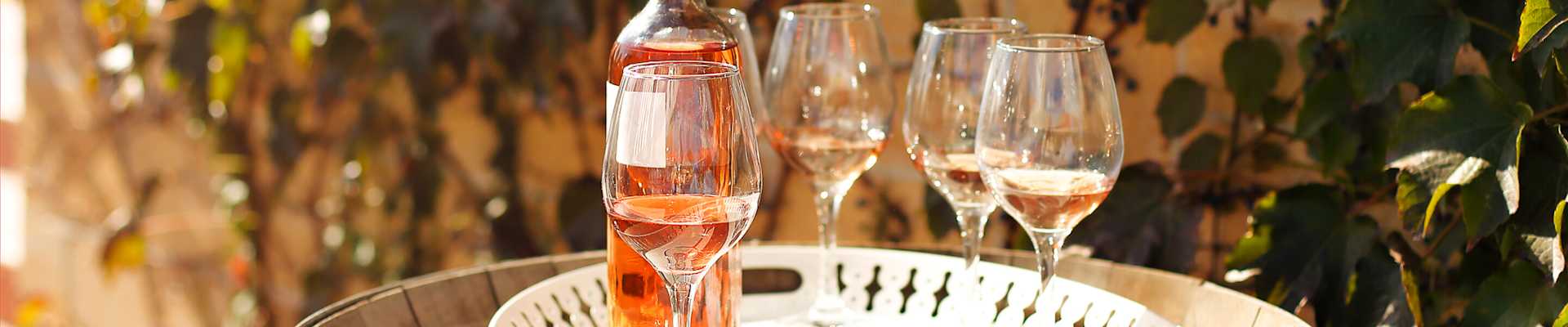
Whether it’s playful and fun or savory and serious, most rosé today is not your grandmother’s White Zinfandel, though that category remains strong. Pink wine has recently become quite trendy, and this time around it’s commonly quite dry. Since the pigment in red wines comes from keeping fermenting juice in contact with the grape skins for an extended period, it follows that a pink wine can be made using just a brief period of skin contact—usually just a couple of days. The resulting color depends on grape variety and winemaking style, ranging from pale salmon to deep magenta.

More than just a European vacation hotspot and rosé capital of the world, Provence, in southeastern France, is a coastal appellation producing interesting wines of all colors. The warm, breezy Mediterranean climate is ideal for grape growing and the diverse terrain and soil types allow for a variety of wine styles within the region. Adjacent to the Rhône Valley, Provence shares some characteristics with this northwestern neighbor—namely, the fierce mistral wind and the plentiful wild herbs (such as rosemary, lavender, juniper and thyme) often referred to as garrigue. The largest appellation here is Côtes de Provence, followed by Coteaux d’Aix-en-Provence.
Provence is internationally acclaimed for dry, refreshing, pale-hued rosé wines, which make up the vast majority of the region’s production. These are typically blends, often dominated by Mourvèdre and supplemented by Grenache, Cinsault, Tibouren and other varieties.
A small amount of full-bodied, herbal white wine is made here—particularly from the Cassis appellation, of Clairette and Marsanne. Other white varieties used throughout Provence include Roussane, Sémillon, Vermentino (known locally as Rolle) and Ugni Blanc.
Perhaps the most interesting wines of the region, however, are the red wines of Bandol. Predominantly Mourvèdre, these are powerful, structured, and ageworthy wines with lush berry fruit and savory characteristics of earth and spice.