
Winemaker Notes
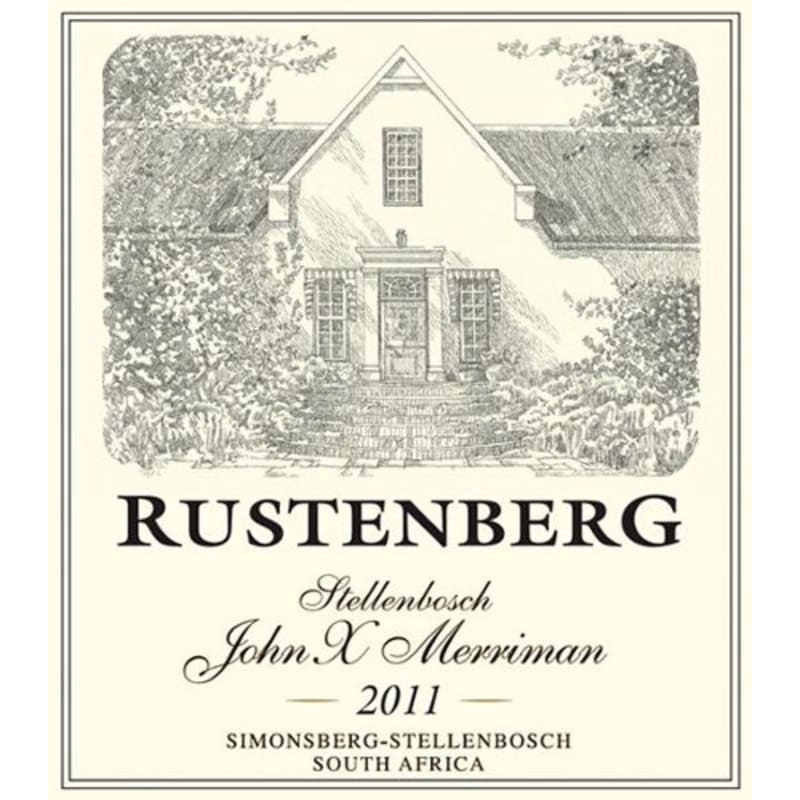
This wine is named after a former owner of Rustenberg, John Xavier Merriman, who bought the farm in 1892 in sympathy with farmers suffering from the phyloxera crisis. He played a great role in revitalizing Rustenberg and in promoting the tourism and agricultural value of Ida's Valley, the area close to the town of Stellenbosch in which Rustenberg is situated.
Blend: 55% Cabernet Sauvignon, 37% Merlot, 4% Petit Verdot, 2% Malbec, 2% Cabernet Franc
Professional Ratings
-
Robert Parker's Wine Advocate
The 2011 John X Merriman was blended from 17 lots that were vinified separately and sees 20 months in new French oak. It is much more closed than the 2010 despite rigorous coaxing. The palate is well-balanced with fine tannin and a little more tension than the previous vintage, gradually building in the mouth toward an intense, white pepper, savory finish. I would give this five or six years in bottle because it may ultimately out-perform the 2010. Drink 2016-2024.
-
Wine Spectator
This has gorgeous flavors of dark plum, currant preserves and fig paste, enlivened with licorice snap, fruitcake and black tea notes. Solidly grippy, but polished and well-integrated overall, featuring a lovely iron note buried on the finish. Nice to see this historic cuvée trending up again. Cabernet Sauvignon, Merlot, Petit Verdot, Cabernet Franc and Malbec. Best from 2015 through 2020.


One of the world’s most classic and popular styles of red wine, Bordeaux-inspired blends have spread from their homeland in France to nearly every corner of the New World. Typically based on either Cabernet Sauvignon or Merlot and supported by Cabernet Franc, Malbec and Petit Verdot, the best of these are densely hued, fragrant, full of fruit and boast a structure that begs for cellar time. Somm Secret—Blends from Bordeaux are generally earthier compared to those from the New World, which tend to be fruit-dominant.

With an important wine renaissance in full swing, impressive red and white bargains abound in South Africa. The country has a particularly long and rich history with winemaking, especially considering its status as part of the “New World.” In the mid-17th century, the lusciously sweet dessert wines of Constantia were highly prized by the European aristocracy. Since then, the South African wine industry has experienced some setbacks due to the phylloxera infestation of the late 1800s and political difficulties throughout the following century.
Today, however, South Africa is increasingly responsible for high-demand, high-quality wines—a blessing to put the country back on the international wine map. Wine production is mainly situated around Cape Town, where the climate is generally warm to hot. But the Benguela Current from Antarctica provides brisk ocean breezes necessary for steady ripening of grapes. Similarly, cooler, high-elevation vineyard sites throughout South Africa offer similar, favorable growing conditions.
South Africa’s wine zones are divided into region, then smaller districts and finally wards, but the country’s wine styles are differentiated more by grape variety than by region. Pinotage, a cross between Pinot Noir and Cinsault, is the country’s “signature” grape, responsible for red-fruit-driven, spicy, earthy reds. When Pinotage is blended with other red varieties, like Cabernet Sauvignon, Merlot, Syrah or Pinot Noir (all commonly vinified alone as well), it is often labeled as a “Cape Blend.” Chenin Blanc (locally known as “Steen”) dominates white wine production, with Chardonnay and Sauvignon Blanc following close behind.