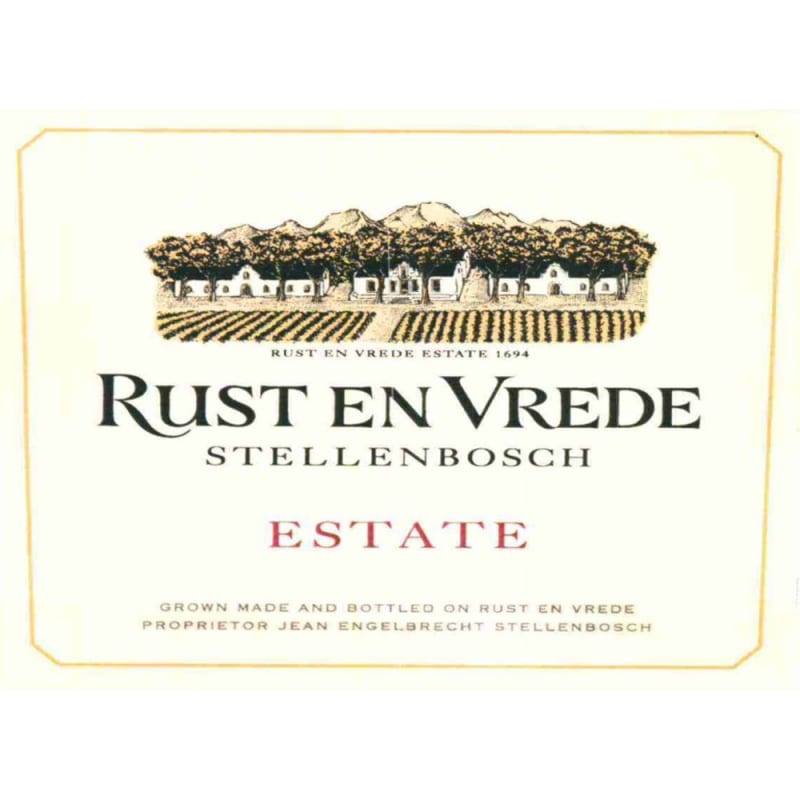

Winemaker Notes
Blend: 61% Cabernet Sauvignon, 31% Shiraz, 8% Merlot
Professional Ratings
-
Robert Parker's Wine Advocate
The 2009 Estate is a blend of 61% Cabernet Sauvignon, 31% Shiraz and 8% Merlot and offers a glorious bouquet of raspberry, wild strawberry, blood orange and a touch of vanilla. The palate is medium-bodied with supple, lithe tannins. There are layers of pure blackberry and mulberry fruit with a lovely, elegant, refined finish that evinces astute winemaking. This is a sophisticated Stellenbosch.
-
Wine Spectator
Very sleek and very focused, with a tightly wound core of damson plum, bitter cherry and linzer torte flavors that's harnessed for now with savory herb, singed iron and shiso leaf notes. There's piercing drive on the finish, with very mouthwatering acidity, while the grip hangs in reserve. Should move along nicely in the cellar.


One of the world’s most classic and popular styles of red wine, Bordeaux-inspired blends have spread from their homeland in France to nearly every corner of the New World. Typically based on either Cabernet Sauvignon or Merlot and supported by Cabernet Franc, Malbec and Petit Verdot, the best of these are densely hued, fragrant, full of fruit and boast a structure that begs for cellar time. Somm Secret—Blends from Bordeaux are generally earthier compared to those from the New World, which tend to be fruit-dominant.

With an important wine renaissance in full swing, impressive red and white bargains abound in South Africa. The country has a particularly long and rich history with winemaking, especially considering its status as part of the “New World.” In the mid-17th century, the lusciously sweet dessert wines of Constantia were highly prized by the European aristocracy. Since then, the South African wine industry has experienced some setbacks due to the phylloxera infestation of the late 1800s and political difficulties throughout the following century.
Today, however, South Africa is increasingly responsible for high-demand, high-quality wines—a blessing to put the country back on the international wine map. Wine production is mainly situated around Cape Town, where the climate is generally warm to hot. But the Benguela Current from Antarctica provides brisk ocean breezes necessary for steady ripening of grapes. Similarly, cooler, high-elevation vineyard sites throughout South Africa offer similar, favorable growing conditions.
South Africa’s wine zones are divided into region, then smaller districts and finally wards, but the country’s wine styles are differentiated more by grape variety than by region. Pinotage, a cross between Pinot Noir and Cinsault, is the country’s “signature” grape, responsible for red-fruit-driven, spicy, earthy reds. When Pinotage is blended with other red varieties, like Cabernet Sauvignon, Merlot, Syrah or Pinot Noir (all commonly vinified alone as well), it is often labeled as a “Cape Blend.” Chenin Blanc (locally known as “Steen”) dominates white wine production, with Chardonnay and Sauvignon Blanc following close behind.