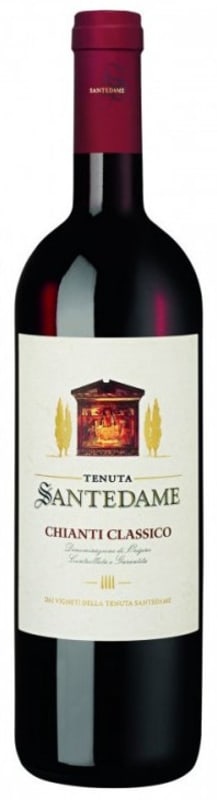


Winemaker Notes
Ruby red. Aroma: Intense fruity aromas of violets typical of the Sangiovese grapes are matched with notes of ripe plums and red and blackberry fruits. Evolved aging aromas provide tertiary notes of black pepper and tobacco. This medium-bodied wine delivers both structure and balance with flavors of plums, blackberry, and currant enhanced by rich velvety tannins. It has an elegant, lingering finish of red berry fruits and balsamic notes. FOOD PAIRINGS Pair Santedame Chianti Classico DOCG with traditional dishes such as roasted chicken with rosemary and portobello mushroom ravioli. It also makes a wonderful accompaniment to international dishes such as tandoori chicken and pork buns.
Professional Ratings
-
Tasting Panel
Smooth texture with notes of juicy raspberry and black cherry; tangy, clean, and racy. A pure and balanced wine with length.
-
Wilfred Wong of Wine.com
COMMENTARY: The 2016 Ruffino Tenuta Santedame is a nicely-textured and delicious Chianti Classico. TASTING NOTES: This wine exhibits enticing aromas and flavors of ripe fruit and dried leaves. Enjoy it with a service of roast chicken and soft polenta. (Tasted: February 15, 2021, San Francisco, CA)


Disenchanted with Italian winemaking laws in the 1970s, a few rebellious Tuscan winemakers decided to get creative. Instead of following tradition, to bottle Sangiovese by itself, they started blending it with international varieties, namely Cabernet Sauvignon, Merlot and Syrah in differing proportions and with amazing success. However, some Tuscan Blends don’t even include Sangiovese. Somm Secret—The suffix –aia in Italian modifies a word in much the same way –y acts in English. For example, a place with many stones (sassi) becomes Sassicaia. While not all Super Tuscan producer names end in –aia, they all share a certain coy nomenclature.

One of the first wine regions anywhere to be officially recognized and delimited, Chianti Classico is today what was originally defined simply as Chianti. Already identified by the early 18th century as a superior zone, the official name of Chianti was proclaimed upon the area surrounding the townships of Castellina, Radda and Gaiole, just north of Siena, by Cosimo III, Grand Duke of Tuscany in an official decree in 1716.
However, by the 1930s the Italian government had appended this historic zone with additonal land in order to capitalize on the Chianti name. It wasn’t until 1996 that Chianti Classico became autonomous once again when the government granted a separate DOCG (Denominazione di Origine Controllata e Garantita) to its borders. Ever since, Chianti Classico considers itself no longer a subzone of Chianti.
Many Classicos are today made of 100% Sangiovese but can include up to 20% of other approved varieties grown within the Classico borders. The best Classicos will have a bright acidity, supple tannins and be full-bodied with plenty of ripe fruit (plums, black cherry, blackberry). Also common among the best Classicos are expressive notes of cedar, dried herbs, fennel, balsamic or tobacco.