

Winemaker Notes
Professional Ratings
-
Vinous
The 2003 Tokaji Essencia is a vintage that I last tasted 12 years ago. It has the highest residual sugar of all the wines in this tasting, at 635 g/l, with 14.1 g/l acidity and 2.2% alcohol. There was less botrytis in this vintage due to the warmth that season. Deep amber in hue, the bouquet has matured nicely with Seville orange marmalade, caramelized pear, melted candle wax and just a very light adhesive element. Superb delineation. The palate is supremely well balanced with another killer line of acidity that slices through the unctuous, honeyed fruit. There is immense purity here as the 2003 becomes quite tangy towards the peacock's tail finish.
-
Wine & Spirits
This is surprisingly delicate for something so concentrated. It pours like warm honey, coating the tongue in a soft, silky blanket of flavor, all apricot and orange at first. As it warms in the mouth, notes of wildflower honey, orange blossoms and green tea emerge, a faint earthy flavor rumbling an octave below. At 2.23 percent alcohol and 511 grams of residual sugar per liter, it should pretty much live forever, a rarity to revel in by the teaspoon.





Royal Tokaji was founded in 1990 by well-known author Hugh Johnson and a small group of investors who were inspired to restore and preserve Hungary’s precious wine legacy after the fall of Communism. Tokaji is the world’s original sweet white wine – the “cult wine” of the 18th and 19th centuries – and the Tokaj wine region was the first to have classified vineyards. At the end of the 17th century, Prince Rakoczi classified the finest vineyards into: great first growths, first growths, second growths and third growths. Royal Tokaji owns five of those first and second growth vineyards, including one of Hungary’s two great first growths: Mézes Mály.
The winery produces a range of exceptional wines from dry to sweet, including several single- vineyard aszú (botrytis-affected) wines and Essencia, the free-run juice of botrytised “raisins.” The wines’ distinct character results from the varied volcanic soils of the classified vineyards, indigenous grapes and yeast, traditional winemaking methods and barrel-aging in the winery’s 13th-century underground cellars. Richness with vibrant acidity is the hallmark of all the Royal Tokaji wines.

Apart from the classics, we find many regional gems of different styles.
Late harvest wines are probably the easiest to understand. Grapes are picked so late that the sugars build up and residual sugar remains after the fermentation process. Ice wine, a style founded in Germany and there referred to as eiswein, is an extreme late harvest wine, produced from grapes frozen on the vine, and pressed while still frozen, resulting in a higher concentration of sugar. It is becoming a specialty of Canada as well, where it takes on the English name of ice wine.
Vin Santo, literally “holy wine,” is a Tuscan sweet wine made from drying the local white grapes Trebbiano Toscano and Malvasia in the winery and not pressing until somewhere between November and March.
Rutherglen is an historic wine region in northeast Victoria, Australia, famous for its fortified Topaque and Muscat with complex tawny characteristics.

Best known for lusciously sweet dessert wines but also home to distinctive dry whites and reds, Hungary is an exciting country at the crossroads of tradition and innovation. Mostly flat with a continental climate, Hungary is almost perfectly bisected by the Danube River (known here as the Duna), and contains central Europe’s largest lake, Balaton. Soil types vary throughout the country but some of the best vines, particularly in Tokaj, are planted on mineral-rich, volcanic soil.
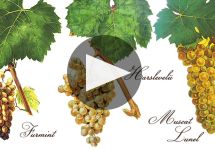
Tokaj, Hungary’s most famous wine region, is home to the venerated botrytized sweet wine, Tokaji, produced from a blend of Furmint and Hárslevelű. Dry and semi-dry wines are also made in Tokaj, using the same varieties. Other native white varieties include the relatively aromatic and floral, Irsai Olivér, Cserszegi Fűszeres and Királyleányka, as well as the distinctively smoky and savory, Juhfark. Common red varieties include velvety, Pinot Noir-like Kadarka and juicy, easy-drinking Kékfrankos (known elsewhere as Blaufränkisch).