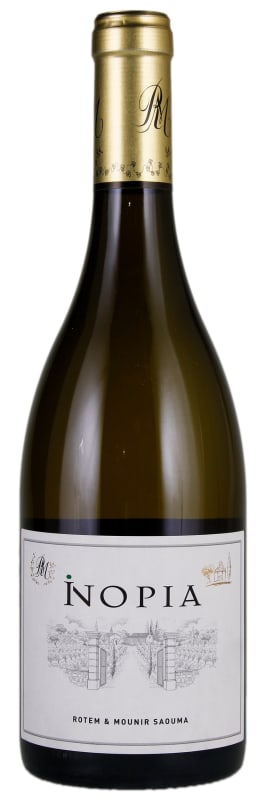


Winemaker Notes
Intensely perfumed and vibrant nose of citrus, flowers and an almost salty note. Intensity of flavors and structure, with a beautifully balanced freshness.
Professional Ratings
-
Jeb Dunnuck
From vines around the estate, just north of Orange, the 2017 Côtes du Rhône Inopia Blanc is a mix of Roussanne, Marsanne, Clairette, and Bourboulenc. It's a sensational Côtes du Rhône Blanc that offers up loads of minerality as well as orchard fruits, brioche, toasted almonds, and white flower aromas and flavors. This Burgundian styled beauty has beautiful depth, vibrant acidity, and a great finish.
Barrel Sample: 91-93 -
Wine Spectator
A lush and showy white, featuring creamed pear, fig and melon flavors, laced with white ginger and chamomile notes. A subtle quinine echo through the finish keeps this honest. Impressive and outsized for this modest appellation. Grenache Blanc, Roussanne, Marsanne, Bourboulenc, Clairette and Viognier. Drink now through 2022. 150 cases imported.
-
Robert Parker's Wine Advocate
Layers of honeyed citrus and toasted nuts unfold on the nose of the 2017 Cotes du Rhone Villages Inopia Blanc. Mainly Grenache Blanc, but with a decent amount of other Southern Rhône varieties, it's a rich, full-bodied white that retains a sense of balance and lingers a long time on the finish. Drink this decadent wine over the next year or two.


Let’s start at the beginning: five acres in Pignan. A sale was being conducted through the French state that presented the opportunity to buy a somewhat neglected parcel adjoining some outstanding plots (notably Rayas’ Bois de Rayas and the Pignan lieu-dit). The Saoumas have long loved the area and its wines, have many friends and saw they could potentially acquire land in a way that would not be possible in Burgundy. The sheer vitality of these vines today is extraordinary.
They know and love Mounir Saouma because of the way he transmits both unknown and acknowledged great crus of Burgundy through his elevage into masterpieces, but it turns out he may be an even more talented vineyard manager. Mounir’s philosophy is in theory straightforward. He has worked to improve drainage in his vineyards, works with organic manures, and doesn’t mind the low yields he is getting in his plots. As is the case with most things in life, simplicity appears only after deliberation and experience. From this plot, Mounir has been able to acquire additional vineyards, and today farms a total of 21 acres across eight vineyards in all five villages of the appellation (Chateauneuf-du-Pape, Bedarrides, Sorgues, Courthezon, and Orange).
The kaleidoscope of the terroirs he works with is reflected in the cellar, as well, where a combination of barrels, foudres, cement, and eggs are used, all except the last of which can be considered “traditional” within the diversity of Chateauneuf’s viticultural history. The fruit is pressed firmly with small presses dating from the late 1970s, left in tank to macerate at relatively cool temperatures for 8 days, and then transferred to the various vessels. The wines are never punched down, never racked, and never sulfured until a light addition a month before bottling. They age for between 24-36 months, including the white, which as you might expect has an outsized focus here.
The wines are stunning: precise, intense, complex, expressive visions of Chateauneuf.

Full-bodied and flavorful, white Rhône blends originate from France’s Rhône Valley. Today these blends are also becoming popular in other regions. Typically some combination of Grenache Blanc, Marsanne, Roussanne and Viognier form the basis of a white Rhône blend with varying degrees of flexibility depending on the exact appellation. Somm Secret—In the Northern Rhône, blends of Marsanne and Roussanne are common but the south retains more variety. Marsanne, Roussanne as well as Bourboulenc, Clairette, Picpoul and Ugni Blanc are typical.

An appellation full of some of the most delightful and particularly charming reds, Côtes du Rhône Villages includes the best villages of the greater Côtes du Rhône appellation. The possibility for an appellation promotion exists for every named village but each has to achieve and prove superior quality before an upgrade will be granted. The main ones today are Gigondas, Vacqueyras, Beaumes-de-Venise, Vinsobres, Rasteau and Cairanne.
The Gigondas appellation, while sometimes producing wines with a touch of rusticity, can often rival Chateauneuf-du-Pape. Its elevations are higher and soils richer in limestone. Vacqueyras reds are more concentrated than the more general Côtes du Rhône reds and must be at least one half comprised of Grenache by law. Beaumes de Venise also includes some excellent higher elevation spots for making snappy, fruity and spicy reds but historically the appellation’s esteem came from its fragrant, sweet and golden Muscat de Beaumes-de-Venise.