


Winemaker Notes
Pale pink with light copper reflections and aromas of red fruit (blackberry, cherry and raspberry) with white fruit and pineapple, and very slight yeasty notes. Delicate and fragrant, with an elegant and soft structure and lively acidity and minerality.
Ideal as an aperitif and with all meals, goes well with fish appetizers.
Blend: 75% Pinot Nero, 15% Chardonnay
Professional Ratings
-
James Suckling
A sophisticated and subtle rosé sparkling with plenty of red-berry aroma, but also ripe peach. I love the juiciness of the fruit on the medium-bodied palate that doesn’t depend on dosage to shine. Very refreshing acidity, lively mousse and a delightful touch of salinity at the long finish. A blend of 75% pinot noir with 25% chardonnay.
-
Wine Enthusiast
A blend of 75% Pinot Nero and 15% Chardonnay, this dry, savory sparkler offers aromas of woodland berry, Alpine herb and the barest whiff of bread dough. Radiant and elegant, it's vinified only in steel to preserve its pristine fruit flavors, offering juicy raspberry, red cherry and mineral notes suggesting saline. Crisp acidity and a refined perlage provide energy and finesse.
-
Wine Spectator
Vibrant acidity meets plush texture in this elegant sparkling rosé, with a subtle streak of smoke underscoring baked white cherry, melon, pickled ginger and floral notes that ride the creamy mousse. Pinot Nero and Chardonnay.


What are the different types of sparkling rosé wine?
Rosé sparkling wines like Champagne, Prosecco, Cava, and others make a fun and festive alternative to regular bubbles—but don’t snub these as not as important as their clear counterparts. Rosé Champagnes (i.e., those coming from the Champagne region of France) are made in the same basic way as regular Champagne, from the same grapes and the same region. Most other regions where sparkling wine is produced, and where red grape varieties also grow, also make a rosé version.
How is sparkling rosé wine made?
There are two main methods to make rosé sparkling wine. Typically, either white wine is blended with red wine to make a rosé base wine, or only red grapes are used but spend a short period of time on their skins (maceration) to make rosé colored juice before pressing and fermentation. In either case the base wine goes through a second fermentation (the one that makes the bubbles) through any of the various sparkling wine making methods.
What gives rosé Champagne and sparkling wine their color and bubbles?
The bubbles in sparkling wine are formed when the base wine undergoes a secondary fermentation, which traps carbon dioxide inside the bottle or fermentation vessel. During this stage, the yeast cells can absorb some of the wine’s color but for the most part, the pink hue remains.
How do you serve rosé sparkling wine?
Treat rosé sparkling wine as you would treat any Champagne, Prosecco, Cava, and other sparkling wine of comparable quality. For storing in any long-term sense, these should be kept at cellar temperature, about 55F. For serving, cool to about 40F to 50F. As for drinking, the best glasses have a stem and a flute or tulip shape to allow the bead (bubbles) and beautiful rosé hue to show.
How long do rosé Champagne and sparkling wine last?
Most rosé versions of Prosecco, Champagne, Cava or others around the “$20 and under” price point are intended for early consumption. Those made using the traditional method with extended cellar time before release (e.g., Champagne or Crémant) can typically improve with age. If you are unsure, definitely consult our Customer Care team for guidance.
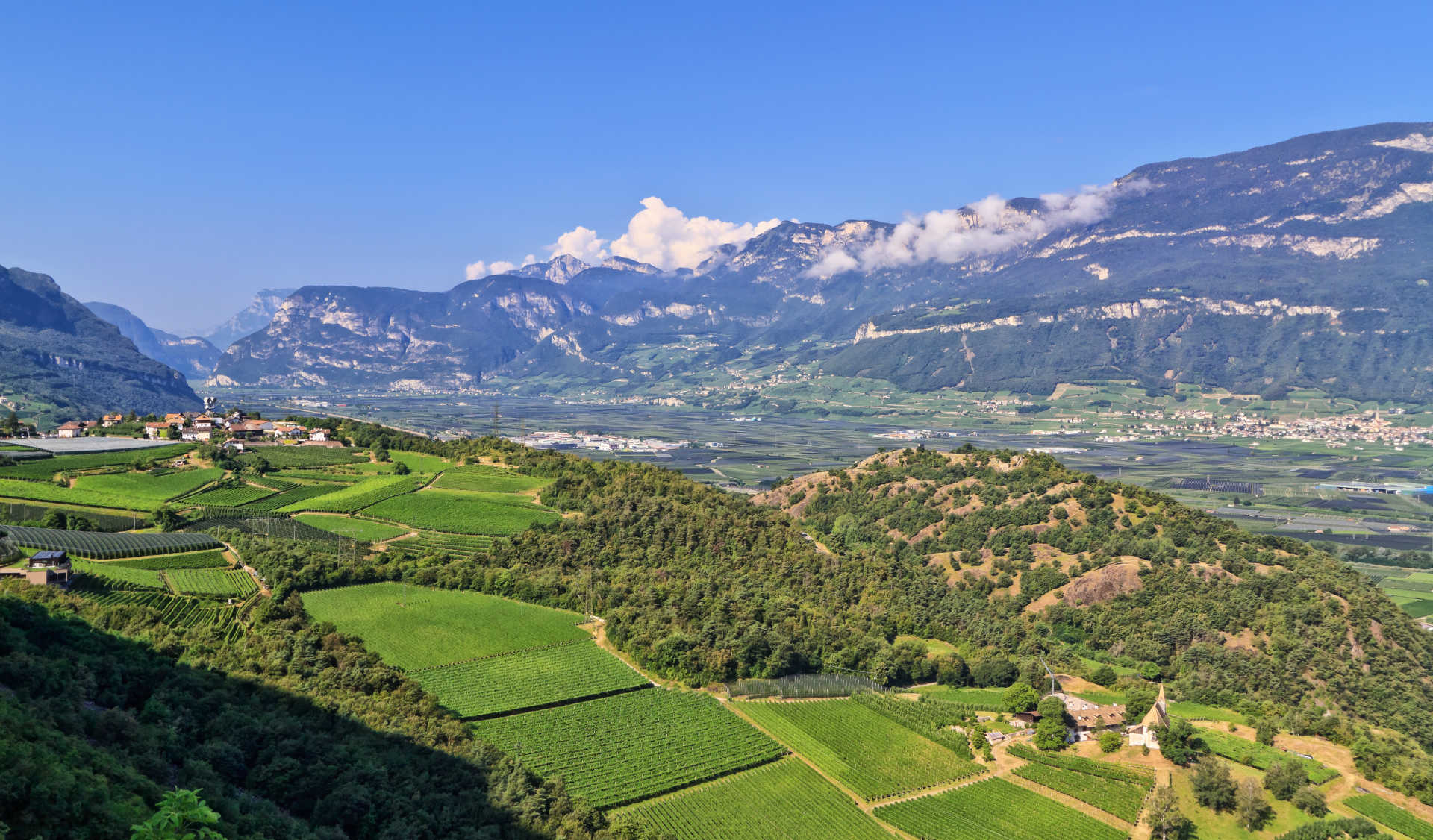
A mountainous northern Italian region heavily influenced by German culture, Trentino-Alto Adige is actually made up of two separate but similar regions: Alto Adige and Trentino.
Trentino, the southern half, is primarily Italian-speaking and largely responsible for the production of non-native, international grapes. There is a significant quantity of Chardonnay, Pinot Grigio and Merlot produced. But Trentino's native and most unique red variety, Teroldego, while still rare, is gaining popularity. It produces a deeply colored red wine rich in wild blackberry, herb, coffee and cocoa.
The rugged terrain of German-speaking Alto Adige (also referred to as Südtirol) focuses on small-scale viticulture, with great value placed on local varieties—though international varieties have been widely planted since the 1800s. Sheltered by the Alps from harsh northerly winds, many of the best vineyards are at extreme altitude but on steep slopes to increase sunlight exposure.
Dominant red varieties include the bold, herbaceous Lagrein and delicate, strawberry-kissed, Schiava, in addition to some Pinot Nero.
The primary white grapes are Pinot grigio, Gewürztraminer, Chardonnay and Pinot blanc, as well as smaller plantings of Sauvignon blanc, Müller Thurgau. These tend to be bright and refreshing with crisp acidity and just the right amount of texture. Some of the highest quality Pinot grigio in Italy is made here.