

Winemaker Notes
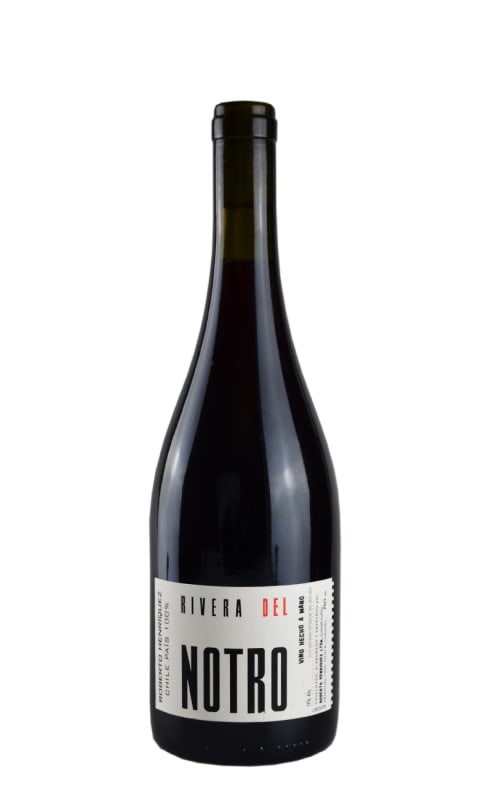
These País vineyards are located on an alluvial piedmont starting at 800m from the Bío Bío River. The soil is especially unique with an alluvial top-layer over black, sandy (basaltic) soils. The wine itself is a representation of unadulterated País with herbal character.
Professional Ratings
-
Robert Parker's Wine Advocate
The 2020 Ribera del Notro is the most approachable of the País bottlings, produced with grapes from ancient vines on alluvial and sandy deep soils by the river in Bío-Bío. It's more fruit-driven and rounder, gentle and tasty and easy to understand, with 12.5% alcohol and a long, dry finish. Here, 20% of the volume matured in old barrels, while the rest was in concrete for one year.


Planted as the first vitis vinifera wine grape in the U.S., País has a long significant history in the Americas. Originally from Spain, where the grape is known as Listán Prieto, it was brought by Spanish colonists to Mexico in 1540 and, later, during the late 1700s, to Mission San Diego in California where it would take on another new name, Mission. Propagated for its use as a sacramental wine, Mission remained important in California until the spread of phylloxera in the 1880s. Somm Secret—In Chile it is called Pais. In Argentina, Pais is known as Criolla Chica.

A cool, rather wet region of southern Chile, Bio Bio is experiencing an increase in the development of quality wine production.