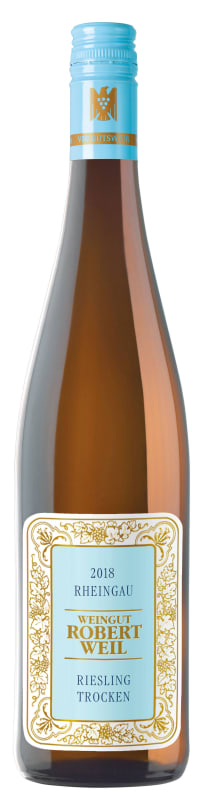


Winemaker Notes
The Robert Weil Estate Riesling Trocken is sourced from vineyards in Kiedrich and Eltville. A fruitier style of Trocken, this dynamic Riesling exhibits aromas and flavors of blood orange, yellow peach, and sweet herbs.
Light, lively and refreshing, pair this with a rosemary pork tenderloin, or a savory mushroom risotto.
Professional Ratings
-
James Suckling
Attractive aromas of flowers and stone fruit here,. This has a very fresh feel. The palate is succulent, precise and elegantly delivered with some honey, ripe peaches and hints of mangoes. Seamless, concentrated and dry.
-
Robert Parker's Wine Advocate
The 2018 Rheingau Riesling Trocken offers a shiny, bright and intense, wonderfully aromatic and coolish Rheingau Riesling nose with great precision and even flinty notes. Lush and fine, with good grip and great elegance, this is a remarkably fine and classic dry Rheingau Riesling in the reductive and linear Robert Weil style. Fabulous, really fabulous.
-
Wine Enthusiast
Invigorating and spry, this light-bodied dry Riesling suggests pristine lemon and grapefruit flavors accented by layers of smoke, cut stone and dried herb. It’s a thirst-quenching, stately wine that’s ready to enjoy now but should hold through 2025. Loosen Bros. USA
-
Wine & Spirits
In Weil’s typical house style, this packs more power than you might expect from the designation. It’s bone dry, built out of mineral tones, with lemony fruit used only as highlights. Give it a decant and use it to counter the fattiness of braised pork belly.


Riesling possesses a remarkable ability to reflect the character of wherever it is grown while still maintaining its identity. A regal variety of incredible purity and precision, this versatile grape can be just as enjoyable dry or sweet, young or old, still or sparkling and can age longer than nearly any other white variety. Somm Secret—Given how difficult it is to discern the level of sweetness in a Riesling from the label, here are some clues to find the dry ones. First, look for the world “trocken.” (“Halbtrocken” or “feinherb” mean off-dry.) Also a higher abv usually indicates a drier Riesling.

Practically one long and bucolic hillside along the northern bank of the Rhein River, the Rheingau stretches the entirety of the river’s east to west spread from Hocheim to Rüdesheim.
Variations in elevation, soil types, and proximity to the Rhine cause great diversity in Rheingau Riesling. Some of the better Rieslings in warmer years come from the cooler and breezier sites at higher elevations. In cooler years, sites closer to the river may perform better.
In the village of Rüdesheim, slopes are steep and soils are stony slate with quartzite; Rieslings are rich and spicy, intense in stone fruit and show depth and character with age. World class Rieslings come from farther east on the river through Geisenheim, Johannisberg, Winkel, Oestrich and past Erbach as well, where soils of loess, sand, and marl alternate. Long-living, floral-driven and mineral-rich Rieslings come from the best of these sites.
Rheingau growers became early activists in promoting the dry style of Riesling, low yields and the classification of top vineyards, or Erstes Gewächs (first growths). Proximity to the metropolitan markets of Mainz, Wiesbaden, and Frankfurt keeps Rheingau in high reputation. While dry wines are the style here, Rheingau isn’t short of some amazing Auslesen, Beerenauslesen, and Trockenbeerenauslesen.
Rheingau doesn’t mess with many other grapes—in fact 79% of its total area is dedicated to Riesling. But it produces some fine Pinot noir, especially concentrated in Assmannshausen, a bit farther west from Rüdesheim.