

Winemaker Notes
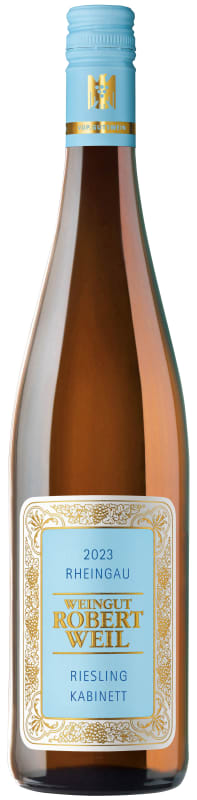
The estate-grown Riesling Kabinett is made to showcase the traditional, lighter style of Riesling. It is sourced from cooler, higher-elevation parcels adjacent to the estate's classified single-vineyard sites. But it also includes fruit from pre selections in the top sites, which gives the wine an extra dimension of fruit and mineral intensity. The Riesling Kabinett is light and lovely, with lush exotic fruit aromas and a poised balance of bright acidity and lacy natural sweetness.
Professional Ratings
-
Vinous
The 2023 Riesling Rheingau Kabinett was picked in the Kiedricher Wasseros and made from whole-bunch-pressed juice. Weil emphasizes that they want "restricted" sugar levels of around 35 g/L with "hearty" acidity. The nose is a vivid and enticing mix of pineapple and lime, still swinging with a touch of yeast, aromatic and tangy. The palate brims with juicy sweetness, dances with light and agile steps and delivers what we want from a Kabinett—ease and joy. The entire experience is scented with lemon balm and summer blossom. Simply lovely.
-
James Suckling
Wonderful floral, nectarine and mandarin orange aromas pour from the glass. Simultaneously juicy and sleek on the barely medium-bodied palate, this is so vivid and charming, but also has stacks of mineral freshness in the long, orangey finish.


Riesling possesses a remarkable ability to reflect the character of wherever it is grown while still maintaining its identity. A regal variety of incredible purity and precision, this versatile grape can be just as enjoyable dry or sweet, young or old, still or sparkling and can age longer than nearly any other white variety. Somm Secret—Given how difficult it is to discern the level of sweetness in a Riesling from the label, here are some clues to find the dry ones. First, look for the world “trocken.” (“Halbtrocken” or “feinherb” mean off-dry.) Also a higher abv usually indicates a drier Riesling.

Practically one long and bucolic hillside along the northern bank of the Rhein River, the Rheingau stretches the entirety of the river’s east to west spread from Hocheim to Rüdesheim.
Variations in elevation, soil types, and proximity to the Rhine cause great diversity in Rheingau Riesling. Some of the better Rieslings in warmer years come from the cooler and breezier sites at higher elevations. In cooler years, sites closer to the river may perform better.
In the village of Rüdesheim, slopes are steep and soils are stony slate with quartzite; Rieslings are rich and spicy, intense in stone fruit and show depth and character with age. World class Rieslings come from farther east on the river through Geisenheim, Johannisberg, Winkel, Oestrich and past Erbach as well, where soils of loess, sand, and marl alternate. Long-living, floral-driven and mineral-rich Rieslings come from the best of these sites.
Rheingau growers became early activists in promoting the dry style of Riesling, low yields and the classification of top vineyards, or Erstes Gewächs (first growths). Proximity to the metropolitan markets of Mainz, Wiesbaden, and Frankfurt keeps Rheingau in high reputation. While dry wines are the style here, Rheingau isn’t short of some amazing Auslesen, Beerenauslesen, and Trockenbeerenauslesen.
Rheingau doesn’t mess with many other grapes—in fact 79% of its total area is dedicated to Riesling. But it produces some fine Pinot noir, especially concentrated in Assmannshausen, a bit farther west from Rüdesheim.