

Winemaker Notes
Pair with orange rind cranberry sauce, or pound cake with reduced berries.
Professional Ratings
-
Wilfred Wong of Wine.com
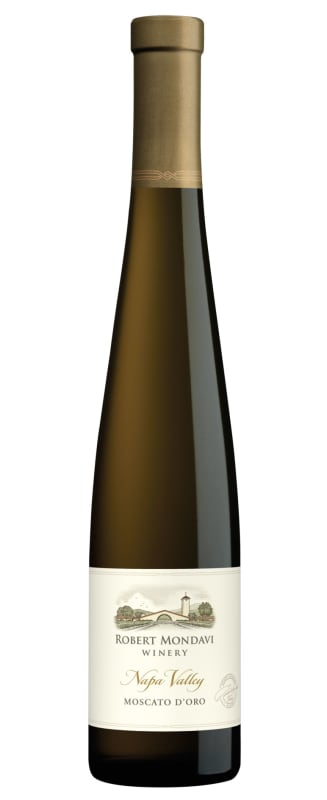
COMMENTARY: Piedmont, Italy in California? Well, not quite, but the 2015 Robert Mondavi Moscato d'Oro strikes gold. TASTING NOTES: This wine is aromatic, delicate, sweet, and nicely balanced. Its aromas and flavors of flowers and stone fruits make it delightfully pleasing to enjoy by itself or with a fresh fruit platter. (Tasted: October 11, 2018, San Francisco, CA)


While Muscat comes in a wide range of styles from dry to sweet, still to sparkling and even fortified, it's safe to say it is always alluringly aromatic and delightful. The two most important versions are the noble, Muscat Blanc à Petits Grains, making wines of considerable quality and Muscat of Alexandria, thought to be a progeny of the former. Somm Secret—Pliny the Elder wrote in the 13th century of a sweet, perfumed grape variety so attractive to bees that he referred to it as uva apiana, or “grape of the bees.” Most likely, he was describing Muscat.

Legend has it that quick and nimble stags would escape the indigenous hunters of southern Napa Valley through the landmark palisades that sit just northeast of the current city of Napa. As a result, the area was given the name, Stags Leap. While its grape-growing history dates back to the mid-1800s, winemaking didn’t really take off until the mid-1970s after a small but pivotal blind tasting called the Judgement of Paris.
When a 1973 Stag’s Leap Wine Cellars Cabernet Sauvignon won first place against its high-profile Bordeaux contenders, like Chateau Mouton Rothschild and Chateau Haut-Brion, international attention to the Stags Leap District of Napa Valley escalated rapidly.
The vineyards in this one-of-a-kind wine growing region receive hot afternoon air reflecting off of its eastern palisade formation. In combination with the cool evening breezes from the San Pablo Bay just south, this becomes an optimal environment for grape growing. While many varieties could thrive here, Cabernet Sauvignon and Merlot dominate with virtually no others, save for a spot or two of Syrah.
Stags Leap soils—eroded volcanic and old river sediments—encourage well established root systems and result in complex, terroir-driven wines. Stags Leap District reds have a distinct sour cherry and black berry character with baking spice and dried earth aromas, and supple tannins.