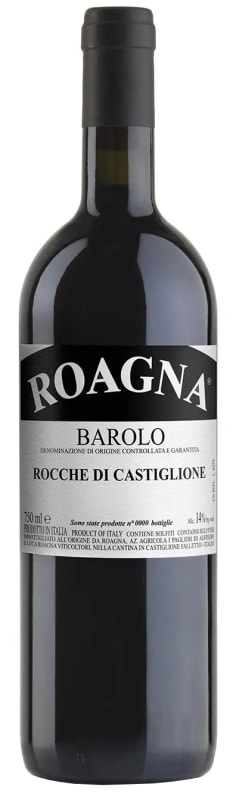


Winemaker Notes
Historical vineyard in Castiglione Falletto, above the Pira geographical mention, next to Roagna's winery. The surface area is 0.48 ha, and the soil is calcareous clay, rich in white rock and sand. The plantation dates back to the 1960s and 70s and contains wood derived from ancient massal selections.
Professional Ratings
-
Robert Parker's Wine Advocate
The Roagna 2019 Barolo Rocche di Castiglione comes from a 0.49-hectare parcel that was purchased in 2016. The vineyards lay adjacent to Pira, thus opening the possibility for the Roagna family to buy this land. The vines average 50 years old, and the plan is to eventually have this wine join the Vecchie Viti series. Because this is only the fourth year of production, that remains a goal for the future. This distinctive site, one of my personal favorites in the Barolo appellation, always delivers special sharpness and linear focus. You get that here along with a very long finish. The wine has muscle, but it also shows supple roundness and ample fruit weight. Rating: 97+
-
Vinous
The 2019 Barolo Rocche di Castiglione is all sensuality. Silky, aromatic and super-expressive, the 2019 Rocche is all class. Crushed flowers, spice, leather and crushed red berry fruit all grace this wonderfully nuanced, sublime Barolo. All the elements are so well-balanced. Silky tannins pull it all together on the finish, and this builds beautifully over time.
-
Wine Spectator
Focused and linear, this red starts with mint, cherry, rose and mineral aromas and flavors before turning more savory as it builds to the finish. Elegant and detailed, the aftertaste echoes fruit and balsamic elements aligned with a mouthwatering impression. The most approachable of the Roagna 2019s.


Responsible for some of the most elegant and age-worthy wines in the world, Nebbiolo, named for the ubiquitous autumnal fog (called nebbia in Italian), is the star variety of northern Italy’s Piedmont region. Grown throughout the area, as well as in the neighboring Valle d’Aosta and Valtellina, it reaches its highest potential in the Piedmontese villages of Barolo, Barbaresco and Roero. Outside of Italy, growers are still very much in the experimentation stage but some success has been achieved in parts of California. Somm Secret—If you’re new to Nebbiolo, start with a charming, wallet-friendly, early-drinking Langhe Nebbiolo or Nebbiolo d'Alba.

The center of the production of the world’s most exclusive and age-worthy red wines made from Nebbiolo, the Barolo wine region includes five core townships: La Morra, Monforte d’Alba, Serralunga d’Alba, Castiglione Falletto and the Barolo village itself, as well as a few outlying villages. The landscape of Barolo, characterized by prominent and castle-topped hills, is full of history and romance centered on the Nebbiolo grape. Its wines, with the signature “tar and roses” aromas, have a deceptively light garnet color but full presence on the palate and plenty of tannins and acidity. In a well-made Barolo wine, one can expect to find complexity and good evolution with notes of, for example, strawberry, cherry, plum, leather, truffle, anise, fresh and dried herbs, tobacco and violets.
There are two predominant soil types here, which distinguish Barolo from the lesser surrounding areas. Compact and fertile Tortonian sandy marls define the vineyards farthest west and at higher elevations. Typically the Barolo wines coming from this side, from La Morra and Barolo, can be approachable relatively early on in their evolution and represent the “feminine” side of Barolo, often closer in style to Barbaresco with elegant perfume and fresh fruit.
On the eastern side of the Barolo wine region, Helvetian soils of compressed sandstone and chalks are less fertile, producing wines with intense body, power and structured tannins. This more “masculine” style comes from Monforte d’Alba and Serralunga d’Alba. The township of Castiglione Falletto covers a spine with both soil types.
The best Barolo wines need 10-15 years before they are ready to drink, and can further age for several decades.