

Winemaker Notes
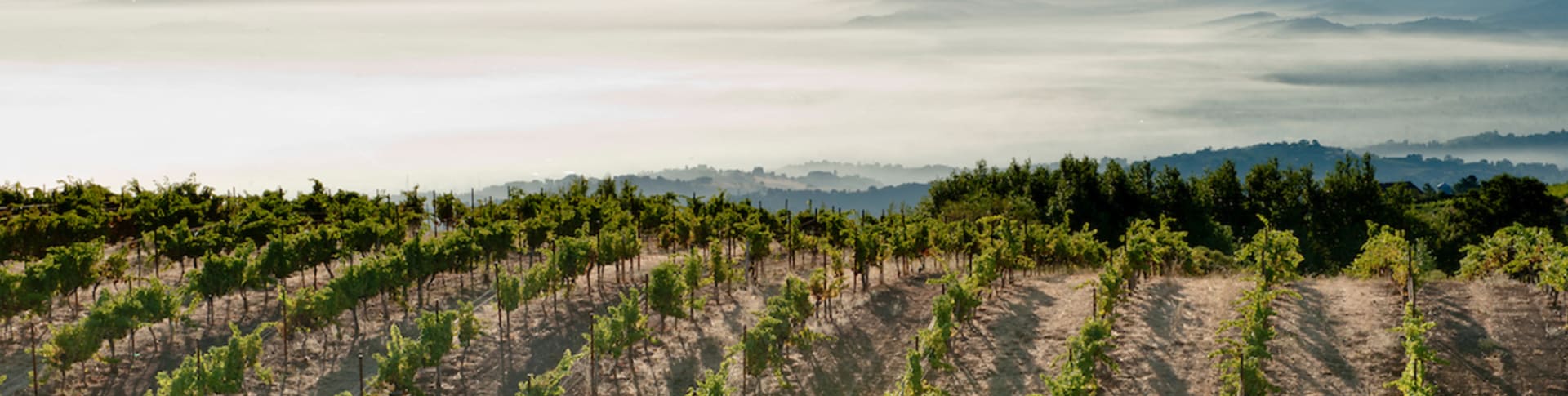
After two years of full yields, this Spring Mountain District vineyard above Napa Valley set a very small crop in 2008. Despite mild summer weather, the grapes were ripe by Labor Day, two weeks earlier than usual. Harvest began September 5 with the young zinfandel, and ended the next week with the thirty-six year old petite sirah; individual parcels fermented separately on their natural yeasts. We pressed as the wines went dry, at eleven days on average. Following natural malolactic, we tasted the finished wines, selecting the five most intense to represent the vintage. The combined lots then aged for fourteen months in air-dried american oak. This full-bodied wine shows the rustic flavors and firm structure typical of zinfandel from York Creek. It will evolve over the next seven to eight years.
Professional Ratings
-
Robert Parker's Wine Advocate
Another iconic site from Ridge, the 2008 Zinfandel York Creek (79% Zinfandel and 21% Petite Sirah, tipping the scales at 14.9% alcohol) displays plenty of boysenberry, blueberry and black cherry fruit notes, a healthy dark ruby/purple color similar to the other wines, but more earth, tannin, structure and grip. This is not as forward and elegant as the Lytton Springs, nor as exuberant and flamboyant as the Pagani Ranch. It is almost a Zinfandel with a Cabernet Sauvignon soul and structure. Give it another year or so of aging and drink it over the next decade.




RIDGE's history begins in 1885, when Osea Perrone, a doctor and prominent member of San Francisco's Italian community, bought 180 acres near the top of Monte Bello Ridge in the Santa Cruz Mountains. He planted vineyards and constructed a winery of redwood and native limestone in time to produce the first vintage of Monte Bello in 1892. The historic building now serves as the RIDGE production facility.
In 1962, Ridge Vineyards made its first Monte Bello, and two years later its first zinfandel. The RIDGE approach is straightforward: find the most intense and flavorful grapes, guide the natural process, draw all the fruit's richness into the wine. Decisions on when to pick, when to press, when to rack, what varietals and what parcels to include and when to bottle, are based on taste. To retain the nuances that increase complexity, Ridge winemakers handle the grapes and wine as gently as possible. There are no recipes, only attention and sensitivity.
In August 2021, Ridge Vineyards joined International Wineries for Climate Action (IWCA), a group of like-minded wineries that are dedicated to decarbonizing the global wine industry. RIDGE is committed to achieving Net Zero by 2050 and completes a biannual greenhouse gas audit utilizing the World Resources Institute Greenhouse Gas (GHG) Protocol methodology and be verified by an internationally accredited, third-party auditor.

Undoubtedly proving its merit over and over, Napa Valley is a now a leading force in the world of prestigious red wine regions. Though Cabernet Sauvignon dominates Napa Valley, other red varieties certainly thrive here. Important but often overlooked include Merlot and other Bordeaux varieties well-regarded on their own as well as for their blending capacities. Very old vine Zinfandel represents an important historical stronghold for the region and Pinot noir is produced in the cooler southern parts, close to the San Pablo Bay.
Perfectly situated running north to south, the valley acts as a corridor, pulling cool, moist air up from the San Pablo Bay in the evenings during the hot days of the growing season, which leads to even and slow grape ripening. Furthermore the valley claims over 100 soil variations including layers of volcanic, gravel, sand and silt—a combination excellent for world-class red wine production.