

Winemaker Notes
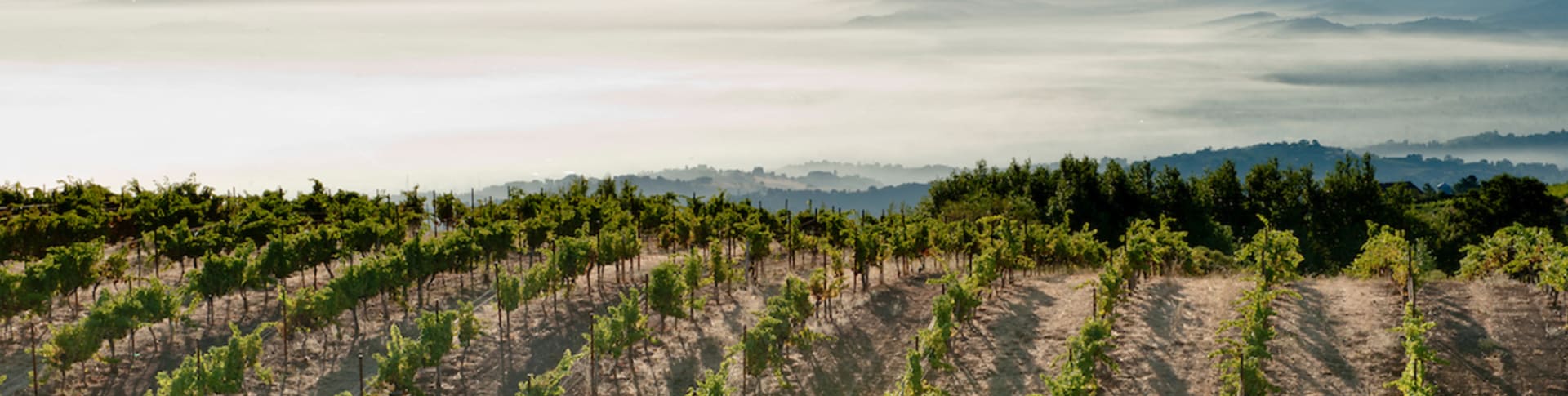
York Creek Vineyard lies high on Spring Mountain, overlooking Napa Valley. The 2005 growing season began late; foul April weather disrupted bloom and set, substantially reducing the crop, but consistent summer weather enabled Ridge to harvest, as usual, in late September. Grapes from the individual parcels were destemmed, then crushed to seven small tanks—three with grids submerging the cap of skins, four with cap floating.
Natural fermentation began within three days, they pressed on the eighth; only a small amount of press wine was included. Following a brief uninoculated malolactic, the separate lots were racked to fifty-three-gallon air-dried american oak barrels to begin aging. By May, Ridge had assembled the most distinctive of these, returning them to barrel for further aging as a blend. Every three months, the wine was carefully drawn off its settled lees to achieve clarity. A mix of new, two-, and four-year-old oak allows vineyard and varietal character to dominate.
This appealing Zinfandel is redolent of York Creek's well-defined mountain fruit. Enjoyable now, it will continue to develop over the next five to six years.
"11% Petite Sirah. Solidly fruity right from the start with touches of caramel and new leather overlying its essential themes of ripe berries and plums, Ridge's York Creek bottling proves that full ripeness in Zin does not necessarily come with bothersome heat or jammy simplicity. It is moderately rich but never flamboyant, and, if trimmed with noticeable edge of Petite Sirah tannin, it is very much a table wine in direction and will develop nicely if set aside for a few years."
-Connoisseurs' Guide
Professional Ratings




RIDGE's history begins in 1885, when Osea Perrone, a doctor and prominent member of San Francisco's Italian community, bought 180 acres near the top of Monte Bello Ridge in the Santa Cruz Mountains. He planted vineyards and constructed a winery of redwood and native limestone in time to produce the first vintage of Monte Bello in 1892. The historic building now serves as the RIDGE production facility.
In 1962, Ridge Vineyards made its first Monte Bello, and two years later its first zinfandel. The RIDGE approach is straightforward: find the most intense and flavorful grapes, guide the natural process, draw all the fruit's richness into the wine. Decisions on when to pick, when to press, when to rack, what varietals and what parcels to include and when to bottle, are based on taste. To retain the nuances that increase complexity, Ridge winemakers handle the grapes and wine as gently as possible. There are no recipes, only attention and sensitivity.
In August 2021, Ridge Vineyards joined International Wineries for Climate Action (IWCA), a group of like-minded wineries that are dedicated to decarbonizing the global wine industry. RIDGE is committed to achieving Net Zero by 2050 and completes a biannual greenhouse gas audit utilizing the World Resources Institute Greenhouse Gas (GHG) Protocol methodology and be verified by an internationally accredited, third-party auditor.

Undoubtedly proving its merit over and over, Napa Valley is a now a leading force in the world of prestigious red wine regions. Though Cabernet Sauvignon dominates Napa Valley, other red varieties certainly thrive here. Important but often overlooked include Merlot and other Bordeaux varieties well-regarded on their own as well as for their blending capacities. Very old vine Zinfandel represents an important historical stronghold for the region and Pinot noir is produced in the cooler southern parts, close to the San Pablo Bay.
Perfectly situated running north to south, the valley acts as a corridor, pulling cool, moist air up from the San Pablo Bay in the evenings during the hot days of the growing season, which leads to even and slow grape ripening. Furthermore the valley claims over 100 soil variations including layers of volcanic, gravel, sand and silt—a combination excellent for world-class red wine production.