

Winemaker Notes
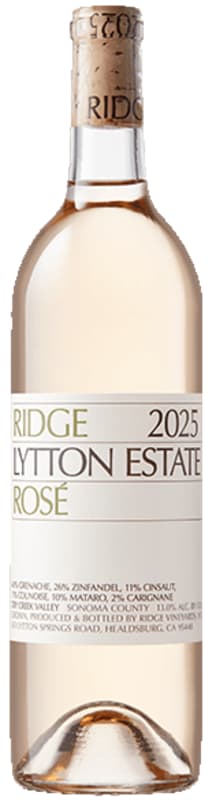
Beautiful pale coral color with aromas of white peach and rose petal. Light and fresh on the palate with notes of strawberry, minerality and balanced acidity.
Blend: 40% Grenache, 26% Zinfandel, 11% Cinsault, 11% Counoise, 10% Mataro, 2% Carignane




RIDGE's history begins in 1885, when Osea Perrone, a doctor and prominent member of San Francisco's Italian community, bought 180 acres near the top of Monte Bello Ridge in the Santa Cruz Mountains. He planted vineyards and constructed a winery of redwood and native limestone in time to produce the first vintage of Monte Bello in 1892. The historic building now serves as the RIDGE production facility.
In 1962, Ridge Vineyards made its first Monte Bello, and two years later its first zinfandel. The RIDGE approach is straightforward: find the most intense and flavorful grapes, guide the natural process, draw all the fruit's richness into the wine. Decisions on when to pick, when to press, when to rack, what varietals and what parcels to include and when to bottle, are based on taste. To retain the nuances that increase complexity, Ridge winemakers handle the grapes and wine as gently as possible. There are no recipes, only attention and sensitivity.
In August 2021, Ridge Vineyards joined International Wineries for Climate Action (IWCA), a group of like-minded wineries that are dedicated to decarbonizing the global wine industry. RIDGE is committed to achieving Net Zero by 2050 and completes a biannual greenhouse gas audit utilizing the World Resources Institute Greenhouse Gas (GHG) Protocol methodology and be verified by an internationally accredited, third-party auditor.

Whether it’s playful and fun or savory and serious, most rosé today is not your grandmother’s White Zinfandel, though that category remains strong. Pink wine has recently become quite trendy, and this time around it’s commonly quite dry. Since the pigment in red wines comes from keeping fermenting juice in contact with the grape skins for an extended period, it follows that a pink wine can be made using just a brief period of skin contact—usually just a couple of days. The resulting color depends on grape variety and winemaking style, ranging from pale salmon to deep magenta.

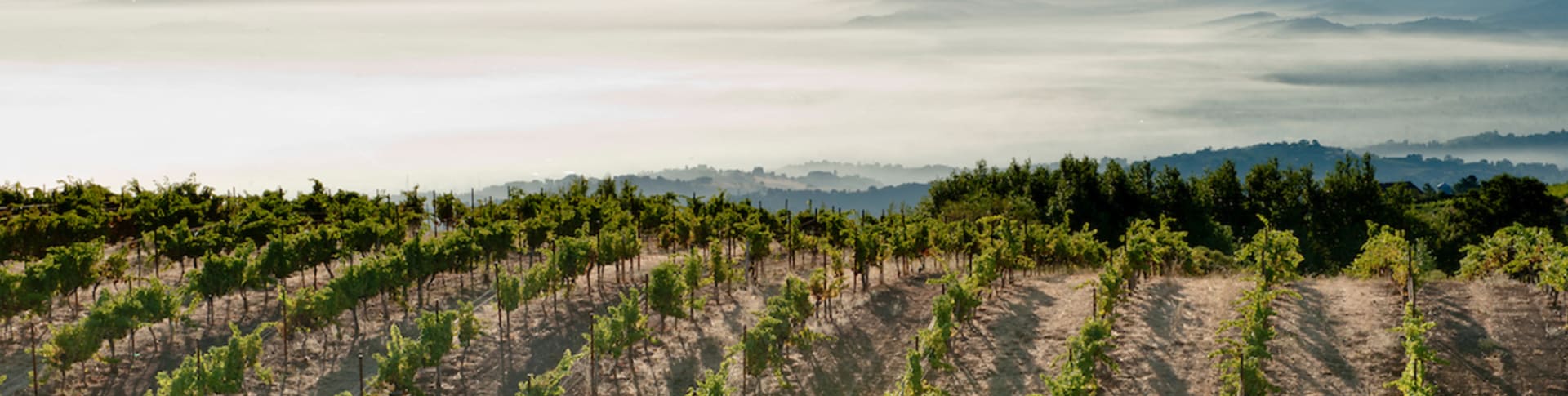
A multifaceted and highly reputable sub-region of Sonoma, Dry Creek Valley is responsible for a wide range of wine styles—both red and white. One of the smallest AVAs in California, Dry Creek Valley has a winning combination of ideal geography and climate. Fertile, well-drained soils create concentrated varietal character while long, warm days, bookended by cool nights, allow grapes to reach full phenolic ripeness and balance. The warm and welcoming appellation is home to a number of family-owned vineyards and wineries that place a strong emphasis on sustainable farming practices.
Zinfandel reigns supreme here and still produces in a great number of very old vineyards—often 100 years old or older. These old vines create a powerful, voluptuous and sultry wine unlike those of any other region. Sauvignon Blanc, the valley’s signature white grape, also performs exceptionally well. Many other varieties grow comfortably here, including Cabernet Sauvignon, Grenache and Syrah. Petite Sirah is often found in blends with Zinfandel.