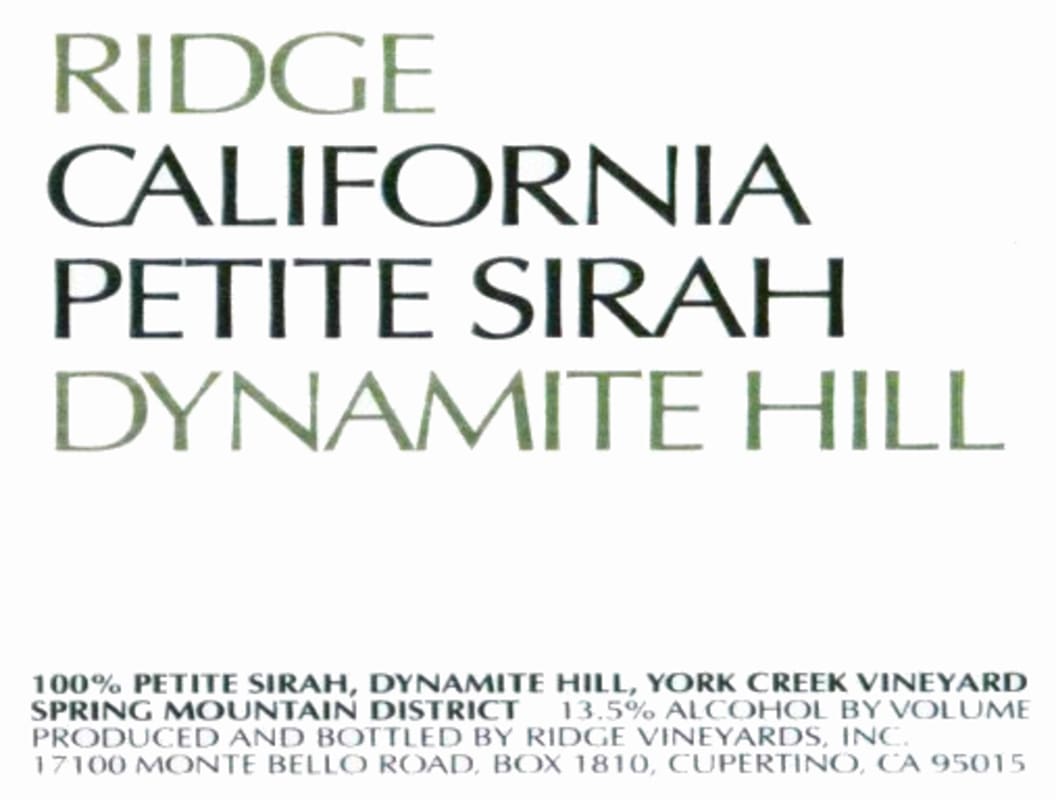

Winemaker Notes


With its deep color, firm tannins and bold flavors, there is nothing petite about Petite Sirah. The variety, originally known as Durif in the Rhône, took on its more popular moniker after being imported to California in the early 1880s. Quintessentially recognized today as a grape of the Golden State, Petite Sirah works well blended with Zinfandel and finds success as a single varietal wine in the state’s warmer districts. Somm Secret—Petite Sirah is not a smaller version of Syrah but it is an offspring of Syrah and the now nearly extinct French Alpine variety called Peloursin.

Above the town of St. Helena on the eastern slopes of the Mayacamas Mountains sits the Spring Mountain District.
A dynamic region, its vineyards, cut by numerous springs and streams, vary in elevation, slope and aspect. Soils differ throughout with over 20 distinct types inside of the 8,600 acres that define the appellation. Within that area, only about 1,000 are planted to vineyards. Predominantly farmed by small, independent producers, the region currently has just over 30 wineries.
During the growing season, late afternoon Pacific Ocean breezes reach the Spring Mountain vineyards, which sit at between 400 and 1,200 feet. Daytime temperatures during mid summer and early fall remain slightly cooler than those of the valley floor.
Spring Mountain soils—volcanic matter and sedimentary rock—create intense but balanced reds with lush and delicate tannins. The area excels with Bordeaux varieties such as Cabernet Sauvignon, Cabernet Franc and Merlot and in some cooler spots, Chardonnay.