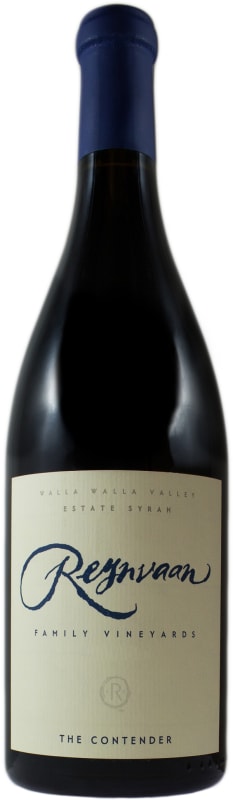


Winemaker Notes
Professional Ratings
-
Jeb Dunnuck
The 2016 Syrah Estate The Contender from this terrific estate checks in as 95% Syrah and 5% Marsanne that was mostly destemmed (there's 35% stems) and aged 18 months in barrel. Black raspberries, plums, toasted spice, ground pepper and decaying flower notes all emerge from this incredibly elegant, seamless Syrah that shines for its complexity, elegance, and richness. With plenty of tannins and impeccable balance, it's approachable today yet will keep for 10-15 years with no issues.
-
Robert Parker's Wine Advocate
The 2016 Syrah The Contender has an intriguing nose and palate, as it was co-fermented with Roussanne. The nose has the straightforwardness of Syrah, with bacon fat, black pepper, black fruit and river rocks. Medium to full-bodied in the mouth, the Roussanne component seems almost unnoticeable until it hits the palate, where the Roussanne gently puts the wine into focus with a softness on the mid-palate, taming the smoky tones and adding a soft complexity and waxy texture. The wine ends with a chewy and softly tannic finish that is long and lingering. 355 cases produced.
-
Wine Enthusiast
Ecstatic aromas of firepit, flower, ember, dried tobacco, roasted coffee bean, smoked meat and earth lead to lighter-styled, focused fruit and savory flavors. It brings a mouthwatering palate that delights. The flavors carry on the long finish.
-
Wine Spectator
Expressive, featuring floral raspberry, licorice and crushed stone accents that gain structure on the long finish.


Marked by an unmistakable deep purple hue and savory aromatics, Syrah makes an intense, powerful and often age-worthy red. Native to the Northern Rhône, Syrah achieves its maximum potential in the steep village of Hermitage and plays an important component in the Red Rhône Blends of the south, adding color and structure to Grenache and Mourvèdre. Syrah is the most widely planted grape of Australia and is important in California and Washington. Sommelier Secret—Such a synergy these three create together, the Grenache, Syrah, Mourvedre trio often takes on the shorthand term, “GSM.”

Responsible for some of Washington’s most highly acclaimed wines, the Walla Walla Valley has experienced a surge in popularity in recent years and is home to both historic wineries and younger, up-and-coming producers.
The Walla Walla Valley, a Native American name meaning “many waters,” is located in southeastern Washington; part of the appellation actually extends into Oregon. Soils here are well-drained, sandy loess over Missoula Flood deposits and fractured basalt.
It is a region perfectly suited to Rhône-inspired Syrahs, distinguished by savory notes of red berry, black olive, smoke and fresh earth. Cabernet Sauvignon and Merlot create a range of styles from smooth and supple to robust and well-structured. White varieties are rare but some producers blend Sauvignon Blanc with Sémillon, resulting in a rich and round style, and plantings of Viognier, while minimal, are often quite successful.
Of note within Walla Walla, is one new and very peculiar appellation, called the Rocks District of Milton-Freewater. This is the only AVA in the U.S. whose boundaries are totally defined by the soil type. Soils here look a bit like those in the acclaimed Rhône region of Chateauneuf-du-Pape, but are large, ancient, basalt cobblestones. These stones work in the same way as they do in Chateauneuf, absorbing and then radiating the sun's heat up to enhance the ripening of grape clusters. The Rocks District is within the part of Walla Walla that spills over into Oregon and naturally excels in the production of Rhône varieties like Syrah, as well as the Bordeaux varieties.