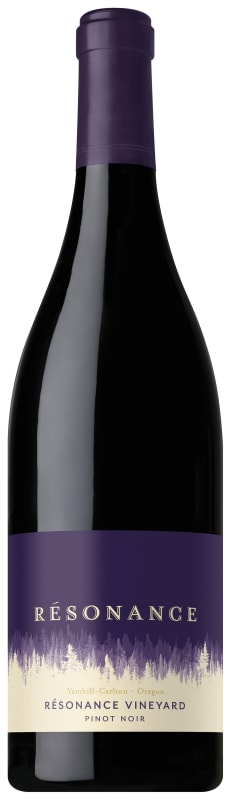


Winemaker Notes
This wine is great on its own or pairs well with grilled or roasted red meats, game, and poultry.
Professional Ratings
-
Wine Enthusiast
This exceptional vineyard, more than 35-years-old, brings a wealth of subtle details to a wine that has both grace and power. There's truffle, earth, mocha, plum, spice, coffee and on and on it goes, all well integrated already. Experience would suggest that wines from this vineyard, previously made for Sineann, are exceptionally ageworthy. Drink now if you must, or cellar and drink from 2022 to 2030.
Cellar Selection -
James Suckling
A wine with Nori seaweed and a pleasant earthy note. Round tannins and a savory finish. A great effort for the 2013 vintage.
-
Wine Spectator
Refined and savory, with delicate raspberry and wild flower aromas and trim but complex pomegranate and green tea flavors.
-
Robert Parker's Wine Advocate
Medium ruby, the 2014 Résonance Vineyard Pinot Noir opens with notions of tar, dried lavender, wild blackberries, dried herbs and leaves plus nuances of red berries and potpourri. The palate is medium-bodied and silky with a good core of earth-laced fruits, a firm, grainy frame and juicy freshness to lift the finish.


Thin-skinned, finicky and temperamental, Pinot Noir is also one of the most rewarding grapes to grow and remains a labor of love for some of the greatest vignerons in Burgundy. Fairly adaptable but highly reflective of the environment in which it is grown, Pinot Noir prefers a cool climate and requires low yields to achieve high quality. Outside of France, outstanding examples come from in Oregon, California and throughout specific locations in wine-producing world. Somm Secret—André Tchelistcheff, California’s most influential post-Prohibition winemaker decidedly stayed away from the grape, claiming “God made Cabernet. The Devil made Pinot Noir.”

Yamhill-Carlton, characterized by pastoral, rolling hills composed of shallow, quick-draining, ancient marine soil, is ideal for Pinot noir and other cool-climate-loving varieties. It is in the rain shadow of the Coast Range to its west, whose highest point climbs to an altitude of 3,500 feet. Yamhill-Carlton is actually surrounded by mountains on three sides: Chehalem Mountains to the north, the Dundee Hills to the east and the western Coast Range to its west, which, when it lets Pacific air through, serves to cool the region.
Vineyards grow on the ridges surrounding the two small communities of Yamhill and Carlton and cover about 1,200 acres of this 60,000 acre region, which roughly makes a horse-shoe shape on a map.