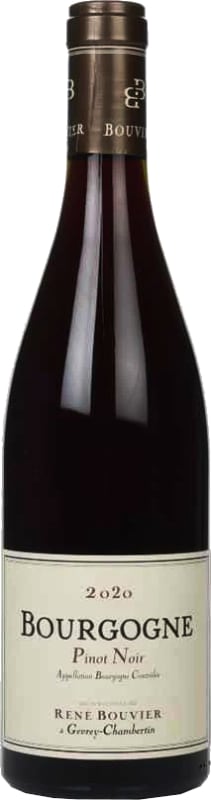


Winemaker Notes
This cuvée comes from plots in Marsannay, Gevrey-Chambertin, Brochon, and Fixin (40-year-old vines). It is thus a Bourgogne from different terroirs, but all of noble origin. You will find in this wine the delicacy of the fresh fruits of the Côte de Nuits. It has true body, which allows it to be kept for a few years, but its juicy character will tempt you to taste it with pleasure from its early youth.
It can be paired with braised veal, a haunch of veal with cardamom gravy, roasted poultry, or pork cooked in its juices.


Thin-skinned, finicky and temperamental, Pinot Noir is also one of the most rewarding grapes to grow and remains a labor of love for some of the greatest vignerons in Burgundy. Fairly adaptable but highly reflective of the environment in which it is grown, Pinot Noir prefers a cool climate and requires low yields to achieve high quality. Outside of France, outstanding examples come from in Oregon, California and throughout specific locations in wine-producing world. Somm Secret—André Tchelistcheff, California’s most influential post-Prohibition winemaker decidedly stayed away from the grape, claiming “God made Cabernet. The Devil made Pinot Noir.”

The origin of perhaps the world’s very finest Pinot Noir, Côte de Nuits is the northern half of the Côte d'Or and includes the famous wine villages of Gevrey-Chambertin, Morey-St-Denis, Chambolle-Musigny, Vougeot, Vosne-Romanée, Flagey-Echezeaux and Nuits-St-Georges.
Fine whites from Chardonnay are certainly found in the Côte de Nuits, but with much less frequency than top-performing reds made of Pinot noir. The little village of Nuits-St-Georges in its southern end gave the region its name: Côte de Nuits. The city of Dijon marks its northern border.