
Winemaker Notes
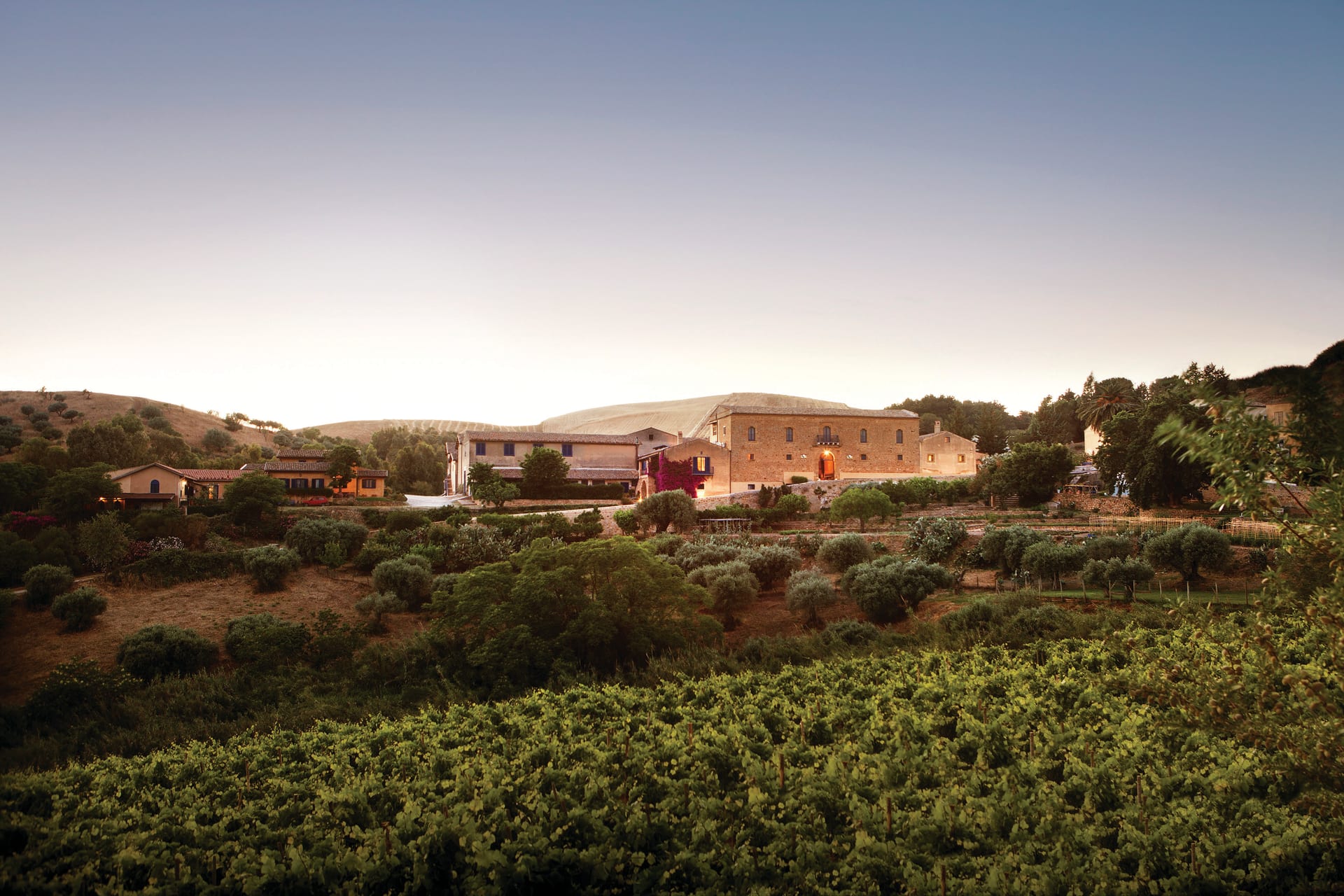



"Regaleali is a vast Sicilian estate owned by the noble Tasca d'Almerita family since 1837 and best-known for its fine wines. Sicily's viticultural roots are some of the world's most ancient as the area supported vines as far back as five centuries before Christ. The Tasca D'Almerita family runs a model estate that yields approximately 200,000 cases annually. The wines are made in one of the world's most modern wineries built under the direction of Ezio Rivella.
The wines of Regaleali continue to grow in both quantity and quality thanks to the hard work and dedication of Count Giuseppe Tasca over the past 50 years. Today the winery is run by Lucio Tasca and his sons, Giuseppe and Alberto who are increasingly involved in management. Carlo Ferrini, one of Italy's most renown enologists, is makes the wines. In conjunction with the winery, Anna Tasca Lanza - Lucio's sister – also runs a highly regarded cooking school at the estate."

While certainly not one of the hundreds of indigenous Italian varietals, Cabernet Sauvignon has been present in the country since the 1820’s and now encompasses approximately 35,000 acres. Only a small amount of Cabernet Sauvignon is grown in northern Italy, but notable examples include Angelo Gaja’s Darmagi from Piedmont and San Leonardo (typically a Cabernet blend) from Trentino-Alto Adige. Southern Italy sees more plantings, especially in Sicily, Puglia and Campania; most of these versions are made for everyday consumption and rarely garner widespread attention.
Then there is Tuscany, where Italian Cabernet Sauvignon can rise to impressive levels of quality. It is required in Carmignano, and since 1996 has been permitted in Chianti and Chianti Classico. The grape first shook up the Italian wine world in the early 1970’s, with the release of the so-called “Super Tuscans.” These were wines from the coastal region of Maremma that broke the rules of almost every Tuscan appellation and therefore had to be labeled as “table wine.” The first, Sassicaia, is a blend of Cab with Cabernet Franc. Other notable Italian wines that include Cabernet Sauvignon are Tignanello, Ornellaia and Solaia. These and others bear Cabernet’s signature notes of blackcurrant, blackberry, tobacco, graphite and oak, all supported by impressive structure.